










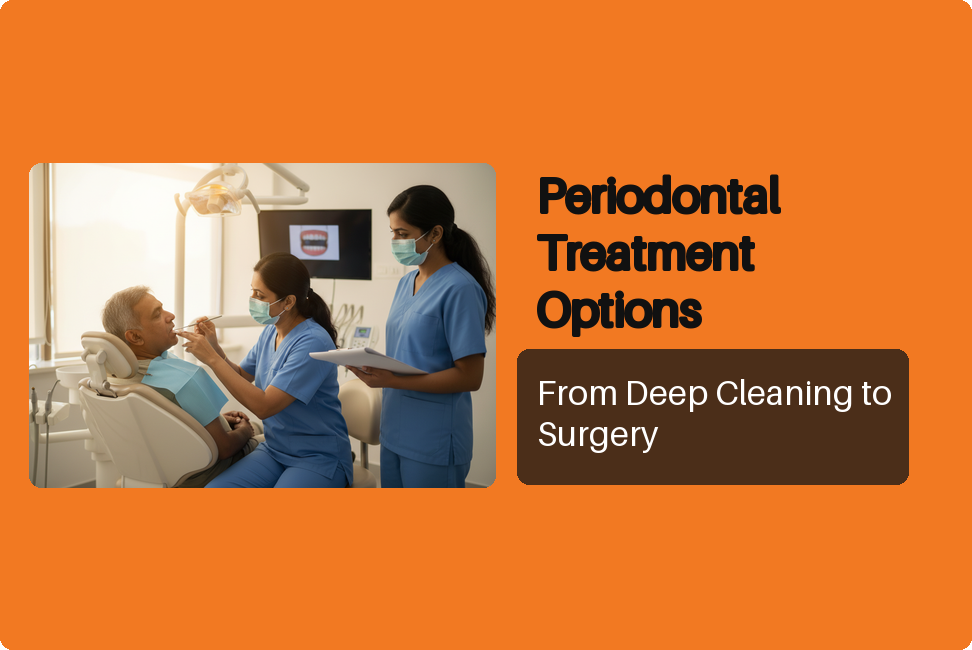
Periodontal treatment options confuse most patients because gum disease has stages, and each stage needs a different response. You might worry about surgery, or wonder if a simple cleaning will stop the bleeding. The direct answer is that early gum disease usually responds to non-surgical care like scaling and root planing, while advanced cases may need procedures such as Periodontal Diseases & Flap surgery to restore damaged tissue. At Partha Dental, periodontists with MDS qualifications and NABH-accredited protocols assess every case individually, matching the treatment to your pocket depth, bone levels, and overall health. Read on to see exactly what each option involves, how dentists decide between them, and what you can expect during recovery.
Key takeaways
- Scaling and root planing is the first-line treatment for early to moderate periodontitis.
- Surgical flap procedures become necessary when pocket depths exceed 5 millimetres and bone loss is present.
- Laser-assisted periodontal therapy offers a less invasive alternative for selected patients with moderate disease.
- Regenerative techniques using grafts or membranes can rebuild bone support in advanced cases.
- Long-term success depends on patient maintenance and regular professional monitoring, not just the initial procedure.
What are the non-surgical periodontal treatment options?
Non-surgical periodontal treatment options form the foundation of gum disease management and are effective for most patients with mild to moderate periodontitis. The primary procedure is scaling and root planing, often called deep cleaning. A dentist or periodontist removes plaque and tartar from above and below the gumline, then smooths the root surfaces to help gums reattach. This eliminates the dysbiotic plaque biofilm that drives disease progression. Antimicrobial agents, such as locally applied antibiotics or antiseptic rinses, may accompany deep cleaning to control bacteria in deep pockets. Dental Lasers are increasingly used as an adjunct to reduce bacteria and inflammation with less tissue trauma than conventional methods. These approaches aim to control infection and promote healing without cutting or stitching. Patients typically need multiple visits, with each quadrant of the mouth treated separately. The preference for less invasive options reflects their quicker recoveries and cost-effectiveness for appropriate cases.
| Non-Surgical Option | What It Does | Best For |
|---|---|---|
| Scaling and Root Planing | Removes plaque and tartar below gumline; smooths roots | Mild to moderate periodontitis |
| Antimicrobial Therapy | Applied antibiotics or rinses target specific bacteria | Persistent pockets after deep cleaning |
| Laser-Assisted Therapy | Reduces bacteria and diseased tissue with focused light | Moderate disease, patient prefers minimal intervention |
When does periodontal disease need surgical treatment?
Surgical periodontal treatment becomes necessary when non-surgical methods cannot adequately reduce pocket depth or when bone loss has created defects that trap bacteria. The threshold is generally pocket depths exceeding 5 millimetres that remain after scaling and root planing. Flap surgery, or periodontal flap procedure, involves lifting the gum tissue to access deep roots and bone, thoroughly cleaning the area, and then repositioning the gum at a lower level to reduce pocket depth. This makes future maintenance easier and helps prevent further destruction. Regenerative procedures may follow, using bone grafts, guided tissue membranes, or growth factors to rebuild lost support. Gum Disease Treatment at Partha Dental follows evidence-based guidelines that tailor surgical decisions to individual patient, site, and systemic factors. Surgery does not cure periodontitis, but it creates conditions where oral hygiene and professional care can maintain stability.
| Surgical Option | What It Addresses | Expected Outcome |
|---|---|---|
| Flap Surgery (Open Flap Debridement) | Deep pockets, complex root anatomy | Reduced pocket depth, improved access for cleaning |
| Bone Grafting | Vertical bone defects from advanced disease | Partial bone regeneration in selected sites |
| Guided Tissue Regeneration | Isolated defects with good surrounding bone | Regrowth of periodontal ligament and bone |
| Soft Tissue Grafts | Receding gums, root exposure | Improved coverage and reduced sensitivity |
How do dentists choose between periodontal treatment options?
Dentists select periodontal treatment options based on a structured assessment that begins with a comprehensive examination and full-mouth periodontal charting. The dentist measures pocket depths at six sites per tooth, assesses bleeding on probing, evaluates tooth mobility, and reviews radiographs for bone loss patterns. This determines the stage of periodontitis, which directly guides treatment intensity. Stage I and II disease typically responds to non-surgical care. Stage III disease, with pocket depths of 6 millimetres or more and significant bone loss, usually requires surgical intervention or a combined approach. Systemic factors also influence decisions. Uncontrolled diabetes, smoking, and certain medications affect healing and may modify the treatment plan. At Partha Dental, the consultation includes digital X-rays, a personalized risk assessment, and discussion of Personalized Treatment Options Enhancing Clear Aligners Treatment for patients whose gum health must be stabilized before orthodontic work. The goal is always to match the intervention to what the specific site and patient can benefit from most.
What does recovery look like after periodontal procedures?
Recovery varies significantly between non-surgical and surgical periodontal procedures. After scaling and root planing, most patients experience mild gum tenderness and slight bleeding for a few days. Normal eating and brushing resume quickly, though dentists may recommend a soft diet initially and special oral hygiene aids for deep pockets. Laser-assisted therapy often produces even less post-procedure discomfort. Surgical recovery requires more planning. After flap surgery, patients typically need to avoid chewing on the treated side, use prescribed antimicrobial rinses, and attend follow-up visits for suture removal and healing assessment. Swelling and discomfort are manageable with medication. The critical factor in all cases is not the immediate recovery but the long-term maintenance phase. Periodontitis is a chronic condition; without consistent home care and professional monitoring, disease recurs. Partha Dental schedules supportive periodontal therapy at intervals tailored to each patient’s risk level, typically every three to four months initially. Root Canal Treatment may be needed if periodontal infection has compromised the tooth pulp.
What should patients ask before starting periodontal treatment?
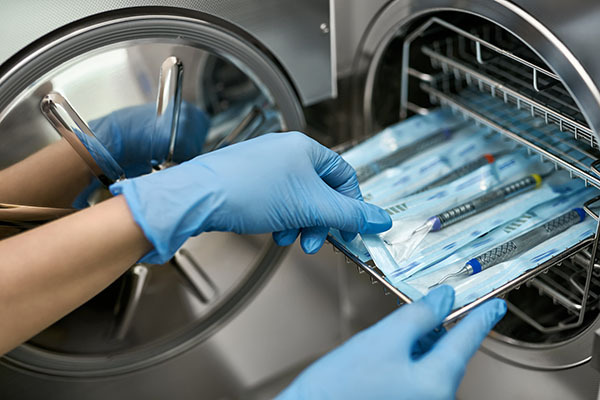
Patients should ask specific questions that help them understand their disease stage, the proposed approach, and their role in success. Key questions include: What is my exact periodontitis stage based on pocket depths and bone loss? Is the proposed treatment the minimum effective intervention, or are there less invasive alternatives? What are the realistic outcomes, and what happens if this treatment does not work? How will my medical history affect healing? What will maintenance cost and involve long-term? At Partha Dental, cost transparency and payment plan options are discussed upfront, including EMI availability where relevant. Patients should also inquire about sterilisation protocols and whether the practice follows NABH standards for infection control. Understanding that outcomes depend on individual case and oral health status helps set appropriate expectations. For patients with complex bite issues alongside gum disease, different bite patterns may need coordinated management with periodontal care.
Patients considering how missing teeth relate to their periodontal future can also review What Are the Long-Term Effects of Missing Teeth? | Replacement Options Explained for integrated treatment planning.
For those in specific areas seeking coordinated care, Expert Root Canal Treatment in Machilipatnam: Procedures, Benefits & Costs Explained follows the same structured planning steps used across Partha Dental’s periodontal protocols.
Periodontal disease demands a response matched to its stage, not a one-size-fits-all approach. Early intervention with scaling and root planing preserves tissue; advanced disease may need flap surgery or regeneration. The key is accurate diagnosis and patient commitment to maintenance. At Partha Dental, MDS-qualified periodontists guide this journey with transparent planning and ongoing support. Call +91 801 955 0000 to book a periodontal assessment and learn which approach fits your situation.
FAQs
What is the first treatment for periodontal disease?
Scaling and root planing is the first-line treatment for most patients with periodontal disease. This deep cleaning removes plaque and tartar from below the gumline and smooths root surfaces to help gums reattach and heal.
Is periodontal surgery painful?
Modern periodontal surgery uses local anaesthesia effectively, so patients do not feel pain during the procedure. Post-operative discomfort is manageable with medication and typically decreases within several days as healing progresses.
Can periodontal disease be cured completely?
Periodontitis is a chronic condition that cannot be completely cured, but it can be controlled and stabilised. Successful long-term management depends on professional treatment combined with excellent daily oral hygiene and regular maintenance visits.
How long does recovery take after flap surgery?
Initial healing of the gum tissue after flap surgery occurs over one to two weeks, though complete tissue maturation takes longer. Patients can usually resume normal activities within a few days, following specific dietary and hygiene instructions from their dentist.
Does laser therapy work as well as traditional periodontal surgery?
Laser-assisted therapy is effective for selected patients with moderate periodontal disease, offering reduced bleeding and faster initial comfort. However, it does not replace flap surgery for advanced cases with deep bone defects, where surgical access remains necessary.
Will I lose my teeth if I have periodontal disease?
Tooth loss is not inevitable with periodontal disease. Early diagnosis and appropriate treatment, combined with consistent maintenance care, can preserve teeth for many years even after significant bone loss has occurred.