












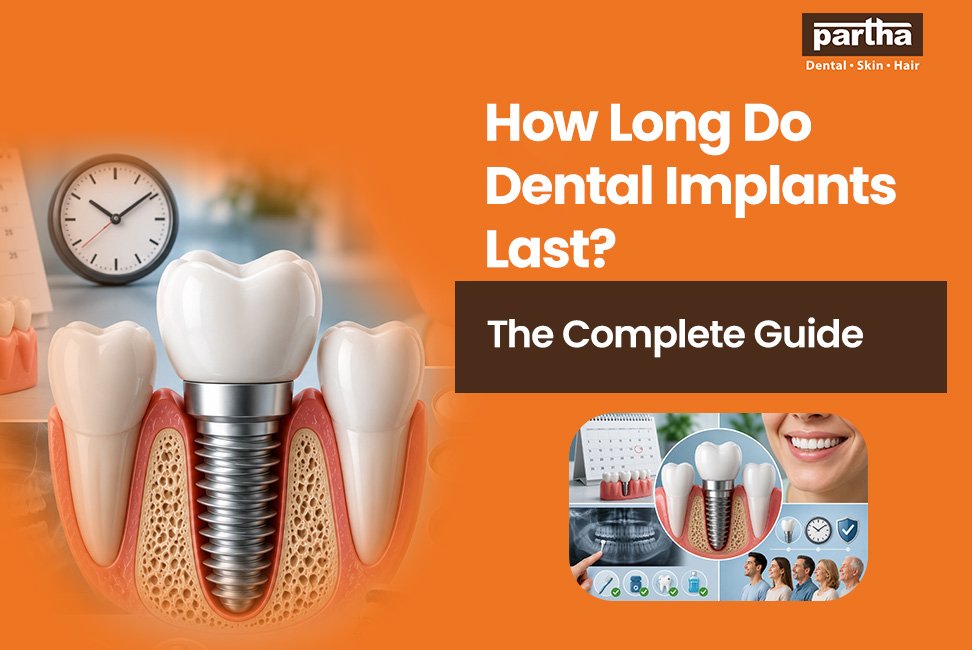
Before you spend ₹40,000 or more on a dental implant, you want to know one thing: will it actually last? The titanium post placed inside your jawbone can last a lifetime if it bonds properly with the bone and you maintain it well.
The crown on top, the visible tooth typically lasts 10 to 15 years before it needs replacing. So the honest answer to “how long do dental implants last” is: the implant itself lasts potentially decades or more.
Partha Dental specialists offering dental implants in Hyderabad, plan every case with CBCT 3D imaging and place internationally certified implant systems. With 120+ clinics, 300+ doctors, and 15 lakh+ patients treated across South India the teams here have seen what makes implants last and what makes them fail. This guide gives you the full picture.
How Long Do Dental Implants Last?
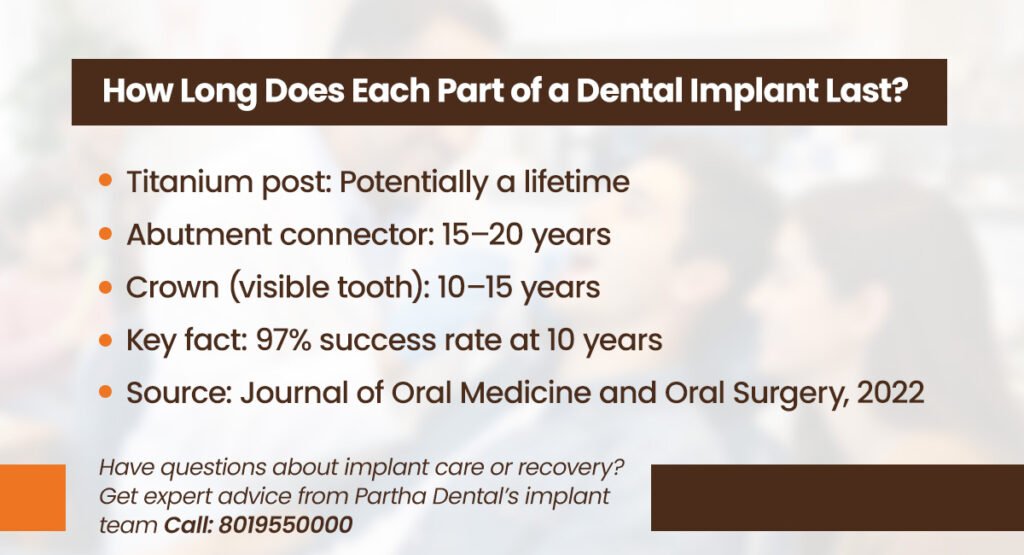
A dental implant isn’t one piece. It has three parts and each one ages differently.
| Component | What It Is | How Long It Lasts |
| Titanium post | The screw placed in the jawbone | Potentially a lifetime |
| Abutment | The connector between post and crown | 15–20 years |
| Crown | The visible replacement tooth | 10–15 years |
The titanium post fuses with the bone through osseointegration, a process where the bone grows around the implant and treats it as part of the jaw. Once that bond forms properly, the post is incredibly stable.
The crown is different. Every bite, every meal, every cup of tea puts pressure on it. Porcelain and zirconia are tough materials, but they wear. That’s why the crown may need replacing even when the post underneath is perfectly fine.
How Long Do All-on-4 Dental Implants Last?
All on 4 dental implants in Bangalore and across India work the same way as single implants at the biology level, four titanium posts go into the jaw and bond with the bone through osseointegration. According to Malo et al. (Clinical Implant Dentistry and Related Research, 2011), All-on-4 restorations show a 94.8% implant survival rate at 10 years.
It will need maintenance and eventual replacement over time, just like a single crown. The posts themselves, if osseointegration was successful, tend to hold well long-term. Your implant specialist reviews bone levels at each check-up to monitor this.
What Factors Determine How Long Your Dental Implant Lasts?
The dental implants surgery gives the implant its start. But the single biggest factor in how long an implant lasts isn’t the surgery. It’s what you do in the years after.
- Oral Hygiene: Peri-implantitis is a gum infection around the implant. Think of it as gum disease, but around the implant site instead of a natural tooth. A 2022 study in the Journal of Oral Medicine and Oral Surgery found it in 34% of patients who experienced late implant failure. Brushing twice daily and using an interdental brush around the crown is what keeps it away.
- Smoking: Blood flow to the gums drops when you smoke. That slows healing after Dental Implants Surgery and weakens the bond between bone and titanium over time.
- Bone Density: Soft bone called Type IV bone has a 20.6% implant failure rate, according to research in the Journal of Family Medicine and Primary Care. Denser bone holds the implant much more securely.
- Teeth Grinding: A lot of people grind at night without knowing it. The repeated force wears down the crown faster and can slowly loosen the abutment. A custom nightguard costs a fraction of replacing a crown and handles the problem completely.
- Diabetes: Uncontrolled diabetes raises implant failure risk by 2.17 times. Managed well, it doesn’t rule out implants, it just means the planning has to be more careful before surgery begins.
- Where the Implant Sits: Back molars take far more chewing force than front teeth. The post stays just as stable, but the crown on a molar wears out sooner.
- How Precisely the Implant was Placed: Angle, depth, distance from nearby nerves all of this affects whether the bone integrates properly. CBCT-guided placement reduces early failure because the surgeon isn’t guessing.
How to Make Your Dental Implant Last as Long as Possible?
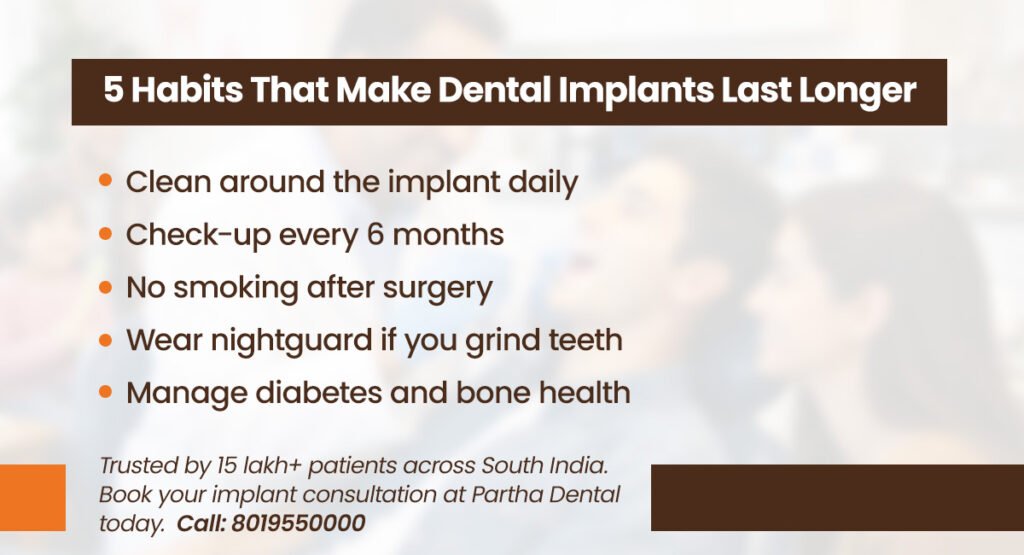
Most implant failures are preventable. Follow these 5 habits:
- Clean Around the Implant Every Day. Regular brushing misses the area just below the gum line around the crown. Use an interdental brush or water flosser there.
- Check-up Every 6 months. X-rays at these visits catch bone loss before it becomes visible or painful. Silent bone loss is how late failures start.
- No Smoking after Surgery. Even light smoking reduces blood supply to healing tissue. If you smoke, tell your specialist before the procedure, there’s a right way to manage the timing.
- Nightguard if You Grind. Many people don’t know they grind at night until a dentist spots the wear patterns. The nightguard costs a fraction of what crown replacement does.
- Keep Diabetes and Bone Health in Check. Calcium and Vitamin D help the jaw bone hold the implant over years. If you have diabetes, well-controlled levels before and after surgery matter more than most patients expect.
What Do the Success Rate Studies Actually Show?
A 2024 meta-analysis in Clinical Oral Investigations (PMC, NCBI) pulled together data from multiple studies and found 4 out of 5 implants still functioning at the 20-year mark, a 92% mean survival rate.
The dental implants benefits over alternatives aren’t about marketing. They’re in the clinical follow-up data. Most failures happen in year one, while osseointegration is still happening. Get past that window successfully and the implant’s chances of lasting decades are very high.
The Right Implant Lasts. The Right Specialist Makes That Happen. Book Your Appointment Now!
Partha Dental’s implant specialists offer the best dental implants in Chennai, Hyderabad, Bangalore, and Vijayawada using CBCT 3D imaging for surgical planning, mapping bone density, nerve position, and implant angle before placement begins. Every case is handled by MDS-qualified implantologists with post-surgical follow-up protocols built into the treatment plan.
If you’re considering all on 4 dental implants in Bangalore, and dental implants in Vijayawada and want to know whether your bone and health profile is suitable, book your implant consultation at the nearest Partha Dental clinic. Call: 8019550000 for more guidance.
Frequently Asked Questions
How long do dental implants last on average?
The post inside the jaw can last a lifetime. The crown on top usually needs replacing after 10 to 15 years. Most patients will replace the crown once or twice over their lifetime the post underneath stays put.
Can a failed dental implant be replaced?
In many cases, yes, after the site has healed fully. Whether it works depends on how much bone is left, what caused the first failure, and the patient’s overall health at that point. Your specialist assesses this individually.
Do All-on-4 implants last as long as single implants?
The posts do 94.8% survival rate at 10 years per Malo et al. The full-arch bridge on top needs the same kind of maintenance and eventual replacement as a single crown does.
How do I know if my dental implant is failing? The implant feels loose. Pain when you bite or chew. Swelling or redness around the gum near the implant. Pus. Any of these call your dentist the same week. Don’t wait for the next routine visit.
Does smoking affect how long dental implants last?
Yes. Smoking cuts blood flow to the gums, slows healing, and weakens the bond between bone and titanium. Higher failure rates in smokers show up consistently across long-term studies. Stopping before and after surgery makes a real difference to the outcome.