








The surgery is done. The implant is in. Now comes the part most patients underestimate, what you eat in the next few weeks can directly affect whether the implant heals properly or runs into complications.
Eating after dental implant surgery isn’t just about comfort. It’s about protecting the implant site while osseointegration (process where the titanium post fuses with your jawbone) takes place.
According to a study by the Oral and Maxillofacial Surgeons, this bone integration phase is one of the most critical periods in implant healing. Anything that disturbs the surgical site during this window can slow recovery or affect the implant’s stability.
Partha Dental has treated 15 lakh+ patients across South India, which means teams here have seen what helps implants heal and what sets them back. Read the food guidance below for your implant’s long-term success.
Foods to Eat After Dental Implant Surgery
Just after getting dental implants, your mouth needs foods that require no hard biting, create no pressure on the implant site, and support healing by providing nutrients. Here’s how the diet progresses, stage by stage.
First 24 to 48 Hours: Cold Liquids Only
This is the most sensitive window. The implant site is fresh, there’s likely some swelling, and the blood clot protecting the surgical area needs to stay undisturbed. Stick to:
- Cold water, coconut water, cold herbal teas
- Cold smoothies (no straw : the suction can disturb the site)
- Soups at room temperature not hot
- Ice cream or frozen yoghurt to reduce swelling
- Protein shakes and nutritional drinks
You must remember to avoid anything warm or hot in this phase. Heat increases blood flow to the area and can worsen swelling.
Days 3 to 7: Soft Foods, Avoid Chewing Near the Site
Swelling starts reducing in this phase. You can introduce soft foods, but chew only on the opposite side of the mouth from the implant. Food options:
- Mashed potatoes or sweet potato
- Soft-cooked rice or khichdi (not hot)
- Idli, soft dosa
- Curd
- Scrambled eggs or soft boiled eggs
- Ripe banana, mashed mango, soft papaya
- Dal (thin consistency)
- Soft paneer or tofu (cut into small pieces)
- Porridge or oatmeal at a warm temperature
All these foods provide protein, carbohydrates, and vitamins without putting any pressure on the healing bone around the implant.
Week 2 Onwards: Gradual Return to Semi-Solid Foods
Once your dentist confirms healing is progressing, you can start introducing semi-solid foods. Still nothing crunchy, sticky, or hard.
Suitable additions:
- Soft fish or chicken (well-cooked, small pieces)
- Pasta or soft noodles
- Steamed vegetables like carrots, beans, zucchini
- Soft bread (not toasted or crusty)
- Cooked pulses and legumes
- Soft fruit without seeds or skin – eg. peach, melon, kiwi
Foods That Help Healing Specifically
No single food can speed up healing on its own. Your body needs a mix of specific nutrients to support bone integration and tissue repair.
Here are options what most dentists consider:
- Calcium-rich foods : curd, milk, paneer, ragi support bone density around the implant
- Vitamin C foods : soft citrus in small amounts, guava, papaya support gum tissue repair
- Protein : eggs, dal, soft fish, yoghurt rebuild soft tissue
- Vitamin D : fortified milk, eggs helps the body absorb calcium for bone healing
- Zinc : pumpkin seeds (only after week 2, soft foods stage) supports immune response at the surgical site
Staying well hydrated matters too. Water keeps the mouth moist, reduces infection risk, and supports overall healing.
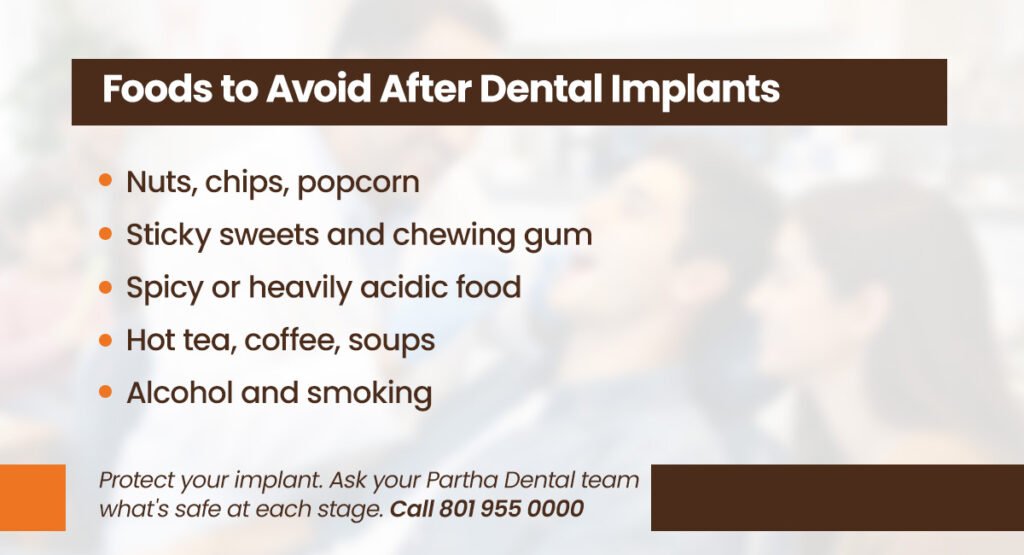
Foods to Avoid After Dental Implant Surgery
This list isn’t about permanent restriction. It’s about protecting the implant during the healing window, typically the first 6 to 8 weeks, though your dentist confirms when it’s safe to reintroduce specific foods.
Hard and Crunchy Foods
These create direct pressure on the implant site and can disturb osseointegration before the implant has properly bonded with the bone. Avoid:
- Nuts, seeds, popcorn
- Chips, papad, fried snacks
- Hard biscuits, toast, rusks
- Raw carrots, raw cucumber, raw apples
- Hard candy or boiled sweets
- Ice (chewing it is a common habit that damages healing implants.
Sticky and Chewy Foods
Sticky foods can physically pull at the healing gum tissue or get lodged near the surgical site, making cleaning difficult and increasing infection risk. Avoid:
- Chewing gum
- Caramel, toffee, sticky sweets
- Chewy meat (mutton, tandoori, jerky)
- Bagels, chewy bread
- Dried fruits like raisins, dates, figs
Spicy and Acidic Foods
Spicy foods like hot sauces, heavily seasoned dishes can irritate the surgical site and cause inflammation or discomfort. Avoid:
- Hot pickles, chutneys, spicy curries
- Very sour foods raw tamarind, excessive lemon
- Carbonated drinks the acidity irritates the site
- Tomato-heavy dishes in the first week
Hot Foods and Drinks
Excess heat can increase swelling during the earliest phase of healing, increase blood flow and disturb the blood clot. Avoid for first few days:
- Hot chai, hot coffee, hot soups
- Piping hot rice or dal poured directly over the site
- Very hot milk
Warm is fine after day 3. Hot is not, for at least the first week.
Alcohol and Smoking
Smoking reduces blood supply to the gums. Alcohol can interfere with recovery and may increase swelling, by negatively interacting with prescribed pain medications . It may also dry out the mouth, which slows healing.
Your Recovery Starts at the Table. Book Your Appointment Now!
Diet after implant surgery isn’t complicated. It’s soft, cool, and nutritious in week one. Gentle and graduated from week two. Back to normal when the dentist says so.
Partha Dental’s implant teams in Hyderabad, Bangalore, Chennai, and Vijayawada provide specific post-operative dietary guidance for every implant patient. If you’re unsure what’s safe to eat after all on 4 dental implants in Bangalore or at any stage of your recovery, contact your nearest Partha Dental clinic directly.
Partha Dental specialists provide dental implants in Hyderabad, best dental implants in Chennai, and dental implants in Vijayawada with 120+ clinics, 300+ specialist doctors, and rated 4.8★ on Google. The teams here know what a well-supported recovery looks like. Call 801 955 0000 to book an appointment.
Frequently Asked Questions
When can I eat normally after dental implant surgery?
Most patients return to normal eating in about 6 to 8 weeks. But “normal” should not mean nuts, chips, toast, or hard foods. Wait until your dentist confirms that the implant is stable and the crown is safe.
Can I drink hot tea or coffee after dental implant surgery?
You must avoid hot tea, coffee, or soups for the first 1 or 2 days. Heat can increase swelling around the surgical area when the wound is fresh. From day 3, warm drinks work, but avoid anything extremely hot.
Is curd safe to eat after dental implant surgery?
Yes. Curd is soft, cold, protein and calcium-rich which support healing after an implant. Avoid adding any spicy tadka or hard ingredients with it.
What happens if I accidentally eat something hard after implant surgery?
Don’t panic. Monitor the area if you feel no acute pain or bleeding, just inform your dentist at the next check-up. In case you notice increased pain, swelling, or bleeding at the surgery site, contact your dental clinic immediately.
Are there Indian foods that are safe to eat after dental implant surgery?
Most of the Indian Cuisines have food options that are soft, nutritious and suit a post-implant recovery diet . For eg. idli, soft dosa, khichdi, curd rice, mashed dal, papaya, and thin porridge.