












Gingival enlargement means the gum tissue has grown beyond its normal size. Your gums look different. They’re bigger than they used to be, or they seem to be covering more of your teeth.
The gingiva, which is the gum tissue that wraps around the base of your teeth, can thicken, puff outward, or creep over the tooth surface for several reasons.
Partha Dental periodontal specialists assess and treat such gum problems across 120+ clinics in South India. This blog by specialists explains what causes gingival enlargement and what treatment you could expect before you walk in.
What Gingival Enlargement Actually Is?
Gingival enlargement is an abnormal increase in the size of gum tissue. The gums grow beyond where they should be, covering more of the tooth surface than is normal and sometimes changing the way the whole smile looks.
It builds slowly over weeks or months. The tissue becomes thicker, sometimes firmer, and in more advanced cases it can grow far enough to partially cover the teeth.
How Is It Different From Normal Gum Swelling?
Normal gum swelling is a response to a short-term irritant. It comes and goes. Gingival enlargement doesn’t go away on its own without identifying and addressing the cause. The tissue either stays the same size or keeps growing.
What Do Gingival Enlargement Symptoms Feel Like?
Most patients describe noticing gingival enlargement symptoms visually through eyes before they feel anything unusual.
- The teeth start to look shorter.
- The gumline sits lower than it used to.
- In some cases, the triangular points of gum tissue between the teeth, called interdental papillae, become rounded and bulky instead of thin and neat.
- The gum surface may look shiny rather than stippled.
- Bleeding when brushing.
- Bad breath that doesn’t improve with brushing
- Difficulty cleaning between teeth because the gum tissue fills the gaps
Why Does Gingival Enlargement Happen To Some People And Not Others?
Gingival enlargement doesn’t have a single cause. The treatment depends entirely on understanding which one applies to you, so this section matters more than it might seem.
-
If You’re On Blood Pressure Or Epilepsy Medication
Certain long-term medications cause gum tissue to overgrow as a side effect. The main ones are calcium channel blockers used for blood pressure, and immunosuppressants used after organ transplants.
A cross-sectional study published in the Journal of Indian Society of Periodontology, conducted at Government Medical College Calicut, found gingival overgrowth in 75% of patients taking nifedipine and 31.4% of patients taking amlodipine.
If you’re on any of these medications and your gums have changed, tell your dental hospital in Koramangala.
-
If Your Gums Bleed When You Brush
Plaque, which is the sticky bacterial film that builds on teeth when cleaning is inconsistent, causes the gum tissue to become inflamed. That’s called gingivitis. When gingivitis goes untreated for long enough, the gum tissue enlarges as part of the ongoing inflammatory response. This is the most common gingival enlargement causes.
Scaling and professional cleaning reduce the bacterial load, and in mild cases the gum tissue returns to normal size without any further intervention needed.
-
If You’re Pregnant Or Going Through Hormonal Changes
Hormonal changes during pregnancy increase how sensitive the gum tissue is to plaque. Even a small amount of plaque that would cause minimal response in a non-pregnant person can trigger significant gum swelling during pregnancy. This is called pregnancy gingivitis, and it typically peaks in the second trimester.
-
If It Runs In Your Family
Hereditary gingival fibromatosis is a rare genetic condition where the gum tissue grows densely, sometimes covering significant portions of the teeth from an early age. It isn’t caused by plaque or medication. The tissue is firm rather than soft, and it doesn’t bleed easily. It requires surgical management. The dentist at the best dental clinic in Bangalore, will identify this from the clinical appearance and family history.
What The Dentist Actually Does?
The dentist’s first step isn’t to treat the gum. It’s to identify the cause. If the enlargement is inflammatory, professional scaling removes the plaque and tartar driving the tissue response. If the enlargement is drug-induced, the dentist has a conversation about the medication.
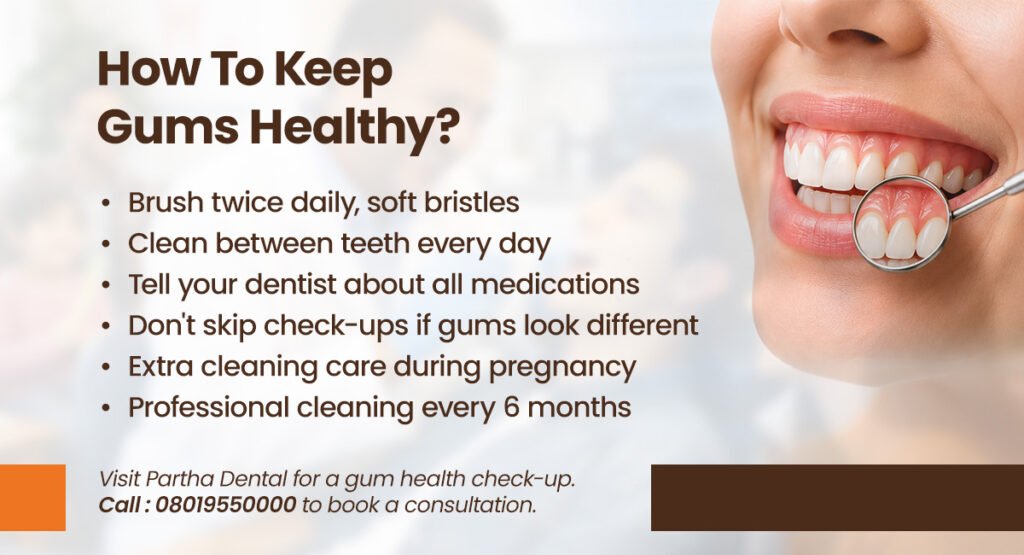
Regular professional cleaning every three to four months, rather than the usual six, becomes part of the management.
But when the tissue has grown to the point where it doesn’t reduce enough with conservative care, a gingivectomy may be needed. Gingivectomy means the surgical removal of excess gum tissue to restore the correct gumline.
Partha Dental covers this, including laser-assisted gum treatment where laser technology is used to remove or reshape the tissue with less bleeding and faster healing .
Note: After gingival enlargement treatment, the gum tissue can grow back if the original cause isn’t managed. Maintaining results requires addressing the underlying cause alongside the procedure itself.
Don’t Leave it Alone. Get Specialist Gum Care At Partha Dental.
Gingival enlargement that isn’t treated doesn’t stay the same. It gets worse. As the gum tissue grows over more of the tooth surface, cleaning that area becomes harder. And what starts as a gum appearance issue becomes a structural problem.
A study in Clinical and Experimental Dental Research found 73% of Indian adults reported no dental visit in the preceding five years. Gum conditions that would take one cleaning and some guidance to resolve at an early stage instead become surgical cases.
If your gums look different than they did six months ago, a gum assessment is the right next step. Partha Dental offers periodontal assessment and gum treatment, with branches across Koramangala, JP Nagar, Jayanagar, and HSR Layout.
Patients in Andhra Pradesh looking for the best dental hospital in Vijayawada can visit Partha Dental across four Vijayawada branches.
With over 15 lakh patients treated across South India, Partha Dental periodontal specialists handle gum conditions from early inflammation through to surgical management. Book a consultation at your nearest clinic. Call: 08019550000.
Frequently Asked Questions
My gums have been slowly growing over my teeth for months. Is that normal?
Gums don’t grow over teeth on their own. Something is driving it, whether plaque, a medication you take, or a hormone change. A dentist can find out which one.
My child’s gums swelled up during braces treatment. Should I be concerned?
Braces trap plaque in spots a toothbrush misses easily. When plaque stays there, gums swell. A professional clean usually settles it. Worth getting checked sooner rather than later.
My gums improved after a cleaning. Will the overgrowth come back?
That depends on the cause. If it was purely inflammatory and your cleaning habits have improved, it may not return. If the cause is a medication you’re still taking, or if plaque continues to build, regrowth is likely without regular professional cleaning.