








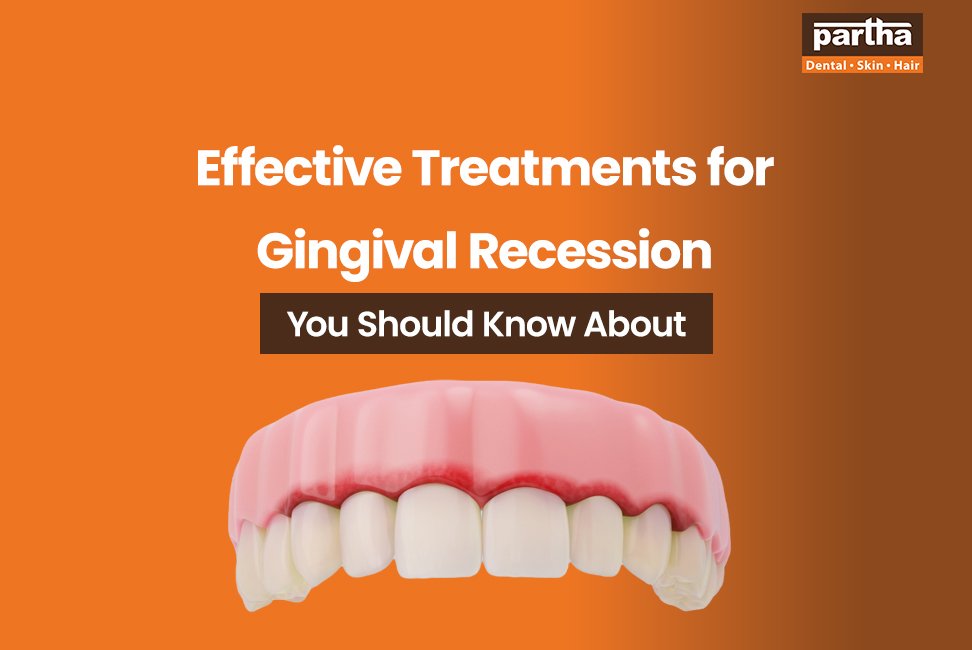
Treatments for gingival recession helps stop gum loss, reduce root sensitivity, and protect roots from more damage. The right treatment depends on the cause and severity of the problem. Mild recession can be treated with deep cleaning, and brushing correction. Moderate to advanced recession may need gum grafting, or periodontal surgery. A 2025 systematic review estimated a gingival recession of at least 1 mm in about 80% of people. (Source: Clinical Oral Investigations, 2025)
Partha Dental treats gum and periodontal problems using tools such as OPG X-rays, Digital RVG, dental lasers, 3D intraoral scanners, and 3D CBCT for diagnosis and planning. These details help because gum recession treatment needs proper assessment before choosing between cleaning, laser, grafting, or surgical coverage.
This guide explains the available treatment options, what suits you, and how to know when a simple cleaning from the best dental clinic in Hyderabad is enough.
What Is Gingival Recession And Why Does It Need Treatment?
Gingival recession happens when the gum margin moves down and exposes more of the tooth root. It needs treatment because exposed roots are more sensitive, more likely to develop root decay, and harder to protect if recession keeps progressing.
This is also why patients should not treat it like a minor cosmetic issue only. Recession often overlaps with plaque build-up, brushing trauma, tobacco use, or thin gum tissue.
Which Non-Surgical Treatments For Gingival Recession Work In Early Cases?
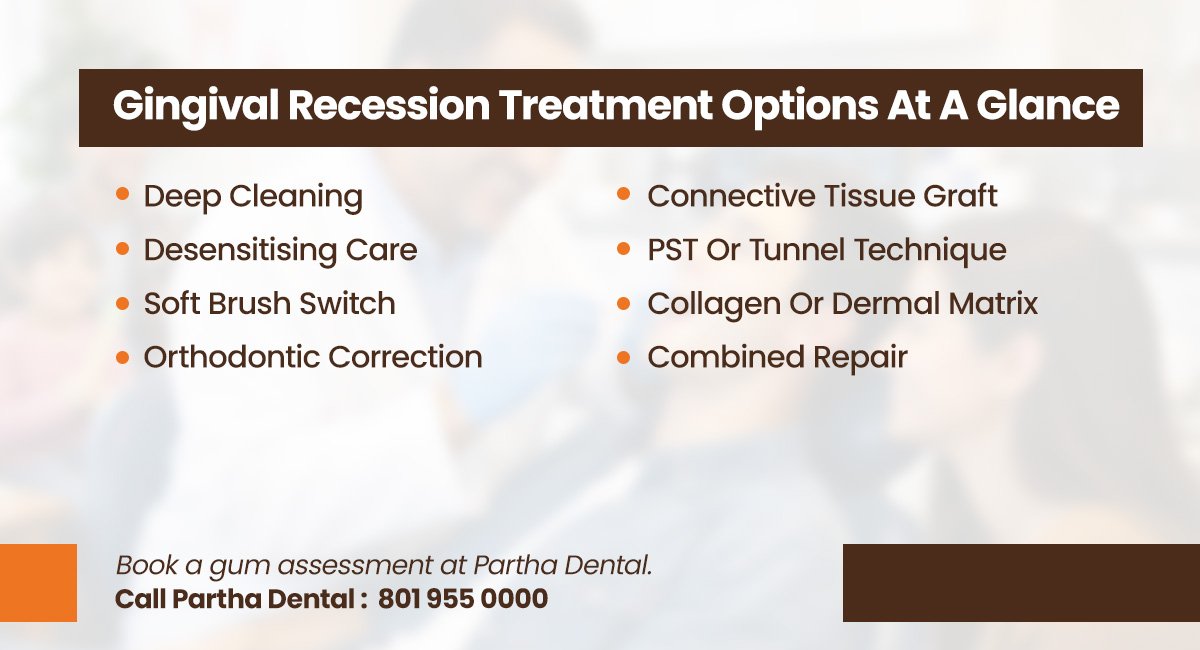
Non-surgical treatment for gingival recession works best when the recession is mild, the cause is still active, and the main goals are to stop progression, reduce inflammation, and lower sensitivity. They do not regrow lost gum tissue, but they often form the first stage of care before anyone considers surgery.
Scaling And Root Planing
Scaling and root planning is the first step taken when plaque, tartar, or gum disease is pushing the recession forward. It removes deposits from below the gum line and smooths the root surface. This treatment by a dental clinic in Bangalore, or a dental clinic in Chennai is important when recession comes with bleeding gums, or bad breath.
Desensitising Agents And Behaviour Correction
When exposed roots react to cold, hot, or sweet foods, a desensitising toothpaste, or bonding agents are used to reduce discomfort. Also the brushing method is corrected using a soft-bristled brush and less pressure to protect the gum line.
Orthodontic Correction In Selected Cases
Orthodontic treatment by the best dental clinic in Telangana can help in recession cases where tooth position is increasing stress on the gum margin. Moving teeth into a more stable position can reduce further trauma.
Is Gum Grafting Still The Main Surgical Treatment For Gingival Recession?
Gum grafting is the best surgical option when proper root coverage is needed, especially in moderate to advanced recession. Among the various gum graft treatments, connective tissue grafting combined with a coronally advanced flap has the strongest base with reliable results.
Connective Tissue Graft
This is often called the gold standard because it has strong data behind it for stable root coverage and tissue thickness gain. Tissue is usually taken from the palate and placed over the exposed root under the existing gum. This works particularly well in single-tooth recession and in cases where aesthetics matter.
Coronally Advanced Flap
A coronally advanced flap repositions the existing gum tissue higher over the root surface. It is often combined with a connective tissue graft for better predictability, but in selected cases it may also be used on its own. This is one of the core procedures patients should know because it directly addresses visible root exposure rather than only controlling inflammation.
Can Laser Treatment Help In Gingival Recession Cases?
Laser treatment helps in bacterial reduction, inflamed tissue management, and provide patient comfort but it does not replace grafting when actual tissue coverage is needed. In early or inflamed cases, lasers may support deep cleaning and healing. While in a deeper recession, grafting or flap-based surgery remains the best path .
Which Treatment For Gingival Recession Is Right For Your Case?
A right gingival recession treatment varies based on the depth of recession, gum thickness, the number of teeth involved, and whether the cause has already been controlled. This is why a professional clinical exam matters .
| Case Pattern | Treatment Direction |
| Mild recession with plaque or gum inflammation | Scaling and root planing, sensitivity control, habit correction |
| Early recession from aggressive brushing | Soft-brush correction, desensitising support, review visits |
| Moderate single-tooth recession | Connective tissue graft with or without coronally advanced flap |
| Multiple adjacent recession defects | Tunnel or graft-based root coverage plan |
| Recession with notched tooth surface | Combined restorative and surgical approach |
| Recession with bone-loss | Selected GTR-based planning |
| Selected minimally invasive cosmetic demand | PST discussion in suitable cases |
A combined restorative and surgical treatment helps when recession also includes a non-carious cervical lesion. In these cases, adhesive restoration may be placed first or combined with surgical correction to support a better result.
How Do You Stop Gingival Recession From Getting Worse After Treatment?
The gum remains vulnerable if plaque control, brushing technique, smoking habits, or bite-related trauma are left unchanged. Always use a soft-bristled brush, clean gently along the gum line, and attend follow up visits. If tooth position is part of the problem, orthodontic review may also matter.
Treat Gingival Recession At Partha Dental
Many people wait because the gums do not hurt all the time, but delay means more root exposure and complex treatment later.
Partha Dental adds real treatment access with 28+ years of experience, and gum-care support that includes dental lasers and digital imaging. For patients looking for the proper gum assessment at the best dental clinic in Hyderabad, or a clear treatment plan, from a dental clinic in Bangalore, or a dental clinic in Chennai, call 801 955 0000 and book a nearby appointment at Partha Dental.
Frequently Asked Questions
Can receding gums grow back on their own?
Lost gum tissue does not grow back on its own. Treatment stops further loss, reduces sensitivity, and restores coverage with grafting or surgery.
What is the best treatment for gingival recession?
The best treatment for gingival recession depends on severity and cause. For predictable root coverage in moderate to advanced cases, connective tissue grafting with a coronally advanced flap performs well.
Is gum graft surgery painful?
Gum graft is performed under local anaesthesia, so it does not hurt during the procedure. Mild soreness for a few days is common after surgery, if tissue is taken from the palate.
How long does it take to heal after gum recession surgery?
Healing after gum recession surgery takes about 1 to 2 weeks, while tissue maturation continues for weeks to months depending on the procedure.
What happens if a gingival recession is left untreated?
Sensitivity can worsen, root decay risk rises, and supporting tissues may continue to deteriorate if the underlying cause for gingival recession is not treated. Thus, the damage becomes harder to correct.