












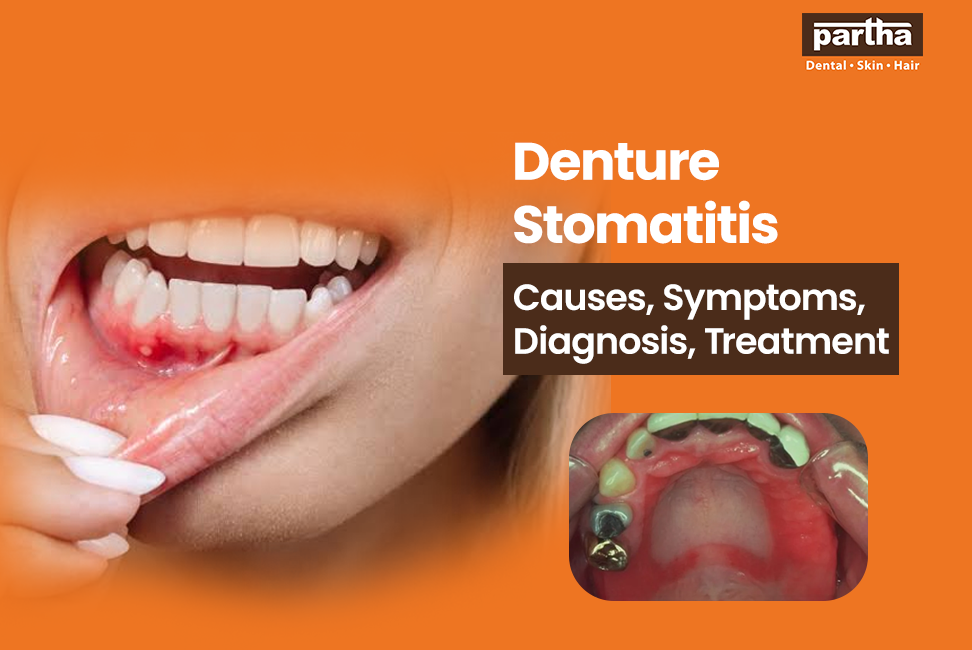
Your gums look red and angry under your denture, and you have no idea why. Maybe it stings a little when you eat. Maybe it doesn’t hurt at all, and your dentist is the one who pointed it out.
That’s denture stomatitis: a gum inflammation under a denture, almost always caused by an overgrowth of a fungus called Candida that already lives in small amounts in your mouth. Most denture stomatitis cases clear up well once they’re properly treated.
Partha Dental checks for this routinely during denture assessments across its clinics in Hyderabad using digital diagnostics to evaluate both the gum tissue and the denture fit in the same visit. Here’s what actually causes denture stomatitis, how to spot it, how it gets diagnosed, and what fixing it involves.
What Causes Denture Stomatitis?
Denture stomatitis causes trace back almost entirely to one thing: an overgrowth of Candida, a fungus that’s normally harmless in small amounts. This condition affects about between 17% and 75% of denture wearers, with poor denture hygiene, long-term wear, and ill-fitting dentures.
A few habits make this fungus far more likely to take hold.
- Sleeping in the Denture: The gum underneath never gets a break from moisture and pressure.
- Skipping Daily Cleaning: Plaque and fungal buildup settle into the denture surface fast.
- A Loose or Old Denture: Friction from a poor fit damages the gum, making infection easier.
- Dry Mouth: Less saliva means less natural defense against fungal growth.
- Diabetes or a Weakened Immune System: Both make fungal overgrowth more likely to take hold.
None of these guarantee the condition will develop. Two people wearing the exact same type of denture can have completely different outcomes based on how well it’s cleaned and how often it comes out at night.
What Are the Symptoms of Denture Stomatitis?
In most cases, denture stomatitis symptoms show up as nothing at all. Plenty of patients find out about the issues only during a routine exam, when a dentist spots redness. When symptoms do appear, watch for these:
- Redness or swelling shaped exactly like the denture’s contact area
- A burning or tingling feeling on the roof of the mouth
- Small red spots or pinpoint bleeding
- Soreness that builds the longer the denture stays in
Regular check-ups at the best dental clinic in Kukatpally matter because this condition hides so well. A dentist can catch it long before discomfort ever starts.
It’s worth knowing that the severity varies quite a bit between patients. Some people have mild redness that a dentist notices and treats easily in one visit. Others have more widespread inflammation that takes longer to resolve, especially if the denture has been ill-fitting for years.
How Is Denture Stomatitis Diagnosed?
A proper denture stomatitis diagnosis comes from a clinical exam. The clearest sign a dentist looks for is redness that follows the exact shape of the denture’s contact surface on the gum. The exam usually covers two things together.
- The dentist checks the gum tissue for the visual pattern described above.
- They also check the denture’s fit and condition, since a poor fit is often what’s driving the problem in the first place.
If the case looks unusual or doesn’t respond to early treatment, a swab might be taken to identify exactly what’s growing.

What Is the Treatment for Denture Stomatitis?
Denture stomatitis treatment usually works on two fronts at once: clearing the infection and fixing the denture issue feeding it. Treating just one rarely solves it for good.
For the infection itself, a dentist may prescribe an antifungal medication, applied either to the gum or to the denture’s fitting surface. The exact medication and how long it’s used depends entirely on how advanced things are. The denture side of treatment usually involves a few changes:
- A Proper Cleaning Routine: Done daily, this clears the buildup that feeds the fungus.
- Removing the Denture at Night: This single habit speeds up healing more than people expect.
- Relining or Refitting: A loose denture often just needs adjustment, not replacement.
- Replacing an Old Denture: Sometimes a worn acrylic denture is simply past saving.
Most people see real improvement with proper care. It can return if the hygiene or fit problem underneath never gets addressed, which is exactly why dentists at the best dental clinic in Hyderabad treat both sides together rather than chasing the infection alone.
Get Your Denture Checked at Partha Dental.
If your gums look off under your denture, or it’s simply been a while since anyone checked, that’s worth sorting out now rather than later. Partha Dental prosthodontic teams examine both the gum tissue and denture fit in the same visit, using digital diagnostics to spot fit issues that aren’t obvious to the eye.
Anyone exploring complete dentures in Hyderabad, whether for a first denture, a reline, or a full replacement, can get assessment and treatment handled in one visit across Partha Dental clinics in the city. The network spans 120+ clinics across South India, so the same standard of care applies no matter which branch is closest to you.
If you’re searching for the best dental clinic in Hyderabad for a denture concern, an actual exam beats guesswork every time. Call: +91 8019550000 and book an appointment.
Frequently Asked Questions
Is denture stomatitis contagious?
You can’t pass this on to anyone. The fungus causing it already lives in your mouth in small amounts. It only becomes a problem when something lets it grow unchecked.
Can it go away without treatment?
Waiting it out rarely works. The fungus doesn’t clear on its own, and without fixing your cleaning routine or getting proper treatment, it tends to stick around.
Should I stop wearing my denture entirely?
Most people don’t need to stop completely. Taking it out every night while treatment’s ongoing usually gives the gum tissue enough of a break to start healing properly.
Is this the same as a regular denture sore?
They feel similar but they’re not the same thing. A sore is one small spot getting rubbed raw. This condition spreads across the whole area where the denture sits.
Will a new denture stop it from coming back?
A better-fitting denture makes a real difference. If your old one was loose or worn, fixing the fit removes one of the main reasons this condition keeps returning.