













Table of Contents
Truth hits differently when you realize how often we brush off sore gums. Blood on the toothbrush? Eh. Must’ve scrubbed too rough, maybe.
Not always. Could be nothing much… yet occasionally it’s your mouth quietly begging for attention. That small sign might mean something bigger.
Every day at Partha Dental, people walk in saying they hoped things would get better without help. Here is the truth silent problems in your gums do not vanish by waiting. Ignoring them just lets quiet damage grow.
One way to spot trouble is noticing blood after brushing. Sometimes redness shows up before pain does. A shift happens once swelling sticks around too long. Instead of searching online, a phone call might be smarter. Early changes include tender spots along the edges. Gums pull back differently when things get serious. Seeing a dentist makes patterns clearer than guesses ever could.
1. Bleeding Gums Explained.
Blood seeping from gum tissue? That is all it means. It happens during brushing. Flossing can trigger it too. Soft tissues react easily. Pressure isn’t always needed. A slight touch leads to red traces now and then.
Bleeding now and then might not mean trouble yet if it keeps happening, something’s off. Gums that are truly healthy stay clean without a drop. Always.
Bleeding gums often come from a few common problems people see again and again.
Plaque buildup due to poor oral hygiene.
Pressing hard while brushing? Your brush isn’t meant to scrape off charred leftovers. Gentle strokes work better than force. Teeth aren’t pots needing vigorous scraping. A soft touch cleans just fine. Rough brushing can harm more than help. Think care, not pressure. The goal isn’t power, it’s protection.
● Skipping flossing (yes, flossing matters)
● Vitamin deficiencies, including Vitamin C
● Hormonal changes (pregnancy, puberty)
When stress sticks around, the body fights fewer germs. A weakened shield means more room for illness to sneak in.
Bleeding when you brush? That’s often how gum problems start. Most times it points to gingivitis lurking underneath a small red flag nobody really notices until it worsens. Starts quiet, then grows persistent without a sound.
Book your free consultation today!
2. Early Signs of Gum Disease That Matter
Begins quietly, long before it gets bad. Most overlook these hints: a sign here, then another there.
- Bleeding gums while brushing or flossing
- Red, swollen, or tender gums
- Bad breath that doesn’t leave (even after mouthwash)
- Gums that look shiny or puffy
- Mild discomfort while chewing
Fixing gum issues now? It’s much like stopping a drip before the roof gives way. Simple. Costs less. Completely possible.
3. Gum Disease Progression: Mild to Severe.
Gum problems take time to show up. Starting slow, they move through phases, each becoming tougher and pricier to handle. Though silent at first, the shifts add up without warning, turning small issues into deeper trouble.
Here’s the spot where bleeding gums tend to hang out.
- Gums are inflamed and bleed easily
- No bone loss yet
- With the right attention, it can always go back to how it was
Many stick around too long reality just gets in the way.
Deeper still, the harm begins to spread.
- Gums start to separate from teeth
- Formation of pockets around teeth
- Early loss of bone density
Only a dentist can fix this now scrubbing your teeth more won’t help. Brushing too hard might even make things worse.
This area carries risk.
- Severe gum infection
- Loose or shifting teeth
- Pain while chewing
- Risk of tooth loss
This leads straight into the main issue…
4. What Is Periodontitis?
Bone damage begins when bacteria sneak beneath the gums, turning mild irritation into deeper trouble. This stage shows up after softer issues get worse without notice. Teeth lose firmness as the foundation weakens under silent attack. Infection digs in where brushing can’t reach easily. Support structures break down once healthy tissue turns inflamed and fragile.
Gums that bleed a little might go away by themselves. Not so with periodontitis it stays unless treated properly. A dentist must step in for things to get better.
- Persistent bleeding gums
- Deep gum pockets
- Gums pulling back, making teeth appear longer
- Loose or wobbly teeth
- Pus between teeth and gums
- Chronic bad breath or bad taste
- Pain while biting or chewing
When gums bleed, that might be a signal. But when it’s periodontitis, things have already gone too far.
5. Bleeding Gums and Periodontitis: How They Differ.
Finding clarity is possible. A single moment can change everything when understanding finally arrives. Confusion fades slowly at first, then suddenly disappears completely.
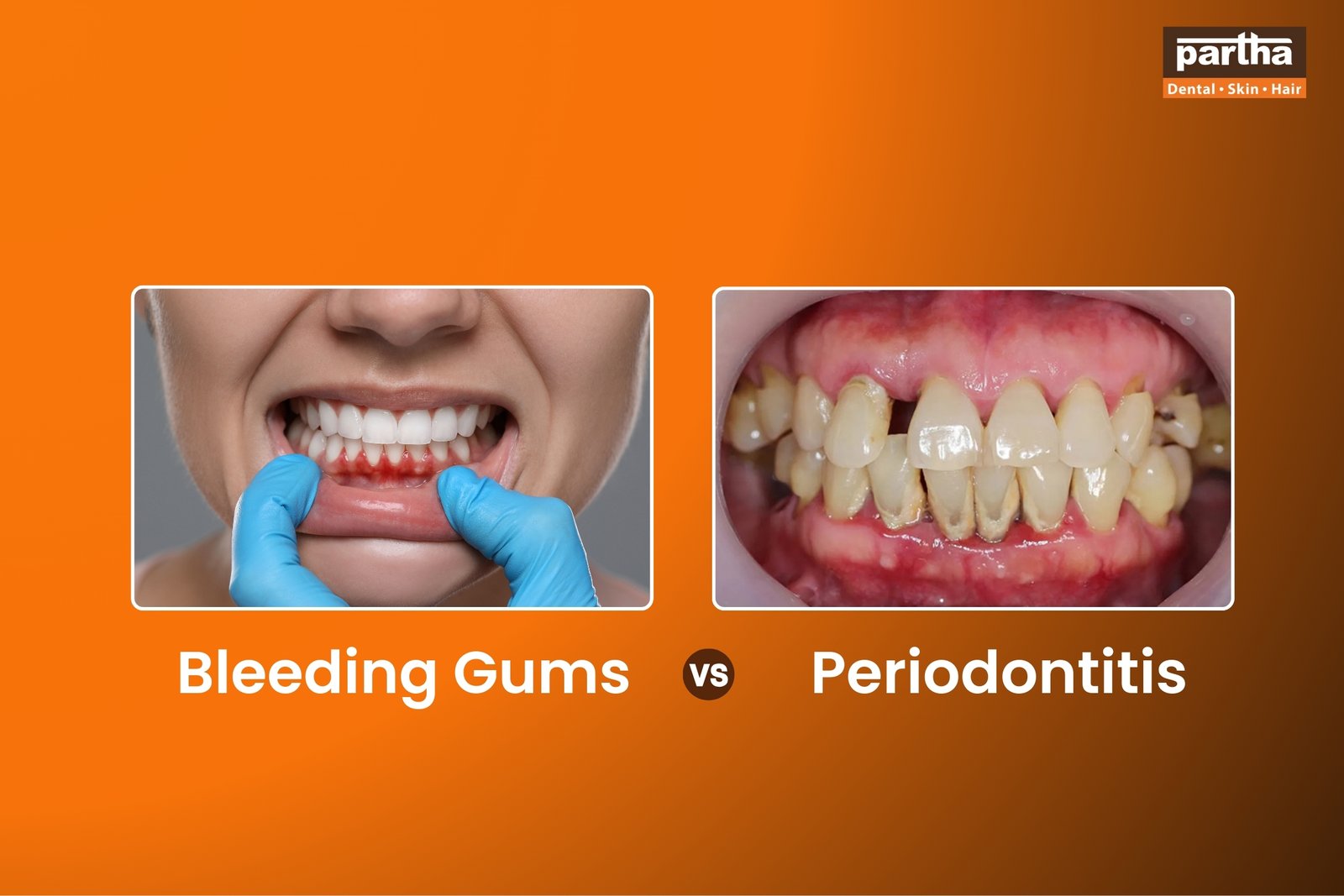
Bleeding Gums vs Periodontitis
| Feature | Bleeding Gums (Gingivitis) | Periodontitis |
| Cause | Plaque buildup due to poor oral hygiene | Long-standing plaque leading to severe gum infection |
| Pain | Usually mild or absent | Moderate to severe |
| Reversibility | Yes, completely reversible | No, but can be managed and controlled |
| Bone Loss | No bone loss | Yes, bone supporting the teeth is affected |
| Treatment | Improved oral hygiene, professional cleaning | Deep gum therapy, scaling & root planing, medications |
Bleeding gums show up first, yet that does not always point to periodontitis. Every case of periodontitis begins this way, though many times the bleed is harmless.
6. Gum Infection Treatment That Works.
A proper fix for gum infections relies on where things stand with the illness. What works changes as it moves forward.
- Professional dental cleaning
- Improved brushing and flossing technique
- Antibacterial mouthwash
- Diet correction and vitamin support
Weeks pass before changes show up if visits stay regular.
7. Treatment for Periodontitis
This requires a more structured approach:
- Scaling and root planing (deep cleaning)
- Medication (local or systemic)
- Laser gum treatment (where required)
- Surgical procedures in advanced cases.
Each smile at Partha Dental gets its own plan. Gum care fits differently for everyone. No standard route here.
8. Bleeding Gums and Periodontitis Connection?
Short answer: Yes.
Gums that bleed are usually where trouble begins. Ignoring warnings and plaque hardens into tartar. Bacteria thrive. Infection creeps lower when left unchecked.
A small cleanup might have solved it now it demands weeks of care instead.
Stop Gum Disease Without Extreme Routines.
Small steps work better than big leaps.
- Brush twice daily with a soft-bristled toothbrush
- Floss once a day
- Use an antiseptic mouthwash
- Quit smoking or tobacco
- Get dental checkups every 6 months
A stitch in time saves nine early care cuts cost, effort, and pain.
9. Visit Partha Dental When You Need Dental Care
Book a dental visit if:
- Bleeding gums last more than a week
- Bad breath won’t go away
- Gums look swollen or receding
- Teeth feel sensitive or loose
Early care keeps teeth stronger and costs lower.
Spotting gum issues early means less pain, fewer missing teeth, and lower costs. Strong teeth rely on healthy gums. When redness lingers, a closer look makes sense.
Your grin earns that care. Done right, it shows. Call us 04041420000 now to book an appointment.
10. Frequently Asked Questions (FAQs)
Frequent bleeding often points to gingivitis. Ignoring it isn’t wise.
Yes when caught early with proper care and professional cleaning.
Not fully reversible, but manageable with consistent treatment.
Yes. Gum inflammation links with blood sugar issues and heart risks.
Twice a year works best sooner if bleeding or swelling appears. Read more.
Dental Questions? We’re here to help!
Disclaimer:
The prices mentioned in this blog are indicative and may vary based on the severity of the condition, the technology used, and materials recommended by the dentist. They are accurate as of the date of publishing and are subject to change based on clinic policy. Third-party or AI-generated estimates may not reflect actual clinic pricing. For accurate cost details, please visit your nearest Partha Dental clinic.