










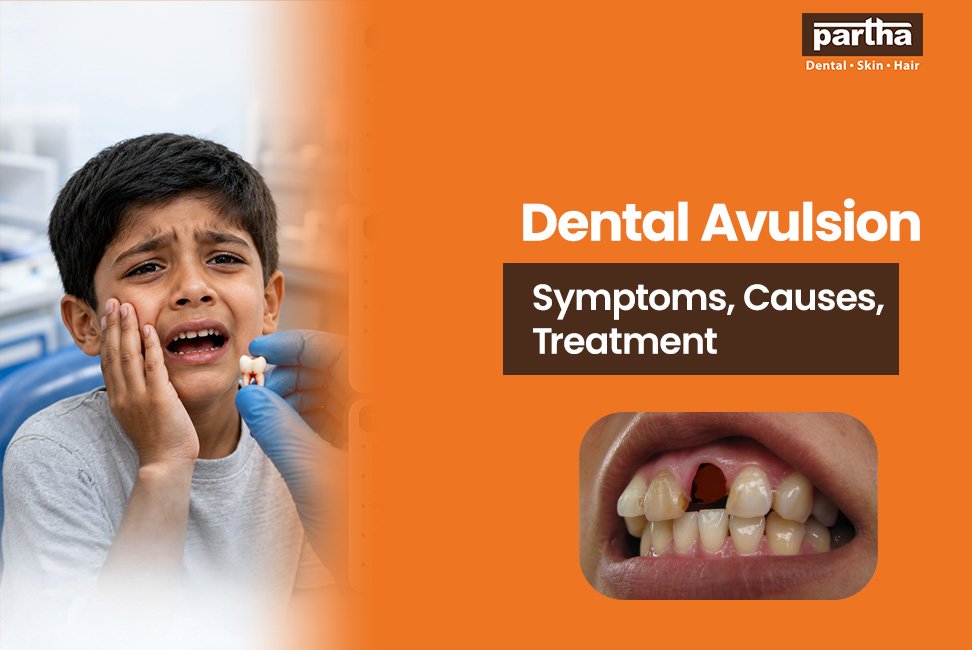
You’ve got sixty minutes. After that, the tooth is almost certainly gone for good. Dental avulsion is a knocked-out tooth. Not loosened. Not chipped. Completely out of the mouth.
It’s the most serious dental injury a person can face, and also the most time-critical. Most people who go through it don’t know what to do in the first few minutes, which is exactly when the outcome gets decided.
At Partha Dental, dental trauma cases are handled across 120+ clinics by experienced dentists who know how to assess these injuries quickly. This blog covers everything you need to understand before an emergency happens: what dental avulsion is, what causes it, whether the tooth can be saved, and what happens if it isn’t treated.
What Dental Avulsion Actually Is?
Dental avulsion is the complete separation of a tooth from its socket in the jawbone. The whole tooth comes out: the crown, which is the part visible in the mouth, and the root, which sits hidden inside the bone.
A tooth isn’t held in place by bone alone. A layer of fibres called the periodontal ligament connects the root to the surrounding bone. Think of it as a cushioning layer that absorbs bite pressure.
- When a tooth avulses, those fibres tear completely.
- The nerve inside the tooth dies almost immediately.
- The socket bleeds.
That’s why avulsion is different from every other dental injury. An avulsed tooth has nothing left connecting it to the mouth.
What You’ll See And Feel in a Dental Avulsion?
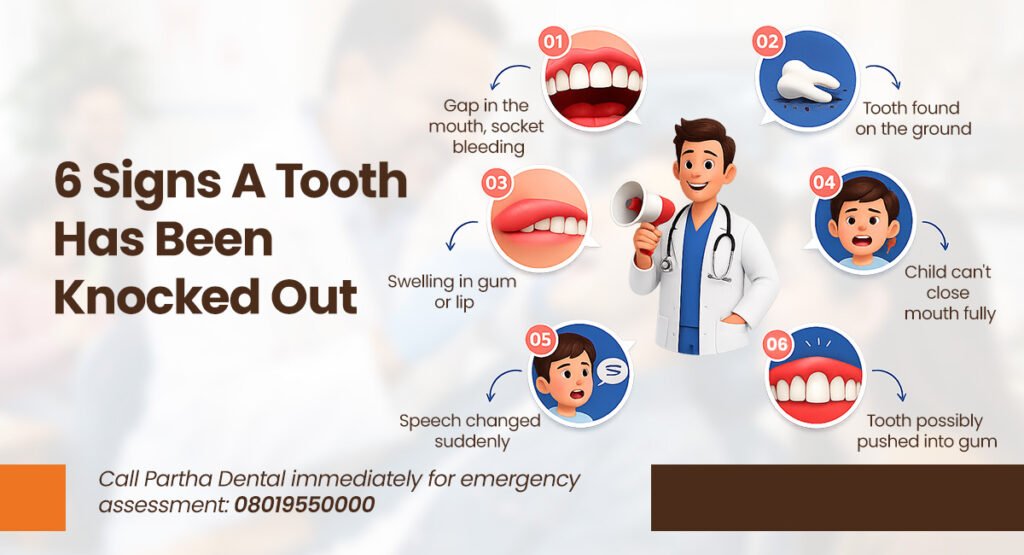
The first dental avulsion sign is the gap. There’s an empty socket where a tooth used to be, and it’s bleeding. Most adults feel sharp pain immediately. Here are the dental avulsion symptoms to recognise:
- An empty, bleeding socket in the upper or lower jaw
- The tooth visible somewhere nearby, on the ground, in clothing, or in the child’s hand
- Swelling around the gum and sometimes the lip or cheek
- Trouble closing the mouth or biting down
- Speech that sounds different
According to a systematic review in the Journal of Clinical and Diagnostic Practice, dental trauma prevalence in Indian children and adolescents is 11%. Falls and sports injuries lead the dental avulsion causes, and most injuries go untreated because the people around the child didn’t know what to do at the time.
Why Does Dental Avulsion Happen?
A tooth doesn’t come out without real force. But the force needed depends on how healthy the tooth already was. School ground falls are the most common dental avulsion causes,in children across India.
- Cricket and contact sports carry consistent risk for older children and teenagers.
- Two-wheeler accidents are a major cause of adult avulsion cases. A sudden direct impact to the face during a road accident can knock out a front tooth instantly.
- And an already weakened tooth doesn’t need much force at all. A tooth with deep untreated decay or a large old filling has compromised structure.
This is one reason why routine dental check-ups by the best dental clinic in Chennai matter even when nothing hurts.
Can The Tooth Actually Be Saved?
Sometimes yes, sometimes no. The answer depends on four things, and two of them are entirely in your control in the first few minutes.
- Time- The periodontal ligament fibres on the root surface need to stay alive for the tooth to reattach after replantation . Those fibres survive for roughly 30 to 60 minutes in a moist environment. After two hours outside the mouth with no moisture, they’re dead.
- Storage- Milk is the best option. Its chemical makeup is close enough to the root surface environment to keep the fibres alive longer than water does. Saline works too. A dry tissue, dry cloth, or a sealed bag with no liquid destroys those root surface cells within minutes.
- Whether it’s a permanent tooth- Baby teeth are never replanted. If a child loses a baby tooth to avulsion, stop the bleeding, keep the child calm, and get to a dentist at the best dental clinic in Hyderabad to confirm the socket is clear.
- The condition of the root – A severely fractured or badly contaminated root may not be suitable for replantation even with good timing. The dentist makes that call after examining the tooth and socket.
What The Dentist Does to Treat Dental Avulsion?
When you walk in, the dentist doesn’t start with paperwork. The dental avulsion treatment starts with socket getting examined first, the surrounding teeth get checked for damage, and an X-ray confirms what the injury has done to the bone.
- If replantation is possible, the dentist cleans the tooth carefully and places it back into the socket.
- Then a splint, which is a thin flexible wire fixed with composite resin across the teeth on either side, holds the replanted tooth stable. It stays on for one to two weeks while the fibres begin to reattach.
- Root canal treatment follows in almost every case. The dentist removes the dead nerve tissue and seals the canal, usually within the first week or two.
Get Emergency Dental Care At Partha Dental.
If a tooth gets knocked out, the clinic is the next call after picking up the tooth.
Partha Dental is the best dental clinic in Hyderabad for same-day dental trauma assessment, covering replantation, splinting, post-trauma root canal, temporary tooth placement, and implant planning for permanent tooth loss.
Those in Bangalore can reach the best dental hospital in HSR Layout at Partha Dental HSR Layout branch beside Cars24 Showroom, next to Tawa Ghar Ka Restaurant.
Partha Dental has treated over 15 lakh patients across South India. Call 08019550000 or walk into your nearest branch.
Frequently Asked Questions About Dental Avulsion
My child’s tooth just came out. What are the two things I do right now?
Pick the tooth up by the white crown part, not the root. Don’t scrub it. Rinse it under cold running water for ten seconds, then either gently push it back into the empty socket or drop it into a small cup of cold milk. Drive to a dentist immediately.
The tooth has been out for more than an hour. Should I bother going?
Yes. Go anyway. The dentist examines the root surface and decides whether replantation is still viable. Don’t make that call yourself.
Why can’t a baby tooth be put back in?
The permanent tooth is developing in the bone directly below it. Replanting a baby tooth risks injuring that developing tooth. Take the child to a dentist to check the socket is clear and no fragments remain.
What if I can’t find milk or saline to store the tooth in?
Tuck the tooth between the gum and the inside of the lower lip. Saliva keeps the root surface cells alive for a short period.