











Mouth ulcers can show up out of nowhere. Once they do, eating, talking, even brushing your teeth turns into a problem. That small sore inside your cheek or under your tongue has a way of throwing off your whole day.
Glycerine helps because it coats that spot. It blocks food and saliva from touching the raw tissue. That’s where most of the sting comes from.
At Partha Dental, the best dental clinic in Bangalore and Hyderabad, a mouth ulcer isn’t treated as a standalone complaint. The dentist checks the sore itself. The dentist also checks what’s sitting right next to it. Often the real cause is a sharp tooth edge, a rough filling, or a denture that doesn’t fit well.
Here’s what’s ahead:
- The real benefits of glycerine
- The right way to apply it
- How long healing takes
- What to do if it isn’t enough
How to heal mouth ulcers, done properly, starts below.
What Are the Benefits of Using Glycerine for Mouth Ulcers?
Glycerine eases pain fast and protects the sore while it heals. Here’s why it works, and what it looks like.
Why the Coating Stops the Pain?
Glycerine is a thick, clear liquid. It pulls in moisture and holds onto it.
Dab a little on the ulcer and it forms a thin film over the raw spot. That film keeps food, salt, and saliva off the sore. It also draws a little fluid out of the swollen tissue nearby. The area calms down instead of staying puffed up.
What You’re Treating?
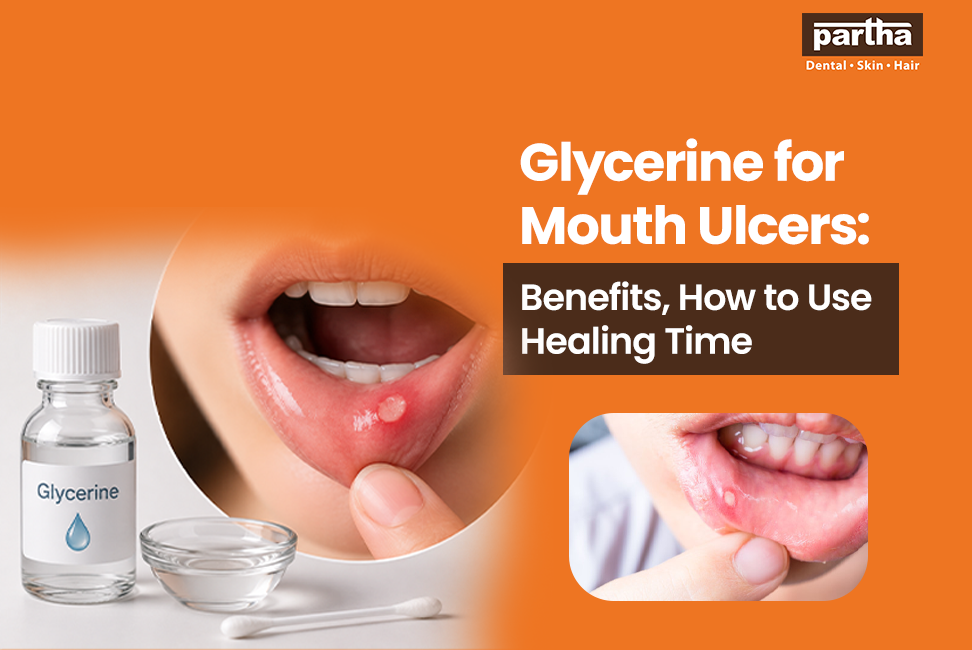
Most minor mouth ulcers look like this:
- Small and round, usually under half a centimetre wide
- Pale yellow or white centre with a red edge
- Found inside the cheek, under the tongue, or along the gumline
Glycerine works well on this type of sore. It won’t help with:
- Cold sores, since these come from a virus and sit on the lips
- Ulcers that are unusually large, deep, or show up in clusters
Five Specific Benefits
Pain relief comes first, often within minutes. Beyond that, glycerine:
- Protects the sore from spicy or acidic foods
- Keeps the area moist, so it doesn’t crack open again
- Eases swelling a little, since the drying effect lowers pressure
- Costs almost nothing and needs no prescription
- Works across most ages, including kids, with careful adult help
Where Glycerine Falls Short?
Glycerine has limits. It won’t:
- Cure the real trigger, whether that’s a sharp edge, stress, or a nutrient gap
- Work the same way on bigger ulcers, or ones that keep coming back
- Fix anything if the real cause stays the same
That’s a different problem. It’s covered further down.
How Do You Use Glycerine on a Mouth Ulcer?
Apply it with a cotton swab, two to three times a day. The order matters more than the frequency.
The Right Way to Apply It
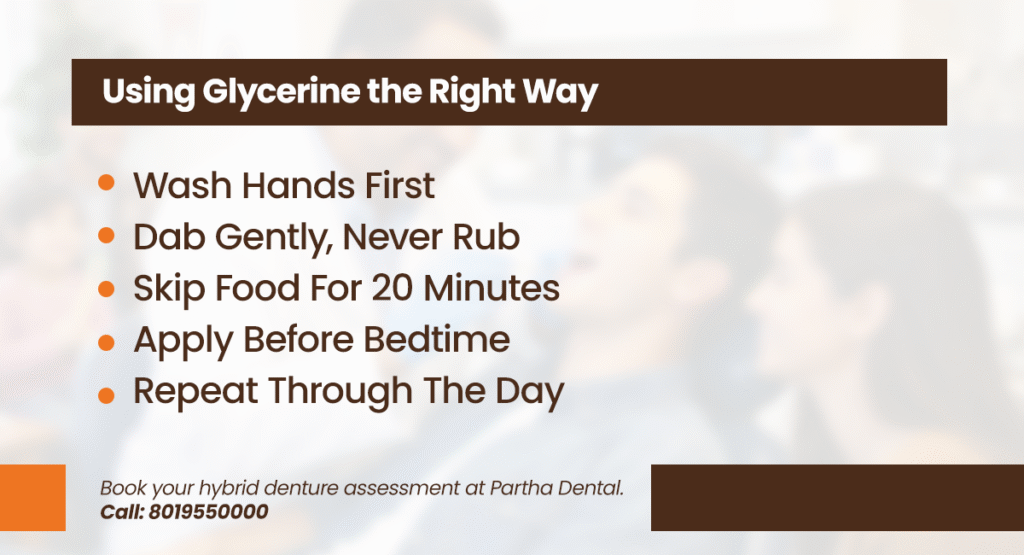
This is the core routine for how to heal mouth ulcers at home:
- Wash your hands before touching the swab or your mouth
- Dip it into pure, food-grade glycerine, never the cosmetic or industrial kind
- Dab it onto the ulcer gently. Don’t rub it in
- Let it sit for a couple of minutes without rinsing
- Skip food or drink for fifteen to twenty minutes after
Why Nighttime Application Works Better?
Your mouth stays mostly still while you sleep. So the glycerine stays on the ulcer longer. There’s less rubbing from talking or chewing too.
Apply it once after meals during the day. Apply it once more right before bed. That one nighttime dose usually does more than two rushed daytime ones.
How Long Does It Take Glycerine to Heal a Mouth Ulcer?
Most small ulcers heal within seven to ten days. Glycerine won’t speed that up much, but it eases the wait.
Typical Healing Range for Minor Ulcers
- Pain eases within two to three days
- Full healing usually takes seven to ten days
- Glycerine helps you get through that window with less pain
What Stretches That Timeline?
- The size and depth of the ulcer
- A sharp filling edge or a rough spot on braces catching it again and again
- Repeated irritation from eating or talking
When “No Change After a Week” Means Stop Waiting?
No change in pain or size after a week? Stop treating it at home. That’s the point to get it checked instead. A quick visit to the best dental clinic in Bangalore can confirm what’s causing it.
What’s the Next Step If Glycerine Isn’t Working?
See a dentist if any of these show up:
- The ulcer lasts more than ten to fourteen days
- It keeps coming back in the same spot
- It comes with swelling, pus, or fever
Glycerine won’t do much for any of these.
What a Dentist Checks For?
A dentist usually checks:
- The ulcer itself
- The tooth, filling, or denture edge right next to it
- Any wire or bracket from braces catching the tissue
- Early tooth decay near the sore
This is a standard part of a general dentistry check at Partha Dental. The same happens at the best dental clinic in Bangalore. Dentists there trace repeat ulcers back to a sharp edge or a loose denture. The same goes for the best dental clinic in Hyderabad.
Recurring ulcers in the same spot are rarely random. Smoothing a sharp edge or fixing a denture usually breaks the cycle in one visit.
Book a Consultation with Partha Dental Now!
Glycerine won’t cure a mouth ulcer. But it takes the edge off while your body heals. Apply it right, two to three times a day, and most small ulcers settle within a week to ten days.
Home care not working after a week? Or the ulcer keeps coming back in the same spot? That’s a sign it’s more than a routine sore. Book a consultation instead of waiting longer.
Patients checking Partha Dental the best dental clinic in Hyderabad for a second opinion usually start with a simple oral exam. Nothing invasive. The same goes for patients in Bangalore.
Book a consultation at your nearest Partha Dental clinic before the next ulcer shows up.
Call the best dental clinic in Bangalore or Hyderabad at +91 8019550000.
Frequently Asked Questions
Can Children Use Glycerine for Mouth Ulcers?
Yes, in small amounts with an adult watching. Stick to food-grade glycerine only. If a child keeps getting ulcers, that’s worth a dental check-up rather than repeated home treatment.
Is Glycerine Better Than Saltwater for Mouth Ulcers?
Not better, just different. Saltwater cleans and fights bacteria. Glycerine soothes and protects after. Many people rinse with saltwater first, then apply glycerine for comfort.
Is It Safe if I Accidentally Swallow a Little Glycerine?
A small accidental amount of food-grade glycerine is usually fine. Just don’t swallow it on purpose or in larger amounts. Spit out the extra where you can.
How Many Times a Day Should I Apply Glycerine?
Two to three times a day covers most cases well. Once after meals and once before bed gives it the longest, steadiest contact time.
When Should I See a Dentist Instead of Waiting for the Ulcer to Heal?
See a dentist if it lasts beyond ten to fourteen days, keeps coming back, or shows up with swelling, pus, or fever.
Does Glycerine Work on Cold Sores Too?
No. Cold sores are viral and sit on the lips. Mouth ulcers form inside the mouth and aren’t contagious. Glycerine soothes the ulcer, not the virus behind a cold sore.