










You looked into braces once. And you quietly decided it wasn’t for you: the brackets, the wires, the months of looking like a teenager in board meetings.
Don’t worry, orthodontics doesn’t look like that anymore. Invisalign moves teeth using a series of clear removable trays, each one worn for one to two weeks before switching to the next. No brackets. No wires.
The Invisalign planning at Partha Dental happens entirely using iTero intraoral scanning and ClinCheck digital planning, a 3D software so you can see the projected final position of your teeth before you commit to anything.
This blog covers exactly why invisalign is the future of orthodontics and how to tell if it’s right for your specific case.
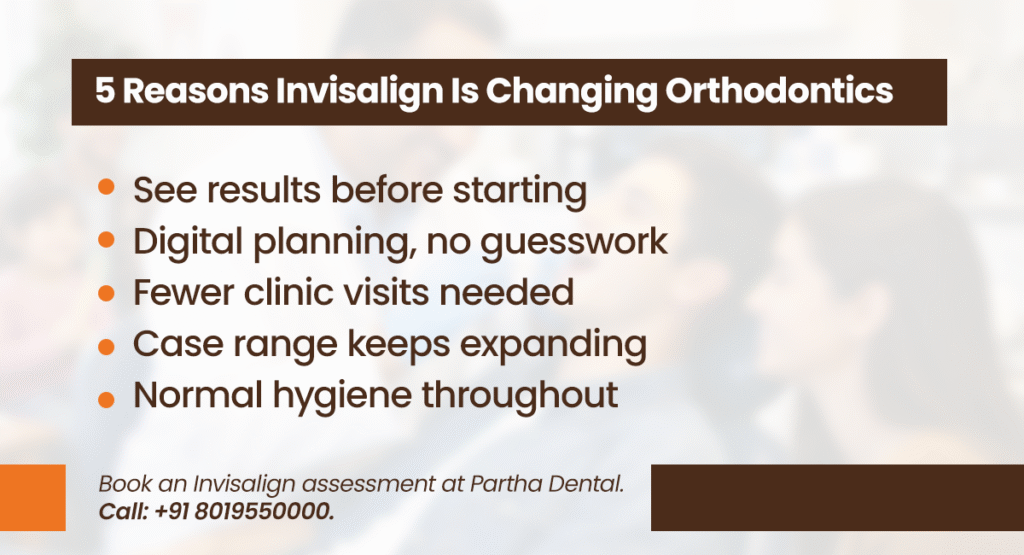
5 Reasons Why Invisalign Is the Future of Orthodontics
Invisalign is the future of orthodontics because it replaces plaster impressions and guesswork with 3D digital planning, which lets patients see their results before treatment starts, and removes the clinic-visit dependency that traditional braces require. Five things set Invisalign apart from traditional braces:
Reason 1: Clear, Comfortable, and Easy to Wear
The trays are clear. Difficult to spot unless someone is looking closely at your mouth. For adults who put off orthodontic treatment specifically because of how braces look at work or in social situations, this is the difference that actually moves the decision.
Comfort follows from the design too. There are no brackets rubbing against the inside of the lip, no wire ends catching on soft tissue, and no emergency clinic visits because something has come loose or snapped.
Reason 2: You See the Outcome Before Treatment Starts
ClinCheck software, the digital planning platform behind invisalign treatment in Hyderabad, simulates the entire tooth movement sequence and shows the projected final position before the first tray is made. Traditional braces can’t offer this. The treatment unfolds as adjustments are made, and the final result is only visible at the end.
Reason 3: Treatment Fits Around Your Life, No Diet Restrictions
With braces, the clinic manages the adjustments. You come in regularly for tightening appointments, and the treatment pace depends on those visits. With Invisalign, tray changes happen at home on a set schedule. In-clinic visits drop considerably, typically to check-ins every six to eight weeks rather than monthly adjustments.
For working adults in Hyderabad managing full schedules, fewer clinic visits is a meaningful difference. You’re also eating and cleaning normally throughout. Trays come out for meals and brushing, so no food restrictions and no navigating floss around brackets.
Reason 4: Digital Planning Replaces Guesswork
Every tooth movement is mapped in software before anything is fabricated. The orthodontist plans, adjusts, and refines the full sequence digitally. It gives clinicians the ability to revise treatment goals or approaches during the planning stage, not after treatment has started and a correction is needed.
What this means:
- Fewer mid-treatment surprises
- Clearer expectations from day one
- Better coordination between complex movements across multiple teeth
Reason 5: Oral Health Doesn’t Have to Suffer During Treatment
Fixed braces make routine oral hygiene genuinely harder. Cleaning around brackets requires special tools, and gum inflammation during orthodontic treatment is a documented clinical risk when cleaning is compromised.
A 2025 systematic review published in PMC confirmed this is one of the real practical advantages of removable aligner systems.
With Invisalign from the best dental clinic in Hyderabad, the trays come out. You brush and floss normally. The teeth and gums stay in the same condition they were in before treatment started.
Is Invisalign Right for You?
Invisalign works well for a wide range of adult cases. Mild to moderate crowding and spacing, overbite, underbite, and crossbite corrections are all within its current clinical scope, as long as the degree of correction needed isn’t severe.
It’s honest to say this: not every case suits aligners.
- The 2025 PMC systematic review found that expansion movements show the most variable outcomes, and molar regions can be harder to move predictably with aligner systems alone.
- Patients who won’t consistently wear the trays for 20 to 22 hours daily also tend to see slower, less predictable results.
Braces remain the right call for some cases. A good consultation tells you which category yours falls into.
Before Invisalign is recommended, the orthodontist at the best dental clinic in Kondapur checks:
- Type and degree of crowding, spacing, or bite issue
- Whether attachments will be needed to guide movement
- Bone and gum health as the foundation for treatment
- Whether the patient can realistically commit to the wear schedule
If your case is a clear fit, you’ll know at the end of that first appointment.
Book an Orthodontic Specialist Consultation at Partha Dental Today!
Anyone looking at invisalign treatment in Hyderabad can book a digital scan-based consultation at Partha Dental. Here’s what’s available:
- Invisalign treatment with ClinCheck digital planning and iTero intraoral scanning
- Partha Aligners, Partha Dental own clear aligner system for eligible cases
- Clear aligner treatment for mild to moderate corrections
- Tooth braces for cases where fixed appliances are the right clinical answer
- Orthodontic assessment with specialist review before any treatment begins
Partha Dental network spans 120+ clinics across South India, with 300+ doctors, 3 Lac+ happy Google reviews, a 4.9/5 star rating, and 28+ years of clinical experience. Call +91 8019550000 to book your Invisalign consultation.
Frequently Asked Questions
Is Invisalign as effective as braces for most adults?
Clinical outcomes are comparable for mild to moderate cases. Complex skeletal issues or severe bite problems may still need fixed appliances, and your orthodontist decides after assessment.
How many hours a day does Invisalign need to be worn?
Twenty to twenty-two hours daily. Regularly going below that slows tooth movement and makes results less predictable over the course of treatment.
Does switching to a new tray hurt?
Usually just pressure for a day or two. It’s milder than the soreness from a braces tightening and settles as the teeth begin to adjust to the new position.
Can I eat what I want during Invisalign treatment?
Pretty much anything. The trays come out before eating so there are no food restrictions. Brush before putting them back in to keep the trays clean.
How long does Invisalign treatment typically take?
Mild cases can finish in six to twelve months. More complex cases run twelve to eighteen. Your ClinCheck plan shows the expected timeline from the very first appointment.