











If you are standing in a store thinking which toothpaste or mouthwash you must buy, the answer is simple. Choose the product based on your dental problem, and not the brand name, promotional promise, or packaging. A cavity affected mouth needs a different product from sensitive teeth, bleeding gums, or bad breath.
That kind of guidance becomes useful when it comes from a clinic network that sees these problems every day at scale. Partha Dental, with 120+ clinics and 15,00,000+ patients across 4 states, is positioned to turn product confusion into practical dental advice. It helps differentiate when a symptom is about “just choose a mouthwash” to when it is actually linked to decay, gum disease, or an old filling.
This blog by the expert dentist provides ways on how to choose the best toothpaste, avoid common mistakes, and know when it is time to visit a best dental clinic in Hyderabad, a dental clinic in Bangalore, or a dental clinic in Chennai.
What Factors Decide The Best Toothpaste Or Mouthwash For You?
The right toothpaste deals with what is happening in your mouth. The best product for one person may be the wrong one for another.
When dentists guide a patient on how to choose the best toothpaste or how to choose mouthwash, they look at the actual problem first. It includes cavity risk, tooth sensitivity, bleeding gums, mouth odour, staining, dry mouth, braces, fillings, or a history of repeated decay. Take decision based on :
- Cavities need fluoride support.
- Sensitivity needs a sensitivity formula.
- Bleeding gums need support and a dental check.
- Bad breath may come from plaque, decay, or gum disease.
- Fillings, braces, and crowns need gentler, daily care.
Which Toothpaste Ingredients Should You Look For On The Label?
Read the back label of the product you buy because that tells you more than an advertisement. If your main goal is cavity prevention, fluoride should be present in the chosen product. If your teeth react to cold, sweets, look for sensitivity care ingredients.
If your gums bleed easily, a gum-care toothpaste may make more sense. If surface stains are your main concern, mild abrasive and whitening formulas help.
A simple way to decide the best toothpaste is to buy for the problem you have now, not for every possible problem at once.
| Dental Problem | What To Look For In Toothpaste? |
| Frequent cavities | Fluoride toothpaste for daily cavity protection. |
| Tooth sensitivity | Sensitivity-care toothpaste with ingredients made to reduce discomfort. |
| Surface stains | Whitening toothpaste for mild external stains only. |
| Bleeding gums | Gum-care toothpaste, plus a dental check if bleeding continues. |
| Enamel wear risk | Fluoride-based paste and a gentler routine. |
Do You Really Need Mouthwash Or Is Toothpaste Enough?
A good brushing and cleaning between teeth works well for many. Mouthwash is still useful in some cases, but it is not compulsory for everyone.
If you already brush twice a day with fluoride toothpaste and clean between teeth, mouthwash becomes an extra support step. How to choose mouthwash can help when you need added fluoride support, cure plaque or bad breath, or have gum issues that need support. But nothing could replace brushing.
If your problem is decay, gum inflammation, trapped food around an old filling, or a cavity between teeth, rinsing may freshen your mouth for a while but it will not remove the cause.
How Do You Choose Mouthwash Based On Your Oral Problem?
A purpose is most important for mouthwash choice, fresh-breath products, fluoride rinses, and dry-mouth products are not the same thing. If you get repeated cavities, a fluoride rinse may be useful at a different time of day from brushing. If your gums are inflamed, your dentist may suggest a therapeutic rinse.
And if your mouth feels dry, alcohol-heavy rinses may feel worse.
| Oral Problem | Mouthwash Type That Usually Fits Best |
| Higher cavity risk | Fluoride mouthwash used at a different time from brushing. |
| Bad breath | Antiseptic rinse, after checking for dental causes. |
| Gum irritation | Therapeutic gum-care rinse for short-term use. |
| Dry mouth | Alcohol-free, dry-mouth-friendly. |
| Mild stain concern | Whitening rinse as a support step, not the main fix. |
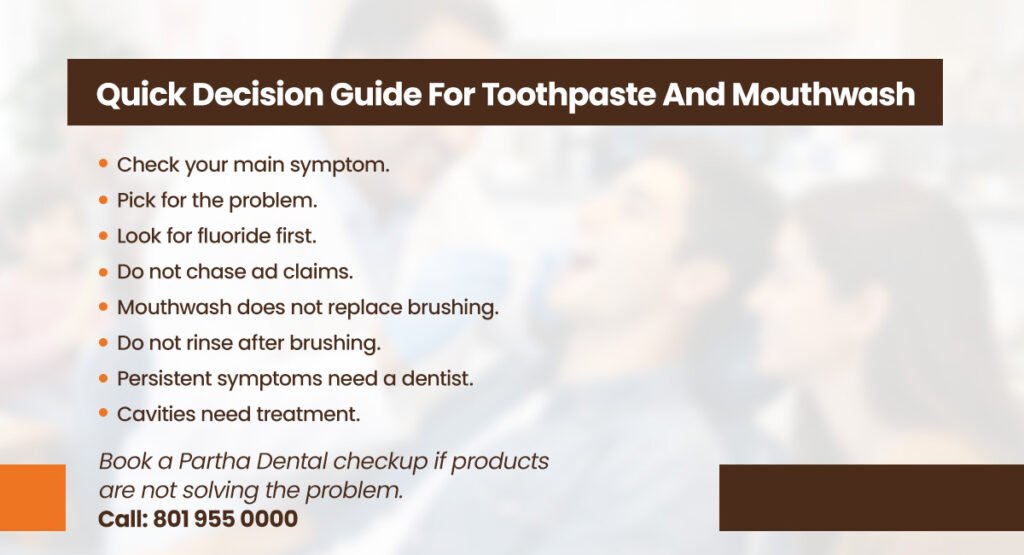
For daily use, timing matters. Do not use mouthwash just after brushing because it washes away the fluoride left by toothpaste. Use mouthwash after lunch, and avoid eating or drinking for 30 minutes.
What Mistakes People Commonly Make While Choosing Toothpaste Or Mouthwash?
Most mistakes happen when people buy for the promise instead of the symptom. Common mistakes include using whitening toothpaste on already sensitive teeth, using mouthwash to cover bad breath without checking for decay or, changing products every few days without giving the right one time to work.
People also ignore the product limits. A toothpaste can support enamel and help with sensitivity. A mouthwash can support fluoride exposure or help manage plaque. But neither one can close a cavity, fix a cracked tooth, or treat a loose filling.
When Should You Visit A Dentist Instead Of Trying New Products?
When the symptom is not settling, getting stronger, or clearly pointing to damage consult a dentist. Book a check if tooth pain, swelling, bleeding gums keep returning, or food getting stuck in one area.
Book A Dental Checkup At Partha Dental If Products Are Not Solving The Problem
Still unsure what to buy? Or sensitivity, bad breath, stains, and cavity signs are not improving, get the reason checked instead of changing products again. Partha Dental provides broad support for cavity care, fillings, gum-related complaints, and preventive guidance.
If you are searching for the best dental clinic in Hyderabad, dental clinic in Bangalore, or dental clinic in Chennai, Partha Dental offer services such as tooth decay/cavity treatments, tooth fillings, root canal treatment, crowns, braces, aligners, and implants using digital scans, digital X-rays, and laser-assisted procedures.
Call: 801 955 0000
FAQs
Can toothpaste heal a cavity completely?
Early weak spots may benefit from fluoride support toothpaste, but a formed cavity needs a dental filling.
Is a more expensive toothpaste always better?
The best toothpaste choice is the one that matches your problem and includes the right active ingredients. A costly whitening paste can be the wrong buy if your real problem is gum bleeding.
How long should I try a toothpaste before seeing a dentist?
If the issue is mild sensitivity or surface staining, you should give the right toothpaste a fair trial. But if you have pain, trapped food, bleeding gums, or symptoms that keep returning, book a dental visit.
Is alcohol-free mouthwash better for daily use?
People with dryness or irritation, alcohol-free mouthwash options can feel more comfortable. The better choice still depends on the main problem and dentist advice.