












When a child of 6-7 years starts losing baby teeth, one or more permanent teeth may never come. You may also notice one extra tooth sitting in an odd place and pushing nearby teeth out of line. That is when most families feel confused and want to know if it is serious, if it needs removal, and if braces will become necessary.
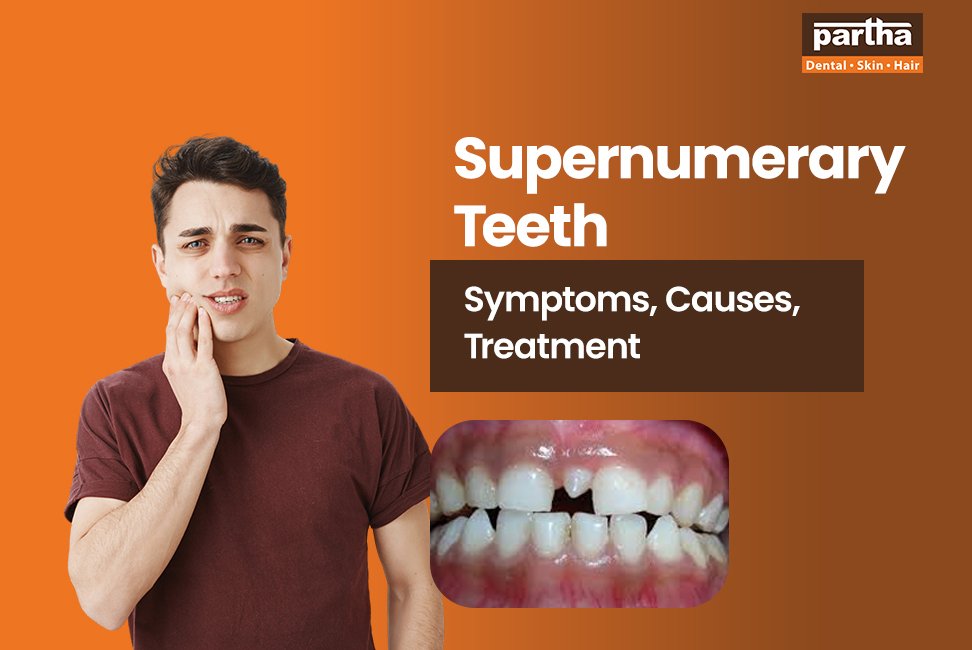
These are supernumerary teeth, extra teeth that grow in addition to the normal set. Some of these become visible and some might stay hidden inside the jaw. Dentists often find them when a permanent tooth gets delayed, when crowding starts, or when a child’s smile does not develop as expected. Early supernumerary teeth symptoms show up as delayed eruption or crowding teeth.
At Partha Dental, dentists use clinical checks, OPG X-rays and kids dentistry review to detect if your child has some similar issue. They then use extraction planning, braces, and clear aligners, etc to treat them.
Dive deeper into what are supernumerary teeth and discover the symptoms before it is too late!
What Are Supernumerary Teeth and Why do They Matter?
Supernumerary teeth are extra teeth. You can have one extra tooth or more than one. These teeth may erupt into the mouth, or they may stay stuck inside the bone. Dentists also call this condition hyperdontia. It does not always need urgent treatment, but it does need proper evaluation because extra teeth can disturb normal tooth eruption and alignment.
They matter because they cause some serious problems:
- Block a normal tooth from coming out.
- Push nearby teeth out of place.
- Make brushing harder.
- Affect bite and smile alignment.
- Stay hidden and still cause trouble.
Some extra teeth do not cause obvious trouble at first. Hence, dentists may find those only by chance on an X-ray. That is why parents should not ignore regular dental visits for routine check ups and updates. Moreover, if a tooth that erupts late or a smile that starts to look crowded very early, do not self diagnose as a delayed tooth can have more than one cause.
What Are The Most Common Supernumerary Teeth Symptoms?
The most common supernumerary teeth symptoms usually show up when an extra tooth blocks space or changes the way nearby teeth erupt. In children, the first sign is quite simple. One permanent tooth does not come in on time. In adults, the first sign may be crowding or an extra visible tooth.
| Mild Signs | Signs That Need a Dental Review |
|---|---|
| One extra tooth becomes visible | A permanent tooth does not erupt on time |
| Mild crowding starts | Teeth shift or rotate quickly |
| Brushing becomes harder in one area | Pain or swelling develops near the jaw |
| Bite feels slightly odd | Gum swelling or a cyst-like bump appears |
If you notice these changes, do not wait for the teeth to settle on their own. Refer to dentists at a dental clinic in Bangalore as they examine the mouth early and decide whether the extra tooth needs monitoring or removal.
What Are The Main Supernumerary Teeth Causes?
In many cases, the problem starts when the tissue that forms teeth becomes overactive and creates an extra tooth bud. Family history can also play a role, which means the condition may be hereditary. Some children and adults develop it along with certain genetic conditions like cleft lip and palate or misaligned teeth. There are certain rare syndromes too that affect the growth and shape of teeth.
In a few cases, one tooth bud may split and form an extra tooth. These are the main supernumerary teeth that dentists consider while checking whether the extra tooth is a simple isolated finding or part of a larger dental pattern.
Common causes and patterns include:
- Extra activity in tooth-forming tissue.
- Family history of extra teeth.
- Genetic conditions in some patients.
- Changes during dental development that create an extra tooth bud.
Most parents cannot prevent this but what they can do is catch it early. A child whose permanent teeth come late, or whose front teeth look crowded very early, needs a proper dental check instead of a wait-and-watch approach.
How Do Dentists Detect Supernumerary Teeth?
Dentists find supernumerary teeth through a clinical exam and an X-ray. If the extra tooth is visible, the diagnosis is straightforward. However, if it stays hidden, the dentist needs an OPG or another dental X-ray to see where it sits and how it affects nearby teeth. Clinical and radiographic evaluation both matter in these cases.
A dentist checks:
- If the extra tooth has erupted.
- Whether it blocks a permanent tooth.
- If nearby teeth are moving out of line.
- Whether swelling, cyst change or pressure has started around it.
At Partha Dental, the best dental hospital in Hyderabad, dentists support this workup with clinical examination. Additionally, kids dentistry review when the patient is a child, and OPG X-ray support where required. That helps the dentist decide the safest next step instead of assuming.
What Is The Right Supernumerary Teeth Treatment?
The right supernumerary teeth treatment depends on three things. Dentists look at the position of the extra tooth. They check whether it causes symptoms. They also see whether it blocks nearby teeth or affects the bite. Not every case needs immediate removal. Some teeth only need monitoring. Others need extraction before they create bigger problems.
Dental Diagnosis of Supernumerary Teeth
Dentists may monitor the tooth if:
- It does not block eruption.
- It does not crowd nearby teeth.
- It does not cause pain or swelling.
- It does not damage the roots of nearby teeth.
Dental Treatment of Supernumerary Teeth
Dentists remove the extra tooth if:
- It blocks a permanent tooth.
- It causes crowding.
- It changes the bite.
- It causes pain, swelling or risk of cysts.
- It makes cleaning difficult and raises future dental risk.
When Braces Or Aligners Help After Removal
Some patients need braces or aligners after removal because the nearby teeth have already shifted. At Partha Dental, the best dental clinic in Hyderabad can guide extraction planning first and then connect the patient to braces or clear aligner care if alignment still needs correction.
What problems can extra teeth cause if you ignore them?
Extra teeth can stay quiet for some time. But they can also create problems that become harder to correct later. This is why dentists do not like to ignore them once they affect function or eruption.
Problems that can happen include:
- Delayed eruption of permanent teeth.
- Crowding and poor alignment.
- Teeth moving into the wrong position.
- Bite problems.
- Trouble cleaning crowded areas.
- Root pressure on nearby teeth.
- Cyst formation in some impacted cases.
If the case reaches this stage, treatment may become more complex. A dental hospital in Bangalore can help when the dentist needs detailed imaging, extraction planning, and orthodontic correction in the same care path.
How Can Parents And Adults Prevent Delays In Treatment?
You cannot prevent supernumerary teeth from forming, but you can avoid long delays in diagnosis and treatment. That matters because early action reduces crowding and makes later treatment easier.
| What to Look for? | What to do? |
|---|---|
| Permanent tooth comes late | Book a dental exam and X-ray |
| Extra tooth appears in front or behind | Get it checked early |
| Front teeth start crowding quickly | Ask about eruption blockage |
| Child’s smile looks uneven | Request a pediatric dental review |
Parents often think a delayed tooth will come when it is ready. Sometimes it does but often an extra hidden tooth blocks its path. In this case you may wonder where to get an early review with kids dentistry support and X-ray planning in Andhra Pradesh.
Well, any best dental clinic in Vijayawada can help you act before the problem grows. Do not assume yourself to be a dentist any unusually delayed tooth needs a proper expert evaluation.
Get Expert Care For Supernumerary Teeth At Partha Dental
An extra tooth can quietly delay eruption, crowd the smile, or push nearby teeth out of line. At Partha Dental, dentists check the mouth properly, confirm the position with OPG if needed, and guide the next step through kids dentistry, extraction planning, braces, or clear aligners. Partha Dental also offers kids dentistry, tooth braces, clear aligners, tooth extraction, and diagnostic support that matter in these cases.
If a delayed tooth or crowding teeth are worrying you, call 040 4142 0000 and book a consultation before the problem becomes harder to fix.
FAQs
Can supernumerary teeth stay hidden inside the gums?
Yes. Some extra teeth never come out into the mouth. Dentists detect them on an X-ray when a permanent tooth erupts late or crowding starts.
At what age do dentists usually detect supernumerary teeth?
Dentists find them during the years when permanent teeth should erupt, especially in children between 6 and 12. A delayed front tooth is a common reason for evaluation.
Do all extra teeth need removal?
No. Dentists remove them mainly when they block eruption, cause crowding, or affect oral health and function. Some cases only need monitoring.
Can supernumerary teeth delay permanent teeth from coming out?
Yes. This is one of the most common problems. An extra tooth can block the normal eruption path of a permanent tooth.
Will a child need braces after supernumerary tooth removal?
Sometimes yes. If the extra tooth has already caused crowding or tooth movement, the dentist may advise braces or aligners after removal to guide the teeth into the right place.