












A dental granuloma can sound scary when a dentist mentions it after an X-ray. You may have tooth pain, swelling, sensitivity, a dark tooth or no symptom at all. The simple answer is this. A dental granuloma is a small inflamed tissue mass near the root tip of an infected or dead tooth. It develops slowly when bacteria stay inside the tooth for months. Early care can save the natural tooth and stop infection from spreading.
Partha Dental helps patients with root canal treatment, diagnostic imaging, dental surgery, tooth preservation and follow-up care across 120+ clinics in South India. The team treats dental infections with a clear plan and explains every step in simple words.
This blog is written by an expert dentist from Partha Dental. Read on to understand the symptoms, causes, diagnosis and treatment options for a dental granuloma.
What Is A Dental Granuloma And Why Does It Develop?
A dental granuloma is a small mass of inflamed granulation tissue that forms near the root tip of a dead or dying tooth. Dentists also call it a periapical granuloma.
It develops when bacteria infect the tooth pulp. The pulp contains nerves and blood vessels. Deep decay, trauma or a failed root canal can damage this pulp. Once the nerve dies, bacteria and dead tissue move toward the root tip.
Your immune system then tries to control the chronic infection. It builds granulation tissue around the infected area to stop the spread. This tissue does not contain pus like an abscess. It forms slowly and can stay hidden for months or years.
Dental granuloma symptoms may not appear early. That is why routine X-rays matter. They can detect root infections before pain starts.
How Can You Recognise The Symptoms Of A Dental Granuloma?
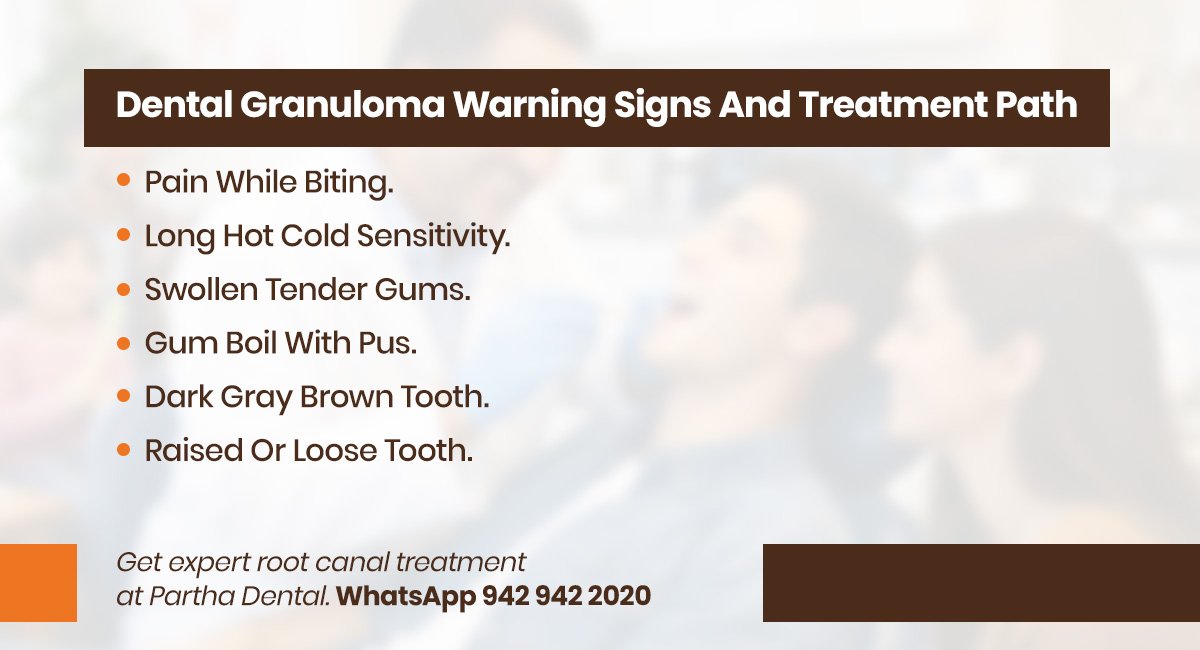
A dental granuloma may cause no symptoms at first, but it can later create pain, sensitivity, swelling, tooth darkening or a gum boil. Many cases show up only during routine dental X-rays.
Common warning signs include:
- Dull pain while chewing.
- Throbbing near one tooth.
- Sensitivity lasting 30 seconds.
- Swollen gums near tooth.
- Redness around the gum.
- Gum boil with drainage.
- Bad taste in mouth.
- Tooth turning gray brown.
- Tooth feeling slightly raised.
Pain increases when you bite because pressure reaches the inflamed root area. Hot or cold sensitivity may linger even after you remove the trigger. A fistula can also form on the gum. It may look like a small pimple and drain infection.
What Causes A Dental Granuloma To Form?
Dental granuloma causes start with infection inside the tooth. Deep decay, dental trauma or failed root canal treatment can allow bacteria to reach the root tip and trigger inflammation.
Untreated Deep Tooth Decay Reaching The Pulp
Untreated decay causes most dental granulomas. A cavity first damages enamel, then moves into dentin and finally reaches the pulp chamber.
Once bacteria enter the pulp, they infect the nerves and blood vessels. The pulp can die over time. Dead tissue and bacteria then move through the root canal toward the bone around the root tip.
The immune system reacts by forming granulation tissue around the infection. This process can take 6 to 18 months from the early cavity stage.
Patients visiting the best dental clinic in Hyderabad reach the clinic when pain starts. Early cavity treatment can prevent pulp infection and protect the tooth.
Dental Trauma That Kills The Tooth Nerve
Dental trauma can kill the tooth nerve even when the tooth looks normal outside. A fall, sports injury or accident can disturb blood supply inside the tooth.
The nerve may die slowly over weeks or months. The tooth may first feel fine. Later, it may darken or become sensitive. Once dead tissue inside the tooth gets infected, a granuloma can form near the root tip.
Children and athletes face higher risk because sports injuries and falls happen often. A tooth injury always needs a dental check, even if there is no visible crack.
People looking for the best dental clinic in Bangalore should not ignore a tooth that turns darker after injury. A timely X-ray can show internal damage early.
Failed Root Canal Treatment Allowing Reinfection
A dental granuloma can also form after a failed root canal. This may happen when bacteria remain inside tiny canal branches.
Root anatomy can be complex. Some teeth have narrow canals, curved roots or small side branches. If cleaning misses these spaces, bacteria can survive. Reinfection can also happen when the crown leaks and allows bacteria to enter again.
Failed root canal treatment may cause symptoms years later. The tooth may feel tender while chewing or show a dark area near the root on an X-ray.
Patients visiting the best dental clinic in Chennai may need retreatment, CBCT imaging or surgical care based on the root condition.
How Do Dentists Diagnose A Dental Granuloma?
Dentists diagnose a dental granuloma through clinical checks, X-rays, vitality testing and sometimes CBCT scans. The goal is to confirm infection, check nerve health and study bone loss near the root tip.
A periapical radiograph shows a dark rounded area at the root tip. Dentists call this a radiolucent lesion. It measures around 5 to 15 mm in many cases.
A vitality test checks whether the tooth nerve responds to cold or electric testing. A dead tooth gives no response. A percussion test checks pain when the dentist taps the tooth gently. Pain during tapping can suggest periapical inflammation.
A granuloma can look similar to a dental cyst on X-rays. Both can show bone loss. A biopsy after removal can confirm the exact tissue type. Treatment stays similar because both come from root infection.
What Are The Treatment Options For Dental Granuloma?
Dental granuloma treatment depends on tooth condition, infection size, bone support and previous dental work. Root canal treatment comes first because it removes infection and saves the natural tooth.
Root Canal Treatment: The Primary Solution
Root canal treatment removes the infected pulp and cleans the root canals. It is the first choice when the tooth structure can still support restoration.
The dentist opens the tooth and removes dead tissue. Then the canals are cleaned with fine files and antimicrobial solutions. After cleaning, the dentist fills the canals with gutta percha. A crown may protect the tooth after treatment.
Root canal treatment can resolve many granulomas with a success rate of about 85 to 95 percent. The granuloma does not disappear overnight. It shrinks over 6 to 24 months as bone heals.
Follow-up X-rays help track healing. This treatment also preserves your natural tooth and avoids higher replacement costs later.
Apicoectomy When Root Canal Treatment Fails
An apicoectomy is root end surgery. Dentists use it when a normal root canal cannot fully clear the infection or when an old root canal fails.
The surgeon numbs the area and makes a small gum opening. Then the infected root tip, about 3 to 4 mm, gets removed with the granuloma. The root end is sealed with a special filling material. The gum is then closed with sutures.
The procedure takes 60 to 90 minutes. Gum healing takes 7 to 10 days. Success rates range from 80 to 90 percent in suitable cases.
Apicoectomy can save a tooth that might otherwise need removal.
Tooth Extraction: The Last Resort Option
Tooth extraction becomes necessary when the tooth cannot be saved. This may happen with severe decay, vertical root fracture, poor bone support or major structural damage.
Extraction removes the infection source quickly. But it leaves a gap that may need replacement with an implant, bridge or denture.
This option can cost more in the long run because tooth replacement adds extra treatment. Dentists suggest extraction only when root canal treatment or apicoectomy cannot protect the tooth.
A timely diagnosis gives more treatment choices. Delayed care can make tooth saving harder.
What Happens If You Ignore A Dental Granuloma?
Ignoring a dental granuloma can allow infection to grow, damage bone and spread to nearby areas. Early root canal treatment is simpler than treating advanced infection.
Possible complications include:
- Granuloma turning into cyst.
- Bone loss around root.
- Infection spreading to nearby teeth.
- Facial swelling during flare-ups.
- Abscess formation with pain.
- Jaw infection in severe cases.
- Sinus involvement in upper teeth.
- Bad breath from drainage.
- Higher chance of extraction.
A chronic granuloma can stay quiet for some time. Then it can flare suddenly and cause severe pain. The dark area near the root may also grow beyond 20 mm in advanced cases.
Treatment delay can increase surgery risk. It can also reduce the chance of saving the tooth.
Get Expert Granuloma Treatment At Partha Dental
Dental granuloma needs timely care because it comes from infection near a tooth root. Root canal treatment can save the tooth, while apicoectomy helps when complex infection remains. Extraction stays the last option. Partha Dental offers endodontic expertise, rotary root canal cleaning, diagnostic imaging, CBCT support for complex cases, surgical care and follow-up treatment across Hyderabad, Bangalore and Chennai. The team focuses on tooth preservation and clear guidance from diagnosis to healing.
Worried about tooth pain, gum swelling or an X-ray finding? Get expert granuloma treatment at Partha Dental. WhatsApp 942 942 2020 today.
FAQs
Can a dental granuloma heal on its own without treatment?
No, it will not heal on its own because it forms due to infection. You need proper care at a dental clinic in Hyderabad or Bangalore to remove the infection.
Is a dental granuloma painful all the time?
No, many cases show no pain in the early stage. Symptoms may appear later, so regular dental checkups in Chennai or nearby areas help detect it early.
Can a dental granuloma spread to other teeth?
Yes, infection can spread to nearby teeth if untreated. Early Dental Granuloma Treatment can protect surrounding teeth and bone.
How long does it take to recover after granuloma treatment?
Initial relief starts within days after treatment. Complete healing of bone may take a few months with proper follow-up care.
Can poor oral hygiene increase the risk of dental granuloma?
Yes, poor hygiene allows bacteria to grow and reach the tooth pulp. This can increase the risk of Dental Granuloma Causes over time.