










Let’s be real, the word “pulpotomy” sounds like it comes from a sci-fi movie. Nope! It’s actually a very common and very useful dental treatment for children!
If your little kid has been complaining about a toothache or if your dentist mentioned a pulpotomy the last time you were there, relax.
This blog post will discuss what a pulpotomy for kids really is, how it helps, what is involved in the pulpotomy process for kids, and how to make recovery as easy and even as fun!as possible!
Let’s be real, the word “pulpotomy” sounds like it comes from a sci-fi movie. Nope! It’s actually a very common and very useful dental treatment for children!
If your little kid has been complaining about a toothache or if your dentist mentioned a pulpotomy the last time you were there, relax.
This blog post will discuss what a pulpotomy for kids really is, how it helps, what is involved in the pulpotomy process for kids, and how to make recovery as easy and even as fun!as possible!
1. What Is a Pulpotomy?
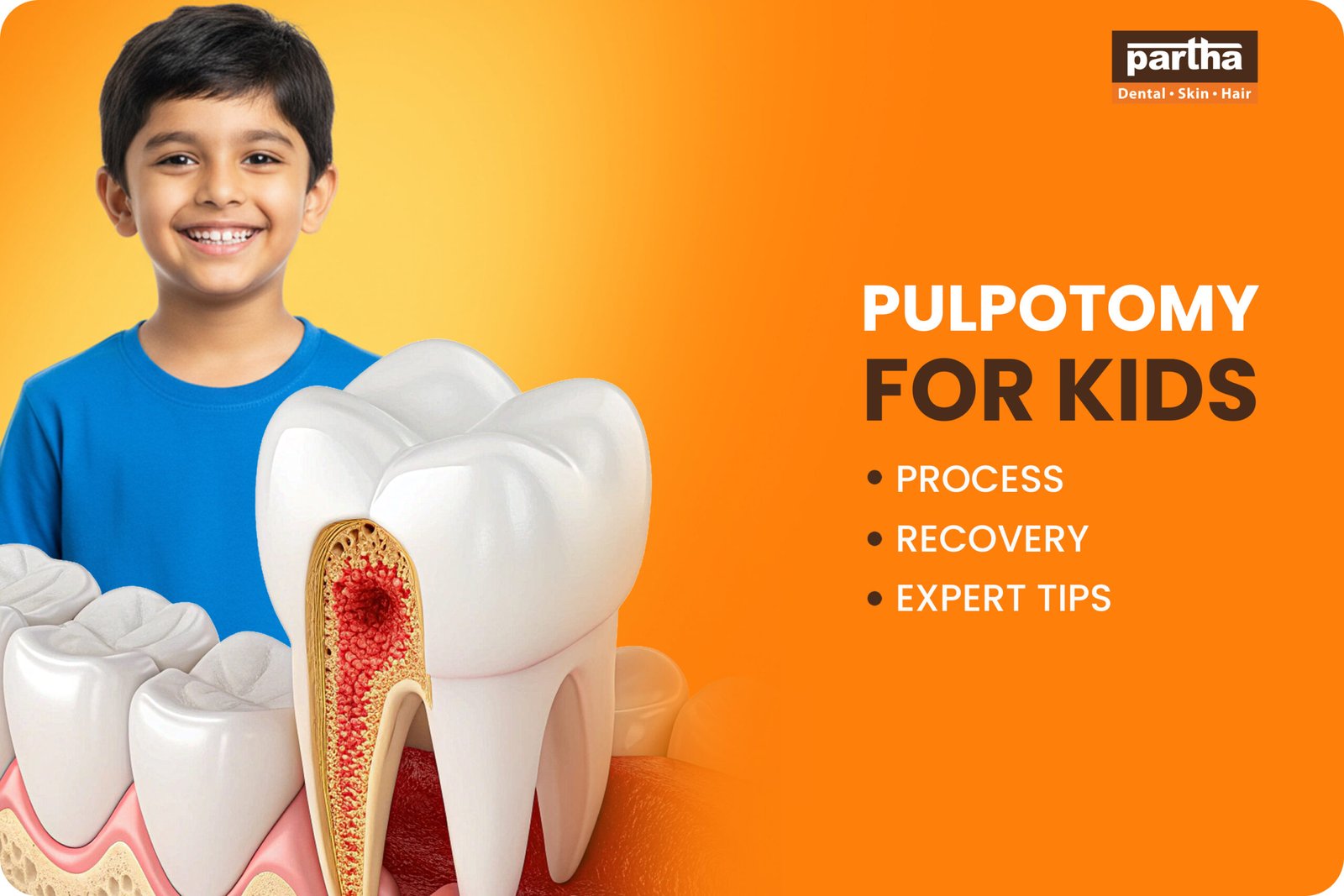
Simply put, pulpotomy for kids is like a mini “tooth rescue operation.” It’s done when a cavity has spread deep enough to involve the soft, inner part of the tooth (the pulp, where the nerves and blood vessels are located).
Think of it like this, if the top part of your child’s tooth is under attack from sugar monsters (cavities…), then a pulpotomy can do its best to save the rest of the tooth, before it’s too late.
We’re not removing all of the pulp like we’d do in an adult root canal, instead, we’re removing only the affected and cleaning it out.
The rest of the pulp is still there, saving it so it can do its job until it’s time to fall out.
To put it another way, a pulpotomy says, “Hey cavity, you can’t sit with us!”
2. When Does a Child Need a Pulpotomy?
The dentist may suggest a pulpotomy if:
- There’s deep decay in a baby tooth
- Your child has persistent tooth pain or sensitivity
- The tooth appears discolored or gauges are swollen around the gums
- The dentist sees that the pulp is exposed during a filling
And here is the important part baby teeth matter! Baby teeth will eventually fall out, but they help with spacing, speaking, and jaw development.
If a baby tooth falls out, they can show up misaligned later on. So saving it with a pulpotomy makes a lot of sense.
3. The Pulpotomy Process for Kids (Step-By-Step)
Okay, here comes the main event. Let’s explain the pulpotomy process for kids in a way that makes sense and maybe earns you some “cool parent” points when you explain it nicely later!
Step 1: The Exam and the Numbing
The dentist will first examine your child’s tooth and take an X-ray to check how deep the cavity is. Then comes the numbing step generally, a small injection or gel. Most kids say it feels like a “funny tickle” or “minty mouth freeze.”
At Partha Dental, our pediatric dentists are awesome at helping with the anxiety part of this step.
Step 2: The Removal
After your child is fully numb and comfortable the dentist uses specific dental tools to gently remove the decayed part of the tooth. (Don’t worry, it is quick, and pain-free.).
Step 3: Cleaning the Pulp Chamber
Here is the enjoyable aspect – your dentist will enter the pulp chamber and remove only the infected section of the pulp from the crown (the top part of the tooth) while leaving the healthy root pulp. This in turn will save your child’s tooth and also prevent the infection from spreading.
Step 4: Placing the Healing Medicine
A comforting medicated paste is applied to the tissue inside the tooth to help relax the rest of the pulp and to protect against any further bacteria getting in think of this like a “band-aid for the inside of the tooth”.
Step 5: Sealing and Crowning
Finally, the tooth will be sealed with a filling or covered with a crown, which is often stainless steel because even baby teeth deserve a little royalty!
And that is if your child’s tooth is preserved, their smile is unaffected, and you can both run off to celebrate with… a sugar-free treat of course.
4. What to Expect After a Pulpotomy: PulpotomyRecovery
Post-pulpotomy for kids typically presents a very easy recovery process. Most kids usually return to their activities the same day.
While, the clinician asks that you (the parents) are aware of one or two aspects to the recovery from the procedure of pulpotomy.
Slight soreness: This expects slight soreness or tenderness will develop once the anesthesia wears off! A kid-friendly pain-relieving medication (as talked about or recommended by your dentist) may be useful.
Chewing on the opposite side: I would like to request that your child chewing strictly on the opposite side of the mouth for a couple of days to compensate for the treated tooth.
Soft foods that are simple to chew: Great options for soft foods are foods like mashed potatoes, yogurt rice, bananas, or soup.
Good oral hygiene: Just in terms of a toothbrush, it’s just better to brush if it is done gently so it is done more effectively.
Look for signs of warning – if your child states they are feeling sharp pain or you can see there is swelling or fever a couple days after the procedure, it is best to consult your dentist promptly.
The, “best part,” of this experience is that once healed, your child will be able to laugh, chew, and once again show off that bright smile without pain!
5. Cost of Pulpotomy in South India: What to Expect
Now, let’s talk about something that every parent is wondering: cost of pulpotomy.
The cost of a pulpotomy in India is generally from about ₹1,500 to ₹4,000, depending on a couple of factors:
- Where the clinic is located
- What filling material or crown is put in
- Whether it’s a baby or a permanent tooth
- The case complexity
At Partha Dental, we do our best to have transparency around pricing. Our pediatric dentists will go over the pulpotomy cost with you upfront. No surprise bills! Just smiles and an easy conversation.
6. Helpful Hints for Parents (From Our Dentists)
Book dental visits early: The earlier dental visits are scheduled; the more preventative measures can be implemented against deep decay.
Limit Sweets: Although gummy candies and sugary drinks can seem innocent, they can still affect your child’s teeth.
Act Soon: It is better to take care of a pulpotomy sooner rather than later to decrease the chance of infection and have the best chance of keeping the tooth.
Play Games: To help ease the anxiety of a dental experience, use a song, tooth dance or an app that gives your child points for brushing.
Why Choose Partha Dental for Your Child’s Pulpotomy?
Because we understand that baby teeth require special attention (and a little magic in some cases).
At Partha Dental, our pediatric specialists are gentle, patient, and we have been trained to ensure kids actually enjoy their appointments and visits.
From the cartoon distinctive decor of our clinics to the friendly smiles of our staff each pulpotomy will feel like a fun little story.
We want nothing more than to provide you with Healthy smiles, happy kids and stress-free parents.
A children’s pulpotomy is not something to be feared, but rather, something to be grateful for, because it is taking care of your child’s smile. It is fast, effective, and allows your child to eat, laugh and shine without pain. If your child is suffering from tooth decay or pain, call us 04041420000 now and book your appointment to visit your closest Partha Dental branch
7. FAQs
No, a local anesthetic is used in the procedure so that your child will not feel any pain. There may be some soreness after the anesthetic wears off, but your child should not experience pain after that.
Usually around 30-45 minutes – shorter than a typical cartoon episode – and much less drama.
Absolutely! The baby tooth will fall out naturally, as it should.
Yes! It is a safe, commonly performed procedure. It prevents more serious concerns that could lead to abscess and tooth loss.
In a pulpotomy, we only remove the infected crown pulp. In a pulpectomy, we remove the entire pulp, including the pulp in the root – like a baby tooth mini root canal. Read more.
Dental Questions? We’re here to help!
Disclaimer:
The prices mentioned in this blog are indicative and may vary based on the severity of the condition, technology used, and materials suggested by the Dentist. They are accurate as of the date of publishing and subject to change as per clinic policy. Third-party or AI-generated estimates may not reflect actual clinic pricing. For accurate costs, please visit your nearest Partha Dental clinic.