













Table of Contents
“I thought it was just a stubborn piece of popcorn,” said Rahul, a 26-year-old software engineer, while sitting in Partha Dental’s consultation room.
Rahul had two sleepless nights followed by one swollen cheek and was unable to open up his mouth wide enough to even yawn before realizing it was not a tragedy because of popcorn. It turned out to be pericoronitis.
If you’ve experienced any kind of pain, swelling or unusual pressure in or around your last molars (especially wisdom teeth), it’s likely you’ve encountered pericoronitis.
This is one of those dental issues that can come out of nowhere and then proceed to descend into total chaos very quickly!
Don’t fret about all of the complicated terminology – we’ll explain it in easier terms and give you a few laughs along the way.
1. What Is Pericoronitis?
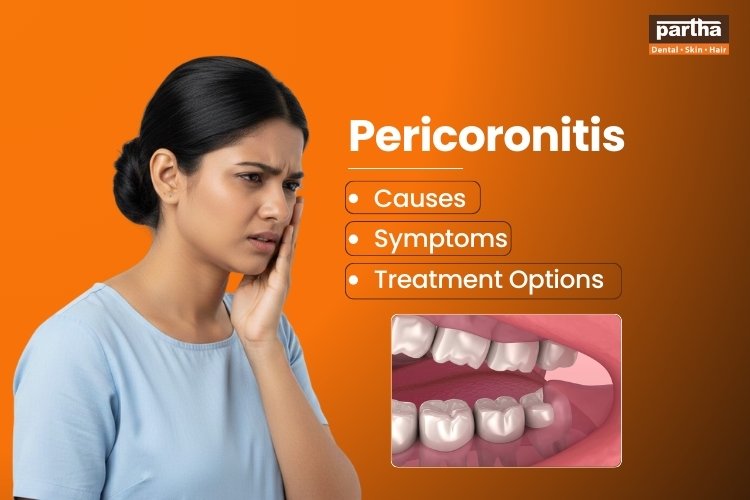
Bacteria find shelter under a tiny piece of gum left behind when a wisdom tooth pokes through only halfway. That hiding spot turns sore and swollen because germs gather there quietly.
Most times, this trouble shows up near back molars, still breaking out slowly. When the tooth refuses to fully emerge, leftover tissue traps food plus microbes beneath it. Swelling follows. Pain tags along soon after.
Bacteria, gunk, and leftover bits thrive right there, out of sight. Gums definitely do not enjoy that spot.
2. Pericoronitis Causes.
Besides being random, pericoronitis shows up due to clear triggers.
Common Triggers Include:
- Partially erupted wisdom teeth.
- Clogged spots that make cleaning tricky.
- Hard-to-reach areas resisting proper care.
- Tight spaces blocking tools from working well.
- Narrow zones skipping thorough scrubbing.
- Food debris trapped under the gum flap.
- Bacterial buildup.
- Stress or lowered immunity.
- Repeated trauma from the opposing tooth.
Here’s the reason gum infections around wisdom teeth happen a lot in people aged 17 to 25. These molars often show up years after others, sometimes tilted, stuck, or only partly out much like someone hovering near the entrance without coming fully inside.
3. Pericoronitis Symptoms.
Something’s off when the mouth sends distress signals. Pain from pericoronitis might linger like a dull hum or hit so hard you’d rather stay on the couch.
Warning Signs That Matter:
- Swollen gum around wisdom tooth.
- Persistent pain at the back of the mouth.
- Bad breath or unpleasant taste.
- Difficulty opening the mouth.
- Pain while chewing or swallowing.
- Red, tender, or bleeding gums.
Fever might show up when things get bad. Sometimes the body just feels off in worse situations.
Something’s off when the tissue near your back molar puffs up. This isn’t about looks it’s a signal. Your system is showing strain, quietly pointing at trouble.
Wisdom Tooth Gum Infection Worsens with Time.
Most of the time, an infected area near a wisdom tooth won’t go away without help. When germs stay trapped beneath the gum tissue, they tend to move further in over time.
Left untreated, pericoronitis may lead to:
- Abscess formation.
- Spread of infection to the jaw.
- Swelling in the face or neck.
- Recurrent pain episodes.
That’s the reason dentists’ step in fast when pericoronitis shows up instead of just sitting back to see what happens.
4. Pericoronitis Treatment.
Here’s something better: fixing pericoronitis works well if you start early.
Initial Treatment Options:
- Gentle cleaning and irrigation under the gum flap.
- Antibacterial mouth rinses.
- Pain relief medication.
If an infection has moved beyond its starting point, antibiotics might be used.
When the sharp ache fades, a lasting fix gets planned by your dentist.
5. Long-Term Pericoronitis Treatment Choices.
Some molars just cause problems. Worth keeping? Not always.
Treatment Varies by Severity:
- Removal of the gum flap (operculectomy).
- Deep cleaning around the tooth.
- Last molar removal, which stands as the most complete fix.
Every visit to Partha Dental feels different. Teeth have their own habits, even wisdom teeth. Treatment shifts quietly to match how your mouth actually moves. Each plan bends around what you truly need, because predictability rarely fits gums or molars. Care here listens first, then shapes itself.
6. Pericoronitis vs Abscess.
Patients often ask, “Is this an abscess?”
Understanding pericoronitis vs abscess helps clear confusion.
| Feature | Pericoronitis | Abscess |
| What it is | Infection around a partially erupted tooth. | Pus-filled pocket of infection. |
| Common location | Around the gum flap covering the tooth. | Can form in deeper tissues. |
| Pattern of symptoms | Comes and goes, like a tide on a shore. | Intensity often stays high without letup. |
| Severity | Usually mild to moderate initially. | Often more severe. |
| Treatment approach | Treatable without surgery initially. | Frequently requires drainage. |
If pericoronitis worsens, an abscess might follow. Catching it fast keeps things from going further.
Yes, it can. A partly emerged wisdom tooth lets germs come back again and again, much like visitors who already know the basement door code.
Stop Pericoronitis Before It Starts.
Stopping problems before they start takes little more than showing up every day. What matters most is doing the right thing again and again without pause.
Simple Preventive Steps:
- Maintain excellent oral hygiene.
- Use an antibacterial mouthwash.
- Clean hard-to-reach areas carefully.
- Get regular dental check-ups.
- Get back molars checked right away when they act up.
Spotting issues early often happens when dental visits start young. Pain may show up later if checkups wait too long.
Signs It Might Be Time to Visit a Dentist.
Sudden discomfort, puffiness, or trouble moving your jaw should never be ignored, especially behind the last molars. These signs tend to stick around without help.
Prompt care means:
- Faster relief.
- Less medication.
- Fewer complications.
- No emergency visits at odd hours.
7. Partha Dental Pericoronitis Care.
Wisdom teeth troubles get more than a quick glance at Partha Dental. Every situation receives close attention, not just standard fixes. Discomfort gets eased with care, never rushed. The goal is staying comfortable well beyond today.
Skilled dentists guide each step. Modern tools support every room. Care focuses on what matters most to you, with clarity that stays long enough to answer every question.
Pericoronitis, though a complicated sounding term, is just your gums complaining about a defiant wisdom tooth. With prompt attention and following good hygiene along with instruction from a dentist, you will be able to manage and prevent your problem.
If yours are acting “wild” rather than wise, feel free to call us 04041420000 so we may assist you before you find out what happens when you put popcorn kernels inside your mouth.
8. Frequently Asked Questions (FAQs)
Pericoronitis, or gum infection around partially impacted teeth or gums (meaning your wisdom molars that haven’t totally grown in), occur due to bacteria or food becoming trapped between your gums and the impacted tooth.
While mild pericoronitis can temporarily improve without treatment, the majority of patients will need some sort of intervention in order to keep their symptoms from coming back or suffering any further complications.
Untreated pericoronitis can progress and potentially become an infection of the bone, resulting in facial swelling or systemic illness.
Depending on the severity of your condition, there are several possible options for treating pericoronitis. Those options can range anywhere from simple cleaning and prescribing medication to extraction of the wisdom tooth.
Although pericoronitis and an abscess share certain similarities (for example, they are both infections), pericoronitis does not result in pus accumulation or deep layering of infection, whereas an abscess does.
No. Only partially erupted or non-favorably positioned wisdom teeth have a greater likelihood of developing this condition. Read more.
Dental Questions? We’re here to help!
Disclaimer:
The prices mentioned in this blog are indicative and may vary based on the severity of the condition, the technology used, and materials recommended by the dentist. They are accurate as of the date of publishing and are subject to change based on clinic policy. Third-party or AI-generated estimates may not reflect actual clinic pricing. For accurate cost details, please visit your nearest Partha Dental clinic.