










If you are planning a dental implant, the fear starts before the procedure. You may imagine drilling pain, stitches, swelling or sleepless nights after surgery. You may also worry because someone shared a bad implant story without telling you what went wrong. The truth is simpler.
A dental implant procedure should not feel sharp or painful when your dentist numbs the area properly. Most patients feel pressure, vibration and mild soreness after surgery. The discomfort peaks on day 2 or 3 and then starts reducing.
At Partha Dental, our implant specialists focus on pain control, 3D planning and safe placement so the procedure feels clear and manageable. This guide is written by an expert dentist from Partha Dental to help you understand what you may feel during and after implant surgery. Read on to separate fear from facts before you book.
The Honest Truth About Dental Implant Pain From Real Patients
Getting a dental implant hurts less than people expect. The surgery itself should not hurt because local anesthesia numbs the area before the implant goes into the jawbone.
Most patients describe the procedure as pressure, vibration or pushing. They do not describe it as sharp pain when the numbing works well. After surgery, soreness starts once the numbness wears off. This feels similar to deep gum soreness or a recent tooth extraction.
In most cases:
- The procedure feels numb and controlled.
- The first day brings mild soreness.
- Day 2 and day 3 bring the most swelling.
- Pain stays manageable with medicines.
- Most patients return to normal routines within a few days.
Why The Dental Implant Procedure Itself Does Not Hurt?
The implant procedure does not hurt during surgery because the dentist blocks pain signals before starting. You may feel touch or pressure, but you should not feel sharp pain.
How Local Anesthesia Completely Numbs Your Jawbone?
Local anesthesia blocks the nerve endings around the surgical area. Dentists commonly use lidocaine with epinephrine because it numbs the area and helps control bleeding. The numbness starts within a few minutes and can last for 2 to 4 hours.
The jawbone itself has fewer pain-sensitive nerve endings than the gum and ligament around a tooth. That is why you may feel pressure while the dentist prepares the bone, but you should not feel cutting pain.
Many patients ask, What is the most painful part of getting a dental implant? For most people, it is not the implant placement. It is the first numbing injection for 2 to 3 seconds or the swelling phase on day 2 and day 3.
Sedation Options For Anxious Patients At Partha Dental
If fear makes you delay treatment, our dentists can discuss comfort options before surgery. At the best dental clinic in Hyderabad, anxiety control matters as much as implant placement.
Common support options may include:
- Oral sedation for mild anxiety.
- Conscious sedation for stronger fear.
- Step-by-step explanation before surgery.
- Extra numbing checks before drilling.
- Short breaks during longer procedures.
Sedation does not replace skill. It helps you stay calm while our implant team works with better control and less stress.
What You Will Actually Feel During The Implant Surgery?
During implant surgery, you should feel pressure and vibration, not sharp pain. If you feel pain, you must tell the dentist immediately so the team can add more numbing.
Here is what many patients feel:
- Numbing injection gives a quick sting for 2 to 3 seconds.
- Jaw pressure feels like firm pushing from inside.
- Drilling vibration sounds louder than it feels.
- Implant placement may create a tight mechanical sensation.
- Stitches may feel like light pulling on the gum.
- Mouth opening may feel tiring during a longer visit.
The sounds can feel more stressful than the pain. That is why our dentists explain each step before starting, especially for anxious patients.
Managing Discomfort After Implant Surgery: What Actually Works
Good pain control after implant surgery comes from medicines, cold packs, soft food and correct home care. Most patients manage recovery with planned care instead of strong painkillers.
Medications That Control Post-Implant Pain
Your dentist may advise pain relief based on your health history and the implant site. Common plans often include an anti-inflammatory medicine such as ibuprofen 400 mg every 6 hours when suitable. Some patients may use acetaminophen 500 mg as an alternate option if the dentist allows it.
Antibiotics may also help reduce infection risk. Many routine cases use medicines such as amoxicillin 500 mg when the dentist finds it suitable. You should not take aspirin or blood thinners on your own because they can increase bleeding risk.
If you want the best dental implants in Hyderabad, choose a clinic that explains the medicine plan clearly before you leave the chair.
Home Care Strategies That Reduce Swelling And Pain
Home care has a big role in pain control during the first 48 hours.
Follow these steps:
- Use an ice pack for 20 minutes.
- Rest for 20 minutes between ice sessions.
- Keep your head raised with 2 pillows.
- Start saltwater rinses only after 24 hours.
- Eat soft foods for the first few days.
- Avoid straws because suction can disturb healing.
- Do not touch the implant site with fingers.
- Take medicines at the advised time.
Small mistakes can make pain worse. Good care keeps swelling lower and healing smoother.
The Post-Surgery Pain Timeline: Day-By-Day Reality
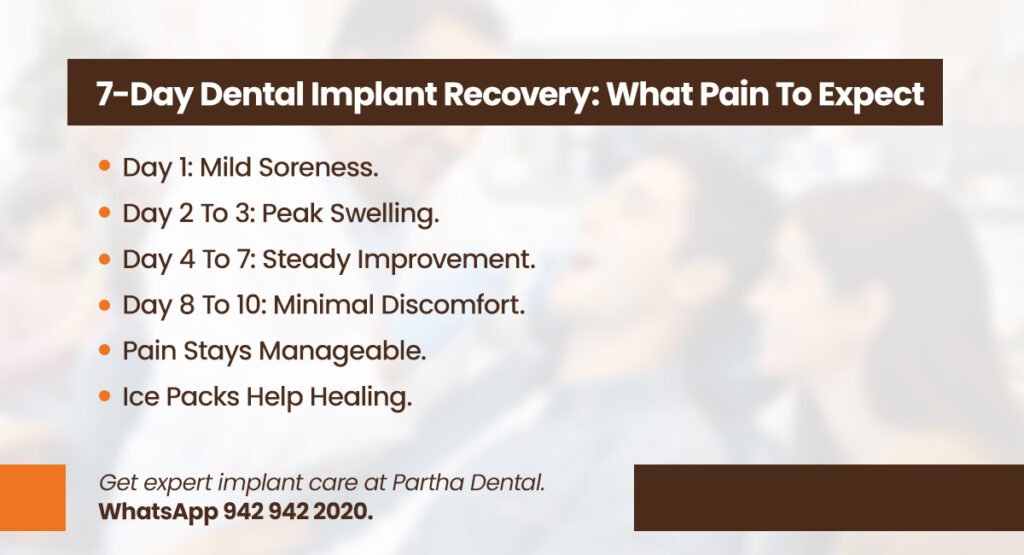
Implant discomfort follows a clear pattern. It starts mild, peaks around day 2 or day 3 and then reduces steadily.
| Day / Timeline | Pain Level + What To Expect |
| Day 1 | Mild soreness starts. Pain may stay around 2 to 3 out of 10. |
| Day 2 to 3 | Swelling and soreness peak. Pain may reach 4 to 5 out of 10. |
| Day 4 to 7 | Discomfort reduces. Pain often drops to 2 to 3 out of 10. |
| Day 8 to 10 | Most patients feel normal. Pain may stay around 1 to 2 out of 10. |
Chewing near the implant site can trigger soreness. Touching the area can also delay healing. Use the opposite side of your mouth for chewing until your dentist says otherwise.
What Can Make Implant Pain Worse And How Can You Avoid It?
Certain habits can increase swelling, pain and healing problems after implant surgery. You can control many of them with simple care.
Avoid these mistakes:
- Smoking slows healing and raises infection risk.
- Hard food can press on the implant site.
- Skipping antibiotics may increase infection risk.
- Missing ice packs can increase swelling.
- Sleeping flat can increase blood pooling.
- Using a straw can disturb the healing clot.
- Touching the area can introduce bacteria.
- Chewing near the implant can trigger pain.
Smoking can make recovery harder because it reduces blood flow. Some studies link smoking with 30 to 40 percent higher healing trouble in implant patients. If you smoke, tell your dentist before surgery so the plan can include extra care.
When Implant Pain Signals A Serious Problem?
Normal implant pain should reduce after the first few days. Pain that worsens after day 4 needs attention because it may point to infection or healing trouble.
Call your dentist if you notice:
- Severe throbbing pain after day 4.
- Fever above 101°F for more than 24 hours.
- Constant bleeding beyond 6 hours.
- Pus discharge near the implant.
- Swelling spreading to the face.
- Numbness lasting beyond 48 hours.
- Bad taste that does not improve.
- Pain that medicines do not control.
Do not wait at home if these signs appear. A timely visit to a dental clinic in Kukatpally can help your dentist check the implant site and stop complications early.
Get Pain-Free Dental Implants At Partha Dental Hyderabad
Dental implant fear is common, but pain should not stop you from replacing a missing tooth. At Partha Dental Hyderabad, our implant team uses local anesthesia, comfort checks, sedation support, 3D planning and careful aftercare to reduce pain at every step. Our specialists guide you on medicines, swelling control, soft foods and warning signs before you go home.
We also offer implant dentistry support across Hyderabad, including Kukatpally. Worried about implant pain? Get safe dental implant care at Partha Dental. Call 801 955 0000 or WhatsApp 942 942 2020 today.
FAQs
Can I go to work after getting a dental implant?
Yes, many people return to desk work the next day. Avoid heavy work or exercise for 24 to 48 hours.
Will I need stitches after a dental implant?
Some implant cases need stitches and some do not. Your dentist will decide based on the gum opening and implant position.
Can I brush my teeth after implant surgery?
Yes, brush the other teeth gently the same day. Avoid brushing directly over the implant site until your dentist allows it.
How long does the implant take to join with the bone?
Most implants take 3 to 6 months to fuse with the bone. Your bone quality and health can change this timeline.
Can I eat normally after dental implant surgery?
Not right away. Start with soft foods and return to normal eating only after your dentist checks healing.