












When Do You Need Dental Splinting Treatment in Hyderabad?
A tooth that moves when you chew, or gaps that suddenly appear between teeth you have had for years, often signal the bone support has weakened. Dental splinting joins a loose tooth to its stable neighbours so biting force spreads across several roots instead of concentrating on one. You may notice this problem after gum disease has shrunk the bone, after a sports injury or fall, or if you grind your teeth at night and have worn the ligaments thin. In Hyderabad, where IT professionals work long hours and many skip regular cleanings, gum disease progression is a common reason patients first notice looseness in their thirties or forties. Trauma from two-wheeler commutes on roads near Hitech City or industrial estates like Sanathnagar also brings in cases of sudden tooth displacement. The splint does not cure the underlying bone loss, but it buys time. It lets you eat comfortably while the dentist treats the cause, whether that means deep cleaning, gum surgery, or adjusting your bite. If you feel a tooth shift when you bite into an idli or apple, that is the moment to book a check. Waiting risks the tooth tilting further, which makes later repair harder and can change how your upper and lower teeth meet.
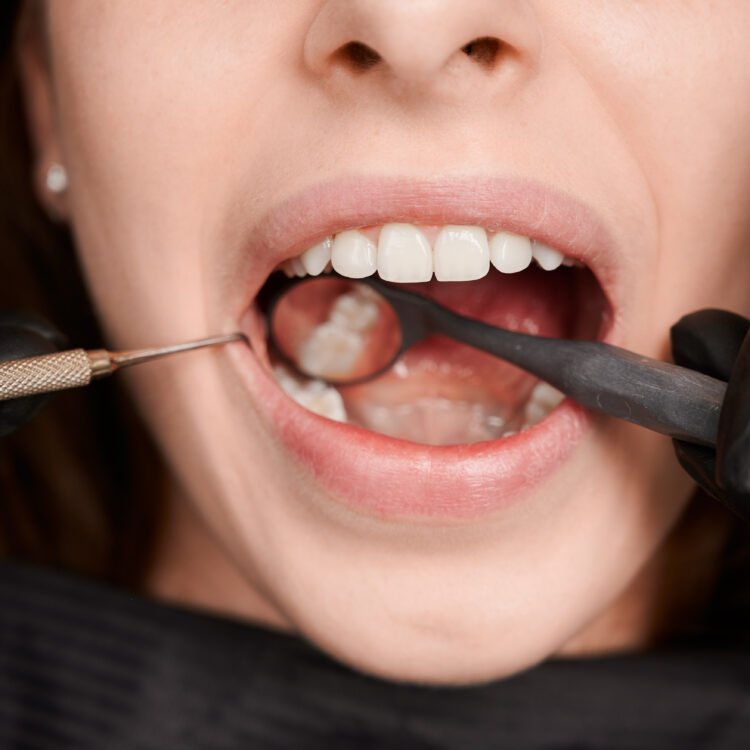
How Dental Splinting Differs from Extraction
Many patients assume a loose tooth must come out. That is not the first choice if the root still has reasonable bone and the gum can be brought back to health. Splinting keeps your natural tooth in place, maintains the bone height in that area, and avoids the gap and bite collapse that follow an extraction. The decision hinges on how much bone remains and whether the cause of looseness can be controlled. The dentist measures pocket depth, checks for pus or bleeding, and takes an X-ray to see the bone level around each root. If two-thirds of the bone is still there, splinting is usually worth trying. Extraction becomes the path only when the root has almost no support left, or when infection has destroyed too much surrounding tissue.
How Dental Splinting Works at Partha Dental
The procedure at Partha Dental, Ameerpet, follows a clear sequence. First, the dentist examines all teeth in the area and takes a periapical X-ray to see bone levels and any hidden infection. Next, the teeth get a thorough cleaning to remove tartar and reduce gum inflammation, because splinting onto dirty roots fails quickly. The third stage is the splint itself. The dentist etches the outer surfaces of the loose tooth and one or two stable neighbours, applies a bonding resin, and lays a thin fibre ribbon or wire across them. A tooth-coloured composite covers this so the result looks natural. The bite gets checked with articulating paper and adjusted so the splinted teeth do not hit first when you close. Most splints use the front teeth or the lower incisors, but molars can be splinted too if the case allows. You leave with a temporary feel that settles in 48 hours. The whole appointment takes 60 to 90 minutes for a simple case, longer if deep cleaning or multiple teeth are involved.
What to Expect After Dental Splinting Treatment
The first two days feel odd. Your tongue keeps finding the new contour, and biting down may seem different. This passes as the jaw adapts. Chew softer foods initially, cut apples and carrots into pieces rather than biting directly, and avoid tearing actions like pulling chapati with your front teeth. Flossing changes: you cannot slide floss between splinted teeth in the normal way, so the dentist shows you how to thread it under the join or use an interdental brush. Gum bleeding should reduce within a week if you keep the area clean. A review happens at two weeks to check gum response and bite, then again at three months. The splint itself stays for months or years depending on whether the underlying gum disease is controlled. Some patients need a permanent splint, others progress to a crown or bridge once the tooth stabilises. If the loose tooth was caused by grinding, the dentist discusses a night guard to protect the repair. Outcomes depend on individual case and oral health status.
What Happens If You Delay Dental Splinting?
A loose tooth tilts under pressure. The tilt changes how force hits the root, which speeds bone loss in a downward spiral. Neighbour teeth drift into the space, and the opposing tooth above or below may over-erupt. Within six to twelve months, what began as a splintable tooth can become an extraction with implant or bridge replacement, at far higher cost and time. Infection from deep gum pockets can also spread to adjacent teeth. Early splinting stops this chain reaction.
Why Choose Partha Dental for Dental Splinting in Hyderabad
Partha Dental operates from Dharam Karan Road, Ameerpet, above Health & Glow, opposite MCH Sports Complex. The branch serves patients from nearby commercial areas including the pharmaceutical units around Ameerpet, the textile businesses in ShivBagh, and commuters from Hitech City who want central Telangana access. The clinic follows NABH-accredited sterilisation protocols: sealed pouches for instruments, autoclave cycles logged, and surface disinfection between patients. Dentists are BDS or MDS qualified and registered with the Dental Council of India. You get a written treatment plan before any procedure, with cost components listed, and EMI options discussed if the treatment spans multiple stages. The Ameerpet location offers parking access and sits on a main road, which matters if you are coming from industrial estates like Chandulal Bardari or Sanathnagar after a workday.
Get Dental Splinting Treatment Near You in Hyderabad
Loose teeth do not fix themselves. The sooner a dentist evaluates the cause, the more options you keep. Partha Dental in Ameerpet takes same-day bookings for urgent looseness, and scheduled consultations for gradual changes you have noticed. Call +91 801 955 0000 or walk in to the Ameerpet branch. If you live in Warangal, Karimnagar, or other Telangana centres, the same phone number connects you to your nearest branch. Bring any recent X-rays if you have them, and a list of medications you take. The dentist will check mobility with blunt instruments, measure gum pockets with a calibrated probe, and tell you whether splinting suits your case or if the tooth has passed that point.