










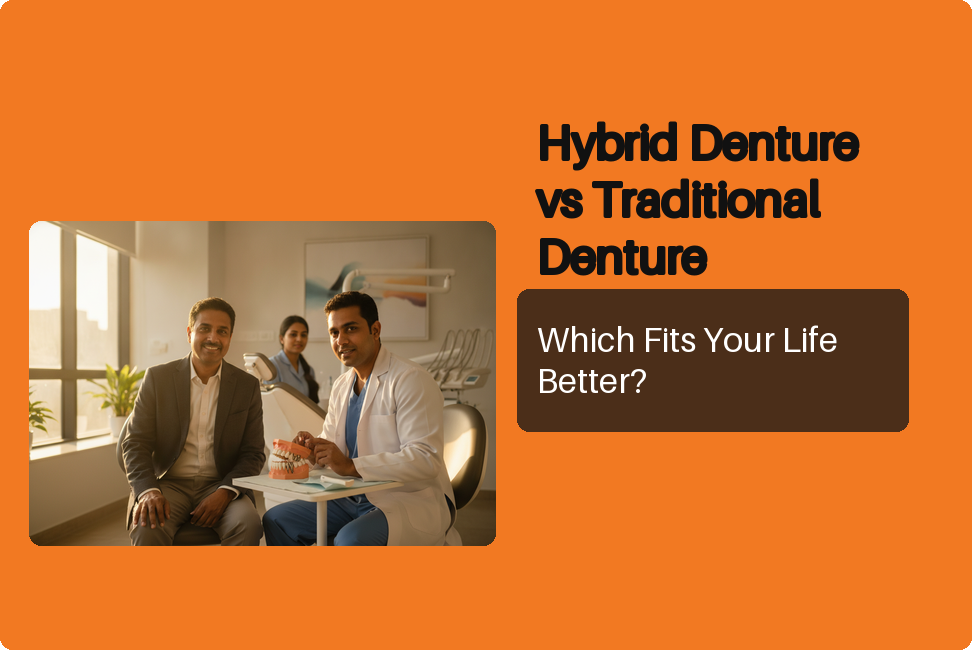
Hybrid denture vs traditional denture is the question patients ask when loose, uncomfortable plates have finally become unbearable. The frustration of slipping dentures, sore gums, and restricted eating takes a real toll on daily life. A traditional denture rests on your gums and is removable, while a hybrid denture is fixed onto implants for secure, stable support. At Partha Dental, we see patients every day who want to eat, speak, and smile without worry, and we guide them through both paths based on bone health, budget, and lifestyle. Understanding how each option actually performs in real use, not just on paper, is what turns confusion into a clear decision. Here is what you need to weigh before you sit down with your dentist.
Key takeaways
- Hybrid dentures attach to implants for stability that traditional dentures cannot match.
- Traditional dentures cost less upfront but may need more adjustments over time.
- Bone preservation is stronger with implant-supported hybrid solutions.
- Eating comfort and speech clarity improve significantly with fixed hybrid designs.
- Your bone density and oral health status determine which option is suitable.
What is the real difference between a hybrid denture and a traditional denture?
A What Is a Hybrid Denture? Benefits & How It Works explains that a hybrid denture is a fixed, implant-supported prosthesis that replaces a full arch of teeth. It screws onto four to six dental implants placed in the jawbone. A traditional denture, by contrast, is a removable acrylic plate that sits on the gum ridge and relies on suction or adhesive for hold. The hybrid design does not shift during eating or speaking, while traditional dentures can slip and require periodic relining as the jawbone changes shape.
At Partha Dental, our consultation process starts with a full oral examination, digital imaging, and bone density assessment. We then explain whether your jaw can support implants or whether bone augmentation might be needed first. This step-by-step evaluation prevents surprises and lets you choose with confidence.
Which option offers better chewing and daily comfort?
Hybrid dentures restore natural chewing function more fully than traditional dentures because they are anchored into the jawbone. Patients often report eating foods like apples, nuts, and grilled meats that they had avoided for years with removable plates. Traditional dentures cover the palate, which can reduce taste sensation and trigger gag reflexes in some wearers. Hybrid designs leave the palate open, improving both taste and comfort.
Research indicates that digital prosthesis performed better than conventional prosthesis with respect to clinical outcomes. This finding supports the move toward precisely fitted, implant-based solutions that match individual anatomy more closely.
How do costs compare over ten years?
The real 10-year cost difference between fixed hybrid, overdenture, and traditional dentures depends on several factors including implant placement, maintenance, and replacement intervals. Traditional dentures have a lower initial cost but may need relining, rebasing, or replacement as the jawbone resorbs. Hybrid dentures involve higher upfront investment for implant surgery and the prosthesis itself, yet their fixed nature often reduces ongoing adjustment costs.
| Cost Factor | Traditional Denture | Hybrid Denture |
|---|---|---|
| Initial prosthesis | Lower | Higher |
| Implant surgery | Not required | Required |
| Long-term adjustments | More frequent | Minimal |
| Bone preservation | None | Supported |
For patients comparing broader dental investments, our guide on Comparing Dental Implant Costs: India vs USA, UK & Australia offers useful context on how implant-based treatments are priced across markets.
Who is a good candidate for each type?
Traditional dentures suit patients who lack sufficient bone density for implants, have medical conditions that contraindidate surgery, or prefer a non-surgical, removable option. They are also the more accessible choice when immediate tooth replacement is needed and budget is a primary concern.
Hybrid dentures are better for patients who want long-lasting stability, bone preservation, and natural chewing function. Adequate jawbone volume is essential, though bone grafting can sometimes prepare a site that initially seems unsuitable. Patients must also commit to excellent oral hygiene around implant abutments to prevent peri-implant disease.
| Suitability Factor | Traditional Denture | Hybrid Denture |
|---|---|---|
| Bone density required | None | Moderate to high |
| Surgical readiness | Not needed | Essential |
| Removal for cleaning | Yes, daily | Only by dentist |
| Palate coverage | Full | Minimal or none |
What does care and maintenance look like?
Traditional denture wearers must remove their plates nightly, brush them, and soak them to maintain hygiene and shape. Over time, changes in gum and bone tissue create fit problems that require professional adjustment. Unlike traditional dentures that sit on the gums and may shift or require adhesives, hybrid dentures are permanently affixed and cannot be removed by the patient, which simplifies daily routine but requires professional cleaning visits.
Hybrid denture patients brush and floss around the prosthesis as they would natural teeth, using interdental brushes and water flossers to clean beneath the framework. Regular dental check-ups allow the dentist to check implant stability and prosthesis integrity. Dental Implants at Partha Dental include follow-up protocols to monitor long-term success.
How do I decide which path to take?
Your decision should rest on a clinical evaluation of bone health, a clear understanding of total cost over time, and honest reflection on your lifestyle priorities. If you value never worrying about a denture slipping at a meal and you have the bone support for implants, a hybrid solution offers distinct advantages. If surgery is not advisable or you prefer a lower initial outlay with removable flexibility, traditional dentures remain a valid, time-tested option.
Patients exploring related solutions may find our Permanent Dentures vs Implants: Which Is Best for You? guide helpful for understanding where hybrid designs fit into the broader implant landscape. Those considering orthodontic alignment before prosthetic work can review Braces Vs Aligners Vs Invisalign: Complete Comparison Guide for context on preparatory treatments.
For patients in specific areas, Dentures in Dilsukhnagar follows the same planning steps and quality standards we apply across all Partha Dental locations.
| Decision Point | Ask Yourself |
|---|---|
| Bone health | Do I have enough jawbone for implants? |
| Budget timeline | Can I invest more now for lower long-term costs? |
| Lifestyle priority | Is fixed stability or removable flexibility more important? |
| Maintenance willingness | Am I comfortable with professional cleaning visits? |
Choosing between a hybrid denture and a traditional denture means weighing upfront cost against long-term stability, and surgery against simplicity. Neither option is right for everyone; your bone health, daily habits, and personal priorities shape the better path. At Partha Dental, we conduct thorough evaluations to match each patient with the prosthetic solution that serves them best. Call +91 801 955 0000 to book a consultation and receive a personalized treatment plan.
FAQs
Are hybrid dentures removable like traditional dentures?
No. Hybrid dentures are permanently affixed to dental implants and can only be removed by a dentist. Traditional dentures are designed for daily removal by the wearer for cleaning and sleep.
Do hybrid dentures feel more natural than traditional dentures?
Yes. Because they are anchored into the jawbone, hybrid dentures restore chewing power and speech clarity more closely to natural teeth. They also avoid the palate coverage that can affect taste and comfort with traditional plates.
How long do hybrid dentures last compared to traditional dentures?
Hybrid dentures typically last longer because their implant support reduces bone resorption and fit changes. Traditional dentures often need relining, rebasing, or replacement as the jawbone reshapes over time.
Is everyone eligible for hybrid dentures?
No. Adequate jawbone density is required to support implants. Some patients need bone grafting first, while others with certain medical conditions may be better suited to traditional dentures.
Are hybrid dentures worth the higher initial cost?
For patients who prioritize stability, eating freedom, and bone preservation, the higher upfront investment often balances out through reduced adjustment costs and improved quality of life. A dentist can project total ownership costs based on your specific case.
Can I switch from traditional dentures to hybrid dentures later?
Yes, provided your jawbone is healthy enough for implants. Many patients begin with traditional dentures and transition to a hybrid solution once their situation allows. A clinical evaluation determines timing and any preparatory steps needed.