












You floss because your dentist told you to. Not because you think it touches your heart. Turns out, it might. The gum-heart connection is one of the more surprising findings in recent medicine. Your mouth and your heart connect in ways researchers are still mapping out.
Here’s the part worth getting right. Gum disease raises your risk of certain heart problems. That’s not the same as saying gum disease causes heart disease. Strong evidence backs one claim. The other goes further than the science allows right now.
At Partha Dental, a gum check looks at your gums on their own terms. It’s not a stand-in for a heart exam. Healthy gums matter either way.
Stick around. You’ll see what the Oral Health Affects Heart Health research shows. You’ll also see how gum disease moves through stages, how a mouth infection could reach your heart, and what’s worth doing about it.
What Does Science Actually Say About the Gum-Heart Connection?
In December 2025, the American Heart Association updated its position on this topic for the first time since 2012. The takeaway: growing evidence links gum disease to several heart problems. That list includes heart attack, stroke, irregular heartbeat, heart failure, and related metabolic problems. Doctors still haven’t proven cause and effect, though.
People with gum disease show up more often in heart attack and stroke statistics than people with healthy gums. That’s one clear way oral health links to heart health in the data, even without a proven cause. One question remains unanswered: does fixing your gums lower your heart risk? The AHA statement says the research isn’t there yet. That gap matters more than most headlines let on.
How Gum Disease Progresses?
Gum disease doesn’t show up overnight. It moves through stages. Knowing them explains why early treatment matters so much, heart research aside.
| Stage | What’s Happening |
| Gingivitis | Early swelling from plaque buildup, gums may look red or bleed easily, usually reversible |
| Periodontitis | Gums start pulling away from teeth, forming pockets that trap bacteria |
| Severe periodontitis | Serious damage to the bone that supports teeth, teeth may loosen or fall out |
Most gum-heart research studies periodontitis and severe periodontitis. Not the earlier, more reversible stage of gingivitis. That’s worth knowing if a dentist just told you that you have mild gum swelling.
How Could Gum Disease Affect Your Heart?
Two theories lead the pack right now. Both rest on things doctors already understand well.
Bacteria Entering the Bloodstream
Inflamed or bleeding gums aren’t just a mouth problem. They act like an open door. Bacteria that normally stay in your mouth can slip into your bloodstream through that damaged tissue. From there, they travel elsewhere in your body. At the best dental clinic in bangalore, dentists see this clearly. Bleeding gums aren’t something to just live with.
Chronic Inflammation
Gum disease and heart disease share a troublemaker: ongoing swelling deep in the body. Infected gums release inflammatory signals that can circulate well beyond your mouth. These signals may reach blood vessels far from where the problem started. At the best dental hospital in Chennai, dentists treat this systemic angle as one more reason to catch gum disease early. They don’t treat it as proof of a heart problem.
What Raises the Risk of Both Gum Disease and Heart Disease?
Some risk factors don’t pick a side. They quietly raise your odds for both conditions at once. That helps explain why the two so often show up together.
| Risk Factor | Affects Gums | Affects Heart |
| Smoking | Slows healing, worsens gum disease | Damages blood vessels, raises heart disease risk |
| Diabetes | Increases infection risk in gums | Raises heart disease risk |
| Age | Gum disease becomes more common | Heart disease risk climbs too |
| Poor diet | Feeds the bacteria behind gum disease | Builds up plaque in your arteries |
None of this proves a direct path between the two conditions. It just means the same habits that hurt your gums often work against your heart too. The best dental clinic in Bangalore screens for these overlapping risk factors as a routine part of every gum exam.
What Are the Warning Signs of Gum Disease?
Your gums warn you before things get serious, if you know what to watch for. Catch gum disease early. It matters on its own, heart research aside.
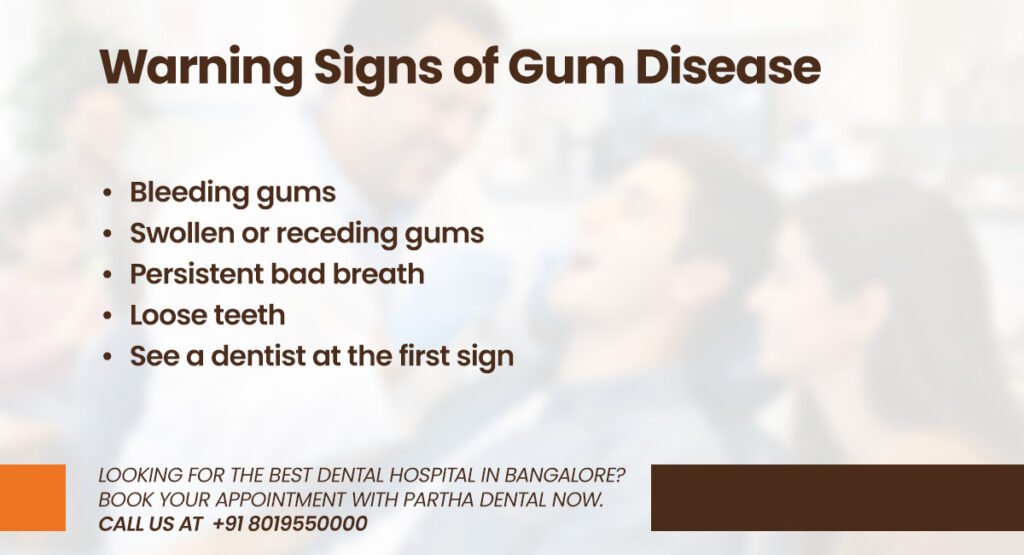
- Gums that bleed when you brush or floss
- Gums that look red, puffy, or seem to pull away from your teeth
- Bad breath that lingers no matter how well you brush
- Teeth that feel loose or seem to shift
What Should You Actually Do With This Information?
Treat your gums seriously because gum disease deserves it on its own. Not because it guarantees a healthier heart.
- Brush twice a day and floss once, every day, no exceptions
- See a dentist every 6 months, sooner if your gums bleed often
- Manage diabetes and quit smoking wherever they apply, since both work against gums and heart at once
- Tell your doctor if you already have a heart condition, and mention it to your dentist too
Your mouth stays part of your overall health picture. It doesn’t run on its own separate rules. Oral health links to heart health as one piece of a much bigger picture. If you have specific heart concerns, though, your doctor still manages those.
Book a Gum Health Check With Partha Dental Now!
Partha Dental runs gum checks across 120+ clinics and 300+ doctors in South India. Its dentists train specifically to catch gum disease early. A gum exam is where the real conversation about your gum health starts, heart research aside. Nothing here promises that fixing your gums will fix your heart. It offers something else instead: an honest, thorough look at your gum health.
Book a consultation at your nearest Partha Dental clinic, or call us at +91 8019550000 to schedule an appointment.
Frequently Asked Questions
What’s the Difference Between Gingivitis and Periodontitis?
Gingivitis is the early, usually reversible stage. It mostly causes gum irritation and occasional bleeding. Periodontitis goes further. Gums pull away from teeth, and bone damage starts underneath. Most gum-heart research studies this more advanced stage, not early gingivitis.
Can Good Oral Hygiene Alone Prevent Heart Disease?
No. No dentist should claim it can. Brushing and flossing protect your gums and cut your risk of gum disease, which research links to heart health. But heart disease has many other causes. Oral hygiene can’t replace the usual heart-health basics: diet, exercise, and managing blood pressure.
How Is Gum Disease Actually Diagnosed?
A dentist checks for bleeding, gum pocket depth, and bone loss around your teeth. This takes a simple probe and sometimes an X-ray. It’s a quick, routine part of a dental exam, not a separate specialized test.
Should I Tell My Dentist About a Heart Condition I Already Have?
Yes, definitely. Some heart problems change how a dentist plans your treatment, including whether you need antibiotics first. The best dental hospital in Chennai asks about heart history as standard practice for every new patient.
Is the Gum-Heart Connection Proven, or Still a Theory?
It’s real, established, peer-reviewed research. Not a fringe idea someone made up. But it’s also not proof of direct cause and effect. That’s enough reason to take your gum health seriously, without treating it as a guaranteed way to protect your heart.