











Dandruff treatment is what you need when white flakes on your shoulders and an itchy scalp start affecting your confidence and daily comfort. Around half of all people worldwide experience dandruff at some point, so you are far from alone in this search. The good news is that effective solutions exist, from over-the-counter shampoos to targeted clinical care for stubborn cases. At Partha Dental, we see patients who have tried multiple products without relief, and we help them find approaches that match their scalp condition. This guide explains what actually works, what to avoid, and when professional help makes sense. Keep reading to learn how to choose the right option for your situation.
What causes dandruff in the first place?
Dandruff develops when the scalp sheds skin cells faster than normal. Several factors drive this: a yeast-like fungus called Malassezia that feeds on scalp oils, oily skin, sensitivity to hair care products, and certain skin conditions like seborrheic dermatitis. Cold, dry weather can worsen it. Stress and illness may also trigger flare-ups. Understanding the cause matters because it shapes which dandruff treatment will actually help you.
Which over-the-counter dandruff treatment works best?
Medicated shampoos are the first line of defense. Look for these active ingredients:
- Ketoconazole: An antifungal that targets Malassezia fungus
- Selenium sulfide: Slows skin cell death and reduces fungus
- Zinc pyrithione: Antifungal and antibacterial properties
- Salicylic acid: Helps eliminate scaling
- Coal tar: Slows skin cell turnover
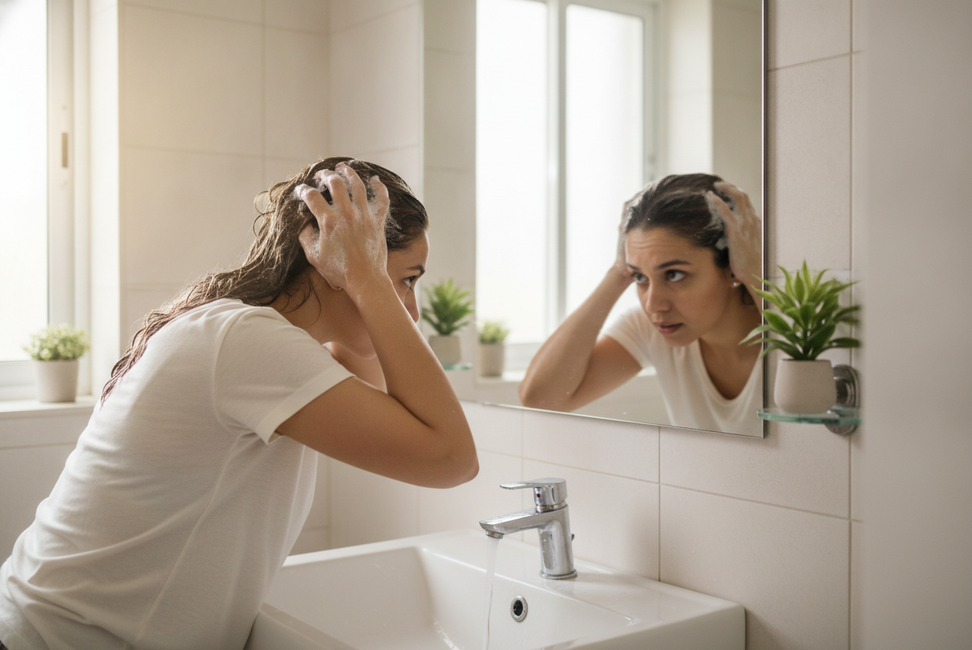
Use the shampoo two to three times weekly, leaving it on your scalp for several minutes before rinsing. Rotate between two different active ingredients if one loses effectiveness. If you also notice hair thinning, our Anti Hair Fall Treatment can address both concerns together.
When should you see a dermatologist for dandruff treatment?
Book a consultation if over-the-counter shampoos fail after several weeks, if your scalp becomes very red or swollen, if flakes spread to your eyebrows, ears, or face, or if you notice significant hair loss. These signs may indicate seborrheic dermatitis, psoriasis, or another condition requiring prescription-strength dandruff treatment. A dermatologist can prescribe stronger antifungal shampoos, topical corticosteroids, or calcineurin inhibitors for stubborn inflammation.
| Symptom | Likely Cause | Typical Treatment |
| Mild flakes, occasional itching | Simple dandruff | Medicated shampoo 2-3x weekly |
| Thick, greasy scales on scalp | Seborrheic dermatitis | Prescription antifungal + steroid |
| Silvery plaques on scalp | Scalp psoriasis | Topical vitamin D or steroid |
| Flakes with hair thinning | Multiple factors | Combined scalp and Anti Hair Fall Treatment |
Can home remedies replace medical dandruff treatment?
Some people find relief with tea tree oil, apple cider vinegar rinses, or aloe vera. Tea tree oil has mild antifungal properties, but concentrations in commercial products vary widely. Apple cider vinegar may alter scalp pH, though evidence is limited. These approaches carry a risk of irritation or allergic reaction. They work best as supplementary measures rather than replacements for proven dandruff treatment, especially for moderate to severe cases.
How do you prevent dandruff from coming back?
Prevention focuses on scalp health and trigger management:
- Wash regularly with a suitable medicated shampoo, even after symptoms improve
- Manage stress through sleep, exercise, or relaxation techniques
- Limit hair products that build up on the scalp
- Get adequate sunlight exposure, which may reduce fungus growth
- Eat a balanced diet with enough zinc and B vitamins
For those dealing with persistent scalp issues alongside visible hair loss, exploring options like Hair Patch Treatment may restore both appearance and confidence.
| Prevention Strategy | How It Helps | Frequency |
| Medicated shampoo maintenance | Keeps fungus levels controlled | 1-2 times weekly |
| Scalp exfoliation | Removes buildup before it flakes | Weekly |
| Stress reduction | Reduces inflammatory flare-ups | Daily practice |
| Dietary zinc and B vitamins | Supports healthy skin cell turnover | Daily intake |
What is the long-term outlook with proper dandruff treatment?
Most people control dandruff successfully with consistent care. It is a chronic condition for many, meaning management rather than cure is the realistic goal. With the right shampoo, proper technique, and attention to triggers, flare-ups become less frequent and less severe. For the small percentage with underlying conditions like psoriasis, ongoing dermatological care keeps symptoms in check. The key is matching the treatment to your specific scalp condition and staying consistent.
Struggling with persistent flakes and scalp irritation? Call Partha Dental to book a scalp assessment and discuss personalised dandruff treatment options that fit your condition.
Effective dandruff treatment starts with understanding your specific scalp condition. Over-the-counter medicated shampoos help most mild cases, while stubborn or severe symptoms need professional evaluation. Consistency matters more than any single product. Your next step is choosing one active ingredient to try, or contacting Partha Dental if home care has not worked after a few weeks.
FAQs
How long does dandruff treatment take to work?
Most medicated shampoos show noticeable improvement within two to four weeks of regular use. You should use the product two to three times weekly and leave it on the scalp for several minutes before rinsing. If you see no improvement after a month, consult a dermatologist for stronger options.
Can dandruff cause permanent hair loss?
Dandruff itself does not cause permanent hair loss, but constant scratching and inflammation can weaken hair follicles temporarily. If you notice significant shedding alongside flakes, a combined approach addressing both scalp health and hair retention may be needed.
Is dandruff contagious?
No, dandruff is not contagious. It results from individual factors like scalp oil production, fungal growth, and skin sensitivity. You cannot catch dandruff from another person or pass it to someone else.
Should I wash my hair more or less often with dandruff?
Regular washing helps remove excess oil and flakes, but overwashing with harsh products can dry the scalp and worsen irritation. Aim for washing every two to three days with a gentle, medicated shampoo, adjusting based on how your scalp responds.
Can diet affect dandruff severity?
Diet plays a supporting role. Diets high in sugar and processed foods may promote inflammation, while adequate zinc, B vitamins, and omega-3 fatty acids support healthier skin. Dietary changes alone rarely eliminate dandruff but can complement other treatments.