












Table of Contents
Recovering from wisdom tooth surgery is not only a matter of time till the pain is gone. It is a matter of knowing your body, adhering to proper dental care, and allowing yourself to take it easy. At Partha Dental, most of the time, patients reach the clinic feeling nervous, holding their jaw, narrating the pain at the back of the mouth, or telling about the pressure behind the molars that has kept them awake at night. The relief begins immediately with the extraction of the troublesome tooth, but the healing process is a gradual journey.
In this blog post, a genuine human-like manner is used to narrate the recovery period post Wisdom Teeth Extraction in Guduru; the sensations in the mouth, the actual duration of healing, and the reason why timely extraction is good for one’s long-term comfort.
Understanding Wisdom Teeth and Why Extraction Becomes Necessary
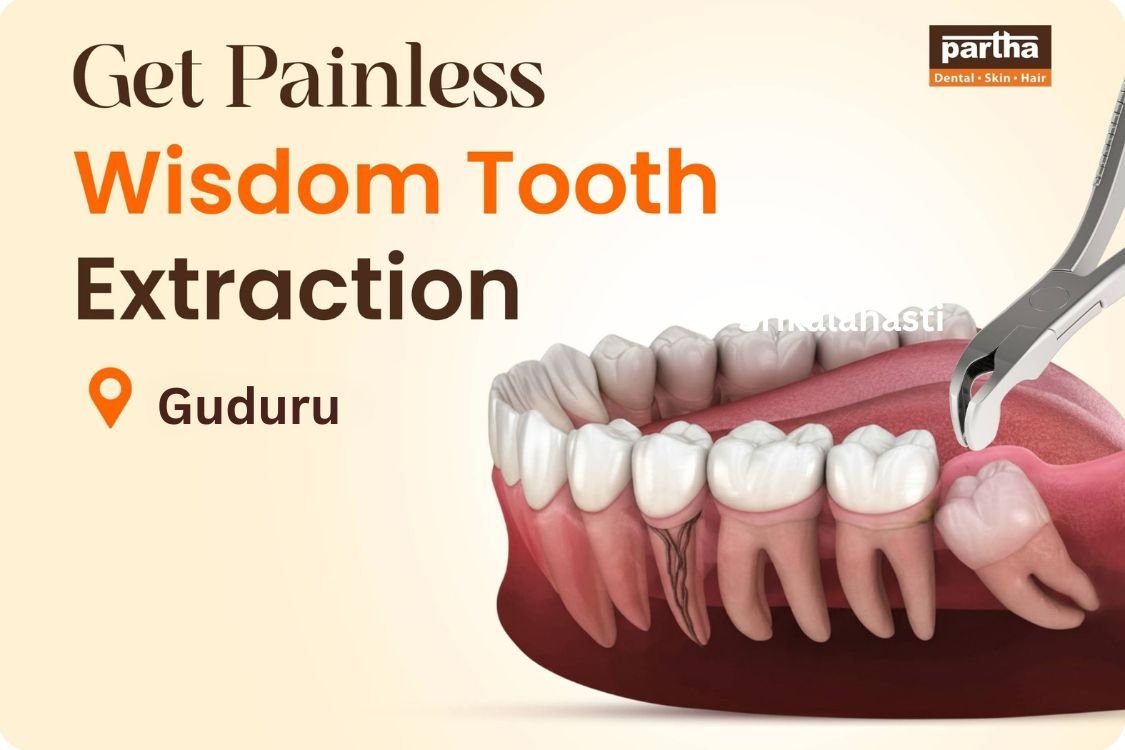
Wisdom teeth are the last molars to emerge, usually between the late teens and mid-twenties. For many people, there simply isn’t enough space. When wisdom teeth don’t get enough space, problems begin quietly and then escalate.
Patients often report an aching wisdom tooth, swollen gums near wisdom teeth, or redness around wisdom tooth areas. Sometimes the pain is subtle. Other times it shows up as jaw soreness wisdom teeth or facial pain from wisdom teeth that spreads toward the ear.
Wisdom teeth growing sideways are usually termed as impacted wisdom teeth causing accumulation of food and bacteria under the gums. In turn, this leads to a dental condition called gum infections around wisdom teeth, a bad taste in the mouth due to wisdom teeth, and swelling of the gums surrounding the wisdom tooth. Eventually, the tooth decay and bite misalignment caused by wisdom teeth can result in permanent complications.
This is where Wisdom Teeth Extraction in Guduru becomes more than a procedure—it becomes preventive care.
How Dentists Decide on Wisdom Teeth Extraction
The expert dentist does not do extraction all at once. At Partha Dental, X-rays, bite studies, and symptom history guides the decision. The warning signals that indicate the removal of wisdom tooth are chronic uneasiness, feeling of tightness in the jaw where the wisdom teeth are located, painful biting of the wisdom teeth, and mild to severe recurring pain in the wisdom tooth area, which does not go away easily.
Delaying treatment may feel convenient, but problems caused by delaying wisdom teeth removal often include worsening infection, bone damage, and chronic oral inflammation. Many patients later say they wish they had chosen early wisdom teeth removal advantages instead of waiting.
The Day of Wisdom Teeth Extraction in Guduru
On the day of Wisdom Teeth Extraction in Guduru, the atmosphere is calm and controlled. Local anesthesia or sedation ensures comfort. The extraction itself may take 30 to 60 minutes depending on whether teeth are impacted.
Patients often describe pressure—but no pain. After the extraction, gauze is placed, instructions are reviewed, and recovery begins immediately. This is where proper dental care matters most.
Recovery Timeline after Wisdom Teeth Extraction
Healing happens in stages. Each stage feels different, and knowing what is normal helps reduce anxiety.
First 24 Hours: The Critical Phase
This is when bleeding control and clot formation matter most. Slight oozing is normal. Ice packs help reduce wisdom teeth causing swelling and pain. Speech may feel awkward. Rest is essential.
Soft foods only. No straws. No smoking. These rules protect the clot and prevent dry socket.
Days 2–3: Peak Swelling
Swelling and jaw stiffness often peak here. Jaw soreness wisdom teeth symptoms can feel intense. Bruising may appear. Warm compresses can help after the first 48 hours.
Pain medication prescribed by your dentist helps manage discomfort. Most patients notice pressure behind molars easing as inflammation settles.
Days 4–7: Noticeable Improvement
By this stage, swelling decreases. Mouth opening improves. Many patients describe relief—the kind where chewing no longer triggers facial pain from wisdom teeth.
Light activity resumes. Soft solid foods return slowly. The extraction sites remain tender but manageable.
Weeks 1–2: Functional Recovery
Most discomfort reduces. Stitches may dissolve or be removed. Patients return to work and social life without constant awareness of their jaw.
This is when many realize how much discomfort they had been tolerating before Wisdom Teeth Extraction in Guduru.
Months 3–6: Deep Healing
The bone socket fills in gradually. This process is silent but essential. Proper dental care ensures long-term comfort and oral stability.
What Recovery Feels Like Emotionally
Healing is not just physical. One patient once shared how strange it felt to eat without discomfort when biting wisdom teeth after years of adapting to pain. That moment—biting down without fear—marks true recovery.
Relief replaces anxiety. Smiling feels natural again. Sleep improves. These changes are subtle but life-enhancing.
Managing Pain and Supporting Healing
Pain after extraction is expected, but it should steadily improve. Over-the-counter medication or prescribed relief helps control mild to severe wisdom tooth pain in the first few days.
Good dental care habits include:
- Gentle saltwater rinses after 24 hours
- Keeping the area clean without aggressive brushing
- Avoiding hard or sticky foods
- Staying hydrated
Ignoring instructions increases risk. Dry socket, infection, and delayed healing often stem from rushed activity or smoking.
Benefits of Wisdom Teeth Extraction
The benefits extend far beyond pain relief.
The benefits of early wisdom teeth extraction are getting rid of the recurrent toothache, reducing the chance of getting an infection, and taking care of the jawbone’s health. Tooth extraction stops the teeth overpopulation and also aids the gum tissue that is in good condition.
Patients also experience reduced facial and jaw pain, avoidance of future oral surgery, and long-term comfort and oral stability. These benefits make Wisdom Teeth Extraction in Guduru a proactive health decision.
Why Choose Partha Dental for Wisdom Teeth Extraction in Guduru
At Partha Dental, experience meets compassion. Each Ans: focuses on patient comfort, clarity, and recovery success. Treatment plans are tailored, not rushed.
From diagnosis to follow-up, Partha Dental focus safety, education, and genuine dental care. Patients are guided through every stage with calm reassurance.
Many who undergo Wisdom Teeth Extraction in Guduru here say the fear they carried for years dissolved within days of healing.
Long-Term Oral Health After Extraction
Once wisdom teeth are removed, oral hygiene becomes easier. No more trapped food. No inflamed tissue around wisdom tooth areas. No recurring infections.
Regular check-ups with your dentist ensure surrounding teeth remain healthy. The absence of chronic inflammation supports overall oral wellness and bite balance.
This is why extraction is often worth it—not just for today, but for decades of comfort.
Book your FREE consultationFAQs
Ans: Pain is generally experienced within the first three days after the tooth has been extracted. However, the majority of patients do not feel any pain by the fifth or seventh day. There might be some slight soreness lasting for the full two weeks. Well-timed and correct dental hygiene, taking it easy, and using the prescribed drugs are the effective steps which ensure that the pain reduces gradually and without any risks of complications.
Ans: Yes, swelling is completely normal and usually peaks around days two to three. It gradually reduces over the following days. Ice packs during the first 48 hours and warm compresses afterward help manage swelling and improve jaw movement.
Ans: Soft foods are recommended for the first few days. By the end of the first week, most patients can slowly reintroduce solid foods as comfort allows. Avoid hard, crunchy, or sticky foods until full gum healing occurs.
Ans: Persistent severe pain, foul odor, fever, pus, or worsening swelling may indicate infection or dry socket. Immediate consultation with a dentist is important to prevent delayed healing or further complications.
Ans: Yes. Occasional pain often signals underlying issues like trapped wisdom teeth or infection. Extraction prevents future flare-ups, protects nearby teeth, and reduces the risk of long-term wisdom teeth complications.
Dental Questions? We’re here to help!
Disclaimer:
The prices mentioned in this blog are indicative and may vary based on the severity of the condition, the technology used, and materials recommended by the dentist. They are accurate as of the date of publishing and are subject to change based on clinic policy. Third-party or AI-generated estimates may not reflect actual clinic pricing. For accurate cost details, please visit your nearest Partha Dental clinic.