












When Is Gum Disease Treatment Needed in HSR Layout?
Gums that bleed when you brush are not normal. Neither is persistent bad breath that mouthwash does not fix, or a tooth that feels loose for no clear reason. These signs build slowly. Most people notice them for weeks before acting.
- Bleeding gums during brushing or flossing, even with gentle pressure
- Persistent bad breath that returns within hours of cleaning your teeth
- Gum recession making teeth look longer or exposing yellow root surfaces
- Deep pockets between tooth and gum that trap food after every meal
- Shifting or loose teeth that change how your bite fits together
- Tenderness or swelling in one area that does not resolve in three days
- Pus between teeth or a constant metallic taste in your mouth
A dentist confirms the diagnosis with a periodontal probe and an X-ray. Only then can the right treatment be planned.
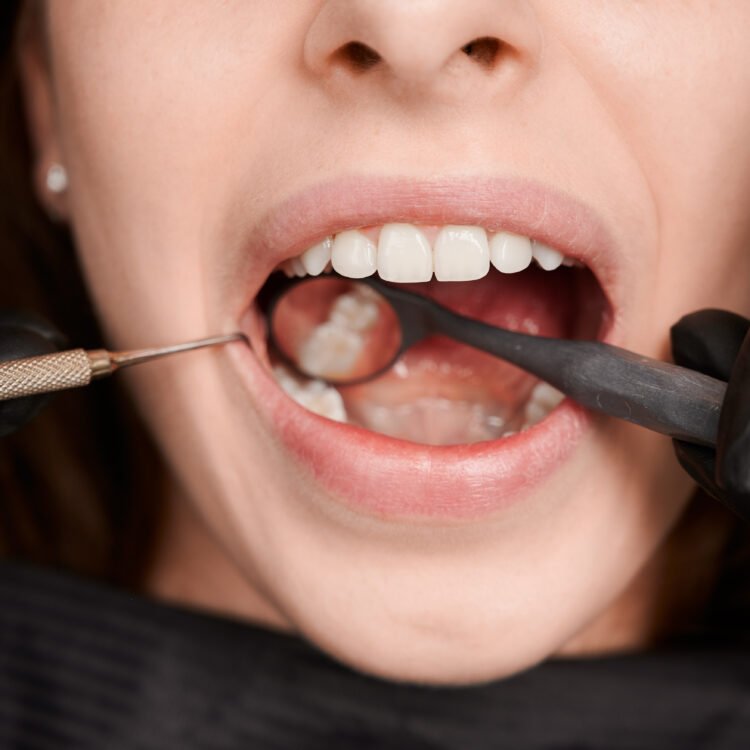
Non-Surgical vs Surgical Gum Treatment
The depth of your gum pockets and bone loss on the X-ray decide which approach fits. Early disease responds to cleaning. Advanced cases need surgical access.
- Scaling and root planing: Deep cleaning below the gumline, done under local anaesthesia, no cutting
- Flap surgery: The gum is lifted to clean deep pockets and reshape damaged bone
- Bone grafting: Added when X-ray shows significant bone destruction around roots
- Gum grafting: Covers exposed roots where recession has progressed
- Laser-assisted options: May reduce bleeding in selected cases, not a replacement for mechanical cleaning
- Healing time: Non-surgical cases typically recover in 3 to 7 days; surgical cases need 2 to 4 weeks
How Partha Dental Performs Gum Treatment
- The periodontist measures every gum pocket with a calibrated probe and records bleeding points
- A full mouth X-ray or OPG assesses bone levels around each tooth
- Local anaesthesia numbs the area before any instrument enters the pocket
- Ultrasonic scalers remove hardened tartar above and below the gumline
- Hand instruments plane the root surface smooth so gums can reattach
- A follow-up appointment at 4 to 6 weeks checks pocket depth reduction
What to Expect After Gum Treatment
Your gums will feel tender for 24 to 48 hours. Sensitivity to cold is common for two weeks. Most patients return to normal eating by day three.
- Rinse with warm salt water three times daily for the first three days
- Brush gently with a soft brush; avoid the treated area for 24 hours
- Take prescribed antibiotics exactly as directed, even if symptoms improve
- Avoid smoking for at least 72 hours; it delays healing significantly
- Eat soft foods for 48 hours; avoid seeds, nuts, and crunchy items
- Use desensitising toothpaste if cold sensitivity persists beyond two weeks
- Call the clinic if bleeding continues beyond 24 hours or swelling worsens after day three
What Happens If Gum Disease Is Left Untreated?
Plaque bacteria trigger chronic inflammation. Over months and years, this destroys the ligament and bone that hold teeth in place. Teeth loosen. Chewing becomes painful. Infection can spread to adjacent tissues. The process is slow but typically irreversible without intervention.
Why Patients Choose Partha Dental in Bangalore
- BDS and MDS qualified periodontists handle all gum cases, not general dentists
- NABH-accredited protocols govern instrument sterilisation and infection control
- Same-day appointment availability across Bangalore branches for urgent gum assessments
- Written treatment plans itemise each stage so patients know what to expect
- EMI payment options spread the cost of surgical procedures over manageable instalments
- Pan-India network of 100+ branches means records transfer if you relocate
Book Gum Care Near You in Bangalore
Call your nearest Partha Dental branch to schedule a periodontal assessment. The dentist will examine your gums, take any needed X-rays, and explain whether non-surgical or surgical treatment suits your case.
- Bangalore, Karnataka: 0804206 0100