












When Is Gum DIsease Treatment Needed?
Your gums bleed when you brush. They look puffy or feel tender. You notice bad breath that mouthwash does not fix. These signs mean you should be examined, not that you definitely need treatment. Only a dentist with an X-ray can confirm how far the disease has progressed.
- Bleeding gums during brushing or flossing, even gently
- Persistent bad breath or a bad taste that returns after cleaning
- Gums pulling back from teeth, making them look longer
- Loose teeth or a change in how your bite fits together
- Pus between teeth and gums when you press gently
- Swollen, red gums that no longer hug the tooth tightly
An examination and full mouth X-ray confirm whether Gum DIsease Treatment in Guntur is what you need.
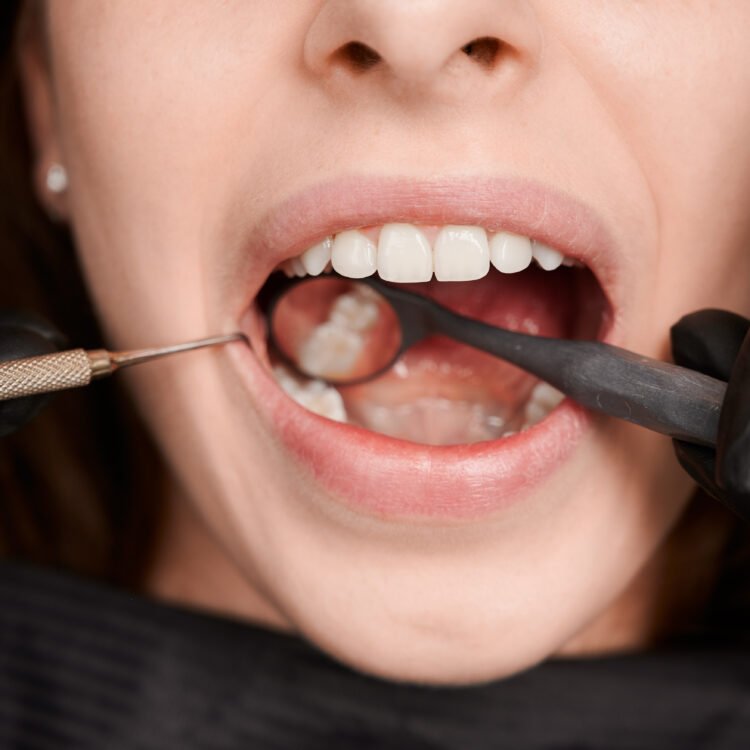
Non-Surgical vs Surgical Gum Treatment
The depth of your gum pockets decides the approach. Shallow pockets respond to cleaning below the gumline. Deeper pockets need surgical access to remove diseased tissue and reshape bone.
- Non-surgical scaling: removes tartar above and below the gumline with hand instruments and ultrasonic scalers
- Root planing: smooths root surfaces so gums can reattach, done under local anaesthesia
- Flap surgery: lifts gums to clean deep pockets and repair bone damage
- Bone grafting: replaces bone lost to advanced disease, placed during surgery
- Healing time: non-surgical cases need 1 to 2 weeks; surgical cases need 2 to 4 weeks typically
- Follow-up frequency: non-surgical patients return in 3 months; surgical patients need closer monitoring
How Partha Dental Performs Gum Treatment
- The dentist measures your gum pockets with a calibrated probe and records six readings per tooth
- You get a full mouth X-ray to check bone levels around each tooth
- The dentist explains whether you need scaling, root planing, or surgery based on pocket depth
- Local anaesthesia numbs the area before any deep cleaning or surgical work begins
- The hygienist or periodontist removes tartar and infected tissue using ultrasonic and hand instruments
- You receive a written aftercare sheet and your next appointment date before leaving
What to Expect During Recovery
Some soreness is normal for 24 to 48 hours. Your gums may feel tight as they heal. Avoid hard, spicy, or hot foods during the first week. Most patients return to normal brushing within 10 to 14 days, sometimes sooner for non-surgical cases.
- Rinse with warm salt water 2 to 3 times daily for the first 3 days
- Brush gently with a soft brush; avoid the treated area for 48 hours
- Take prescribed antibiotics or pain relief exactly as directed
- Eat soft foods for 3 to 5 days after surgical treatment
- Do not smoke for at least 2 weeks; smoking delays healing significantly
- Call the clinic if bleeding continues past 24 hours or pain worsens after day 3
- Attend your follow-up on the scheduled date so the dentist checks pocket reduction
What Happens If Gum Disease Is Left Untreated?
Gum disease does not heal on its own. The inflammation spreads deeper, destroying the fibres that hold teeth in place. Bone around the teeth shrinks. Teeth loosen and may shift or fall out. In advanced cases, infection can affect general health. A dentist confirms the stage after examination and X-ray.
Why Patients Choose Partha Dental in Guntur
- BDS and MDS qualified periodontists handle all gum cases, from mild bleeding to advanced bone loss
- The clinic follows NABH-accredited sterilisation protocols for every instrument and handpiece
- EMI payment options spread treatment cost across manageable monthly instalments
- Same-week appointments are usually available for urgent gum pain or swelling
- Follow-up care is built into the treatment plan, not sold as an extra
Book Gum Treatment Near You in Guntur
Call or visit the branch to schedule your examination. The dentist will measure your pockets, review your X-ray, and explain whether non-surgical or surgical Gum DIsease Treatment in Guntur fits your case.
- Guntur, Andhra Pradesh: 095737 61542