












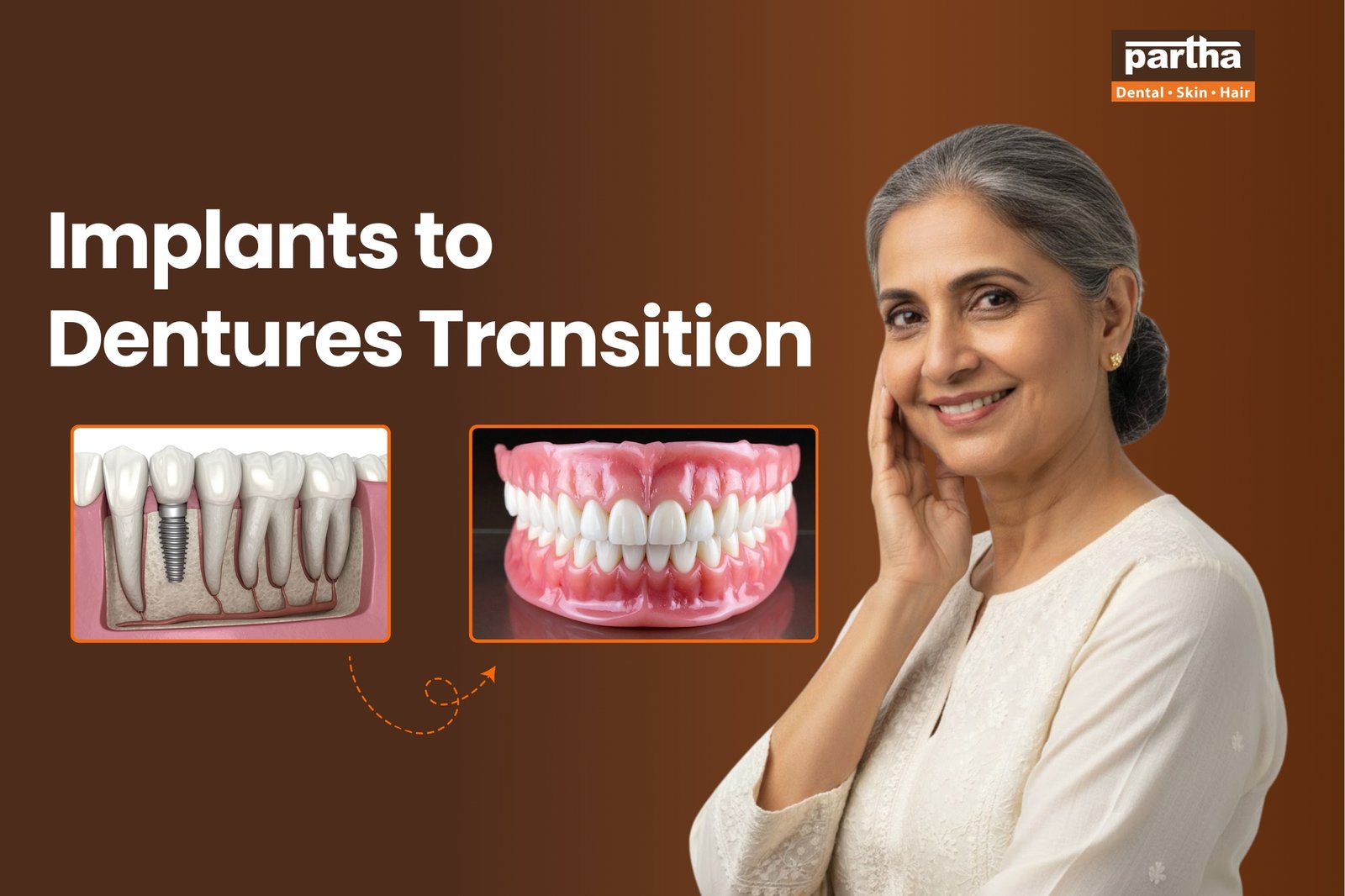
People often walk into our offices wondering if switching from dentures – full or partial – to implants is even possible. Good news spreads quietly: nearly everyone fits the criteria. Wearing dentures right now? That’s fine. Time doesn’t disqualify you. In fact, it means you might be ready for something more stable.
Implants skip the need for adhesives or surrounding teeth holding things together. Instead, they go straight into the bone, mimicking what roots once did. Not a fix on top, but a foundation built below.
What’s the Real Requirement Needed to Receive Implants?
A healthy jawbone (or, if necessary, rebuilding).
The good news is that today’s dental technology provides procedures and products available to rebuild lost bone.
Dentures: Useful, but Not Without Issues
Dentures serve their purpose, yet they do have some issues.
People are starting to change out their dentures for dental implants because:
- Denture slippage during meals and when talking.
- Weak chewing ability (goodbye peanuts and apples).
- Continued bone loss underneath dentures.
- Difficulty with daily life.
- cleaning/removing.
- Denture wearers feel older than they really are.
Dental implants sit in the mouth like real ones – smoother, quieter, without that constant fuss. Unlike dentures, they stick around without slipping or demanding daily upkeep.
From Dentures to Implants: What’s Involved?
Break it down slowly, one piece at a time – clear, gentle, nothing overwhelming. Move through it like a quiet walk, each part making sense before the next begins.
The shift from dentures to implants isn’t something that happens overnight – though it might start slow, progress shows up when you least expect. Time shapes each step differently, weaving change gradually without warning. What feels like delay often turns into necessary groundwork, unfolding at its own rhythm.
Step 1: Your Dental Implant Consultation
(The Planning Stage)
Your first visit to Partha Dental is going to be a thorough evaluation to create the best plan for you:
- Digital images
- X-ray or Cone Beam CT images
- Degree of gums and bone
- History of dentures
All of the information you provide gives your dentist an accurate idea of:
- How many implants you will need
- If there is a need for bone grafting
- What type of implant works best for you
This sets up a clear path ahead – sketching out steps before stepping forward, so hiccups don’t catch you off guard.
Step 2 Leaving loose dentures behind for now.
If you’ve received dentures, know this – through each step ahead, there’ll always be teeth in place. Moments may shift, yet emptiness won’t settle. Where gaps might form, solutions follow close behind. Every phase keeps something solid present. No stretch goes bare. Continuity stays intact, quietly, without fuss.
In the majority of scenarios:
- You can receive modifications to your current set of dentures.
- You can receive Temporary Teeth during your journey.
- You will be able to walk around with your smile intact while undergoing treatment.
- Therefore, yes, you can still attend all of your weddings/meetings/selfies while going through this journey.
Implant Supported Dentures: The Best of Both Worlds
Ceramic braces are a top pick for teens who care about how they look. Though these braces tend to cost a bit more than metal ones, plenty of parents feel the trThis is the part of the journey that gets exciting.
Implant Supported Dentures allow you to have a more stable base compared to traditional dentures. They attach directly to implants rather than sitting on the gums, locking into place through snaps or screws.
Benefits include:
- No unwanted shifting during daily use.
- Improved biting force due to bone support.
- Easier long-term wear without pinching or pressure.
- More natural speech without wobbling plates.
For lower arches, people often get two to four implants.
The upper jaw usually requires four to six due to differences in bone density and surface area.
Also, the dentist will always be the one to take the dentures out but the implants will not just fall out.
Who Should Consider Implant Supported Dentures?
Patients ideal for Titanium fixed bases are:
- Individuals who desire stability but not want to invest in a full-fixed implant.
- Individuals who wear current set of dentures.
- Individuals who desire an implant option that is easy on the budget.
- Individuals who desire an implant option that allows for easier cleaning.
Many Partha Dental patients describe this transition as moving from bicycles to motorcycles similar concept, but a completely better experience.
What Happens If You’ve Worn Dentures for Years?
Long-term denture use can cause jawbone shrinkage, known as bone-resorption. However, this does not disqualify you from implants.
Thanks to dental innovation and new technologies, viable solutions exist through:
- Dental Bone Grafting.
- New Advances in Implant Placement Techniques.
- Precision Placement Techniques for Implants.
Wearing dentures a decade, maybe even two, still brings solid results – time doesn’t seem to dull their effectiveness. Success sticks around, showing up just as often down the road as it did at the start.
Fixed Implants vs. Implant Supported Dentures
Fixed Implant Teeth
- Fixed immediately onto your jawbone.
- Most similar to natural teeth.
- Provide the greatest stability.
- Cost a little more.
Implant Supported Denture
- Snap in or screw-retained
- Cost less
- Removable for cleaning
- Much more stable than standard dentures
Your dentist walks beside you – no push, just presence.
Healing and adjustment how long it takes?
Swelling or tenderness can show up after placement. Recovery takes time – rolling out over weeks, occasionally longer – yet most people drift back into routine right away.
When permanent teeth arrive, something clicks.
- Some forget what real chewing felt like
- Others wonder why they waited so long
- Many didn’t expect to feel this steady while eating
The transition can be life-changing physically and emotionally.
Cost vs. Value
For many, the transition is costly. But implants offer long-term benefits:
- Longevity.
- Prevention of bone loss.
- No frequent denture replacements.
- Enhanced quality of life.
Implants are an investment, not an expense. Partha Dental offers payment options and pricing transparency to give peace of mind.
Life after Your Transformation
Daily benefits include:
- Improved digestion
- Clearer speech
- Increased confidence
- Emergency-free denture glue
- No late-night denture issues
You’ll still maintain oral hygiene minus the daily denture hassle.
The move from dentures to implants restores ease in everyday life chewing, speaking, and smiling without second thought.
Meals feel simple again. Smiles stay effortless. Confidence returns quietly.
If shaky dentures have worn down your patience, maybe it’s time for something steadier.
A stunning, vibrant smile might be closer than it seems. Call us 04041420000 now to book an appointment!
6. Frequently Asked Questions (FAQs)
A: Yes. Bone loss is common, and solutions like grafting are available.
A: Implants are permanent. Dentures may need replacement over time.
A: Most patients report minimal pain.
A: A few months for some, immediate loading for others.
A: Very similar to natural teeth.
A: Yes. Health matters more than age. Read more.
Dental Questions? We’re here to help!
Disclaimer:
The prices mentioned in this blog are indicative and may vary based on the severity of the condition, the technology used, and materials recommended by the dentist. They are accurate as of the date of publishing and are subject to change based on clinic policy. Third-party or AI-generated estimates may not reflect actual clinic pricing. For accurate cost details, please visit your nearest Partha Dental clinic.