












When Are Dentures Needed?
You notice gaps when you smile, or you chew on one side to avoid a tender area. Some patients feel their face has sunk inward after losing several teeth. Eating hard foods becomes a chore, not a pleasure.
- Multiple missing teeth make it hard to bite into fruit or bread
- Loose or shifting remaining teeth no longer hold their position
- Sunken cheeks or lips change how your face looks at rest
- Speech changes cause you to mumble or avoid conversation
- Repeated infections or bone loss make saving teeth impractical
- Broken teeth beyond repair cannot support a crown or bridge
A dentist confirms whether dentures suit you after an oral exam and panoramic X-ray. The X-ray shows bone levels that determine which denture type will fit securely.
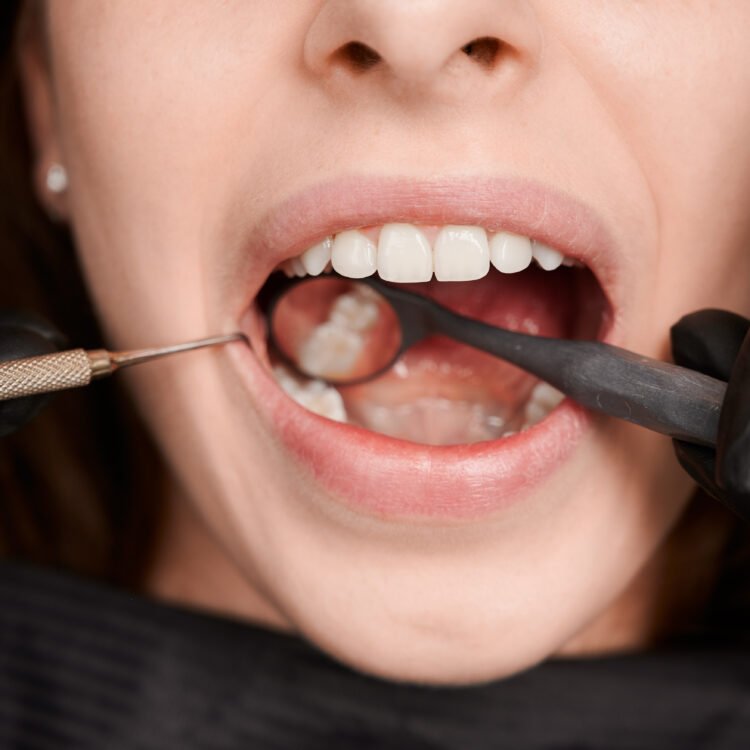
Full Dentures vs Partial Dentures
Your bone ridge and the number of remaining teeth decide which option works. A full denture replaces every tooth in one arch. A partial clips onto existing teeth and fills only the gaps.
- Full dentures: used when no salvageable teeth remain in the upper or lower arch
- Partial dentures: rely on metal or acrylic clasps on nearby natural teeth for support
- Implant-supported options: attach to posts placed in the jaw for extra stability
- Immediate dentures: fitted right after extraction so you are never without teeth
- Conventional dentures: made after gums heal, typically offering the most precise fit
How Partha Dental Fits Dentures in KPHB
- The dentist examines your mouth and takes impressions of your jaw ridges.
- A wax bite block records how your upper and lower jaws meet.
- The lab builds a trial denture in wax so you can see the tooth shape and color.
- You return for a fitting; the dentist checks speech, bite, and comfort.
- The final acrylic denture is processed, polished, and delivered.
- You schedule a follow-up in one week to adjust sore spots.
What to Expect During Denture Recovery
New dentures feel bulky for the first two weeks. Your gums may feel tender as they adapt to pressure they have not felt before. Most patients need three to five adjustment visits before the fit feels natural.
- Day 1 to 3: eat soft foods only; avoid hot liquids that warp the base
- Week 1: speak aloud to train your tongue to the new teeth position
- Week 2 to 4: gradually add firmer foods as sore spots are relieved
- Month 3 and beyond: schedule a reline if the fit loosens as gums shrink
- Nightly removal: always take dentures out to let gum tissue rest
- Call the clinic if you develop a painful ulcer that does not heal in 48 hours
What Happens If Missing Teeth Are Not Replaced?
Remaining teeth drift into open spaces, tilting and changing your bite. The jawbone beneath empty sockets shrinks over time, making later denture fitting harder. Many patients also lose the ability to eat certain foods and may face digestive issues from poor chewing.
Why Patients Choose Partha Dental for Dentures in KPHB
- Qualified prosthodontists with BDS and MDS degrees handle denture design and fitting
- In-house dental lab reduces turnaround time between trial and final denture
- Same-day emergency adjustments available for patients with painful sore spots
- NABH-accredited protocols govern sterilization and impression material handling
- Multiple Telangana branches make follow-up visits accessible if you relocate within the state
Book Your Denture Consultation in Hyderabad
Call the branch nearest you to schedule an examination and jaw measurement. Bring any previous dental records and a list of medications you take daily.
- Hyderabad, Telangana: 090306 22077