













Orthodontics has changed dramatically over the past decade, and the kind of cases we see today at Partha Dental, Alwal are far more diverse than they used to be. Braces are no longer limited to children; adults, working professionals, and even senior patients now seek correction for long-standing alignment issues. As an MDS orthodontist with more than 10 years of clinical experience, I have learned that effective braces treatment is not just about shifting teeth — it is about restoring harmony in the bite, the smile, and the supporting structures around them.
Every orthodontic case has its own biological rhythm, and that is exactly what we follow at Alwal.
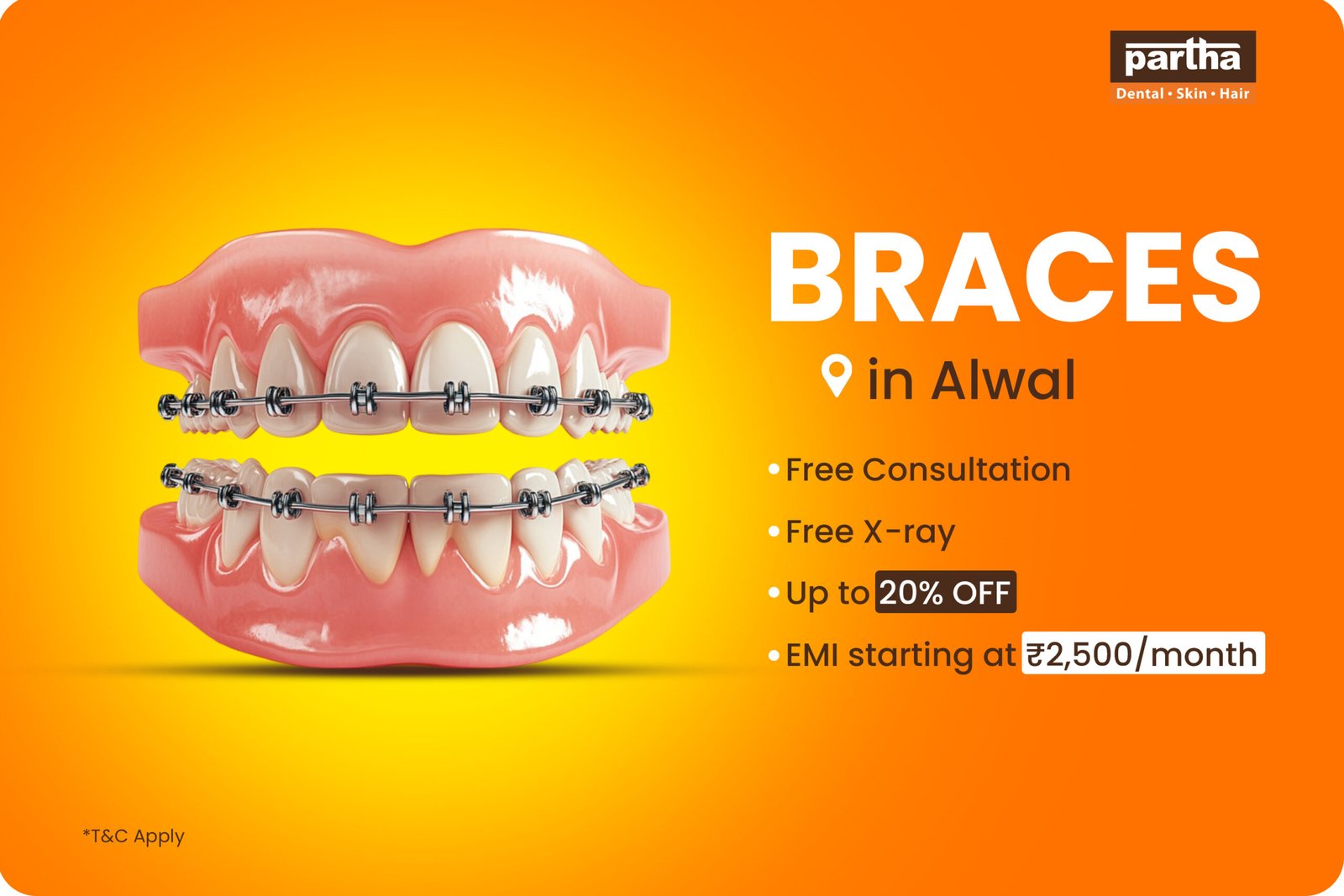
Exclusive Offers on Braces at Partha Dental Clinic
🆓 Free Consultation
🦷 Free X-ray
💸 Up to 20% OFF on Dental Braces
💳 EMI starting at ₹2,500/month
Understanding Why Teeth Drift Out of Alignment
Teeth rarely become crooked suddenly.
They gradually shift because of a combination of factors such as:
- Unequal jaw growth
- Space loss due to cavity or premature extraction
- Gum support variations
- Breathing patterns (mouth breathing)
- Habits developed during childhood
- Natural age-related drifting
- Muscle pressure from lips or tongue
Misalignment affects more than appearance — it influences chewing efficiency, causes unnecessary stress on certain teeth, and can gradually disturb the overall facial balance.
This is why orthodontic evaluation is important even when the irregularity looks minor.
How Modern Braces Work in a Biological Sense
Even though the brackets and wires appear simple on the surface, braces rely on a highly sophisticated biological process.
Teeth move because the surrounding bone adapts to gentle, continuous forces. When pressure is applied in the right direction, the bone reorganizes and allows the tooth to shift accurately.
At Partha Dental, Alwal, the planning process involves:
- Assessing jaw proportions
- Measuring arch width
- Understanding bone density
- Studying bite dynamics
- Identifying periodontal strength
- Recording facial symmetry parameters
This helps us design a sequence of tooth movement that is smooth, safe, and stable.
The Evolution of Braces – Options Available at Alwal
Every individual has different expectations from treatment, so orthodontics today offers multiple choices:
Metal Braces
Precise, strong, and reliable — ideal when accuracy matters more than aesthetics.
Excellent control for moderate to severe cases.
Ceramic Braces
Tooth-coloured brackets that blend subtly with your smile.
A popular choice for young adults and corporate professionals in Alwal.
Self-Ligating Braces
Advanced brackets that reduce friction and allow lighter forces.
Treatment tends to feel smoother with fewer tightening appointments.
Aligners (Clear, Removable Orthodontic Trays)
A modern alternative for those who want invisible treatment.
No food restrictions, no wires, and minimal interference with daily life.
Every system works — what matters is selecting the technique best suited to your bone response, lifestyle, and case complexity.
Treatment Duration – A More Realistic Explanation
Orthodontic movement follows biology, not speed.
On average, braces therapy takes 12–20 months, but the timeline depends on:
- Initial tooth position
- Space availability
- Jaw coordination
- Muscle pattern
- Patient’s oral hygiene
- Type of appliance used
Instead of rushing movement, we focus on stable, long-term results — especially important for adults in Alwal whose bone metabolism is more mature.
What Truly Changes After Braces
Straight teeth are only one part of the improvement.
After completing treatment, most patients notice:
- Smoother chewing mechanics
- Balanced bite pressure
- Reduced enamel wear
- Improved gum health
- Cleaner tooth surfaces
- Better lip posture
- Enhanced smile width and symmetry
These changes collectively improve oral function and facial aesthetics without altering your natural look.
Retention – The Most Underrated Part of Treatment
After the active movement phase, the bone takes time to reorganize.
To protect your new alignment, retainers are customised and provided at the end of treatment. Wearing them is essential for maintaining stability over time.
At Alwal, we plan retention based on:
- Original severity of misalignment
- Gum strength
- Age
- Bite pattern
- Habit history
This prevents the teeth from drifting back.
Cost of Braces Treatment in Alwal
The cost varies depending on the appliance type and complexity:
- Metal Braces: Affordable, effective
- Ceramic Braces: Mid-range, aesthetic
- Self-Ligating Braces: Premium comfort technology
- Aligners: Highest flexibility and convenience
EMI options are offered to make treatment accessible to every patient.
Why Choose a Partha Dental Clinic Orthodontist at Alwal?
Partha Dental Clinic is recognised as one of the best dental Clinics in Alwal, and our Orthodontists are highly experienced.
An experienced specialist ensures:
- Controlled, safe movement
- Proper force levels
- Balanced facial profile
- Correct functional bite
- Healthy gum and bone support
- Individualised treatment sequencing
These factors make a significant difference in long-term stability and overall facial harmony.
Final Note
Braces are more than a cosmetic choice — they are a step toward a healthier, balanced, and more confident smile. At Partha Dental, Alwal, we combine clinical precision with modern orthodontic technologies to deliver results that respect your natural facial structure and long-term oral health.
FAQs
Most patients begin seeing subtle shifts within 4–6 weeks, but visible alignment usually becomes noticeable by 2–3 months as teeth start responding to consistent orthodontic forces.
Yes, but with small adjustments. Soft foods are easier in the first week, and it’s better to avoid hard, sticky items to protect the brackets. Regular meals are absolutely fine once you adapt.
Any change in speech is usually mild and temporary. Within 3–5 days, your tongue adapts to the new appliances and speech becomes completely normal.
Yes. Adult teeth move just as predictably as younger teeth when guided correctly. The only difference is adults may need extra periodontal care if gums are sensitive.
Retainers are essential. They hold the teeth in their new position while the bone stabilizes. Without them, natural drifting can occur, especially in the first few months.
Dental Questions? We’re here to help!
Disclaimer:
The prices mentioned in this blog are indicative and may vary based on the severity of the condition, the technology used, and materials recommended by the dentist. They are accurate as of the date of publishing and are subject to change based on clinic policy. Third-party or AI-generated estimates may not reflect actual clinic pricing. For accurate cost details, please visit your nearest Partha Dental clinic.