











When Is Gum DIsease Treatment Needed in Chirala?
Your gums should not bleed when you brush. If they do, or if you notice a bad taste that will not go away, something is wrong. Many people in Chirala delay care because the early signs seem minor. They are not.
- Bleeding gums when brushing or eating hard foods like chikki or raw mango
- Persistent bad breath that mouthwash does not fix
- Gums pulling back from teeth, making them look longer
- Loose teeth or a change in how your bite fits together
- Pus between teeth and gums when you press gently
- Tender, swollen gums that hurt to touch
- Deep pockets forming where food gets trapped
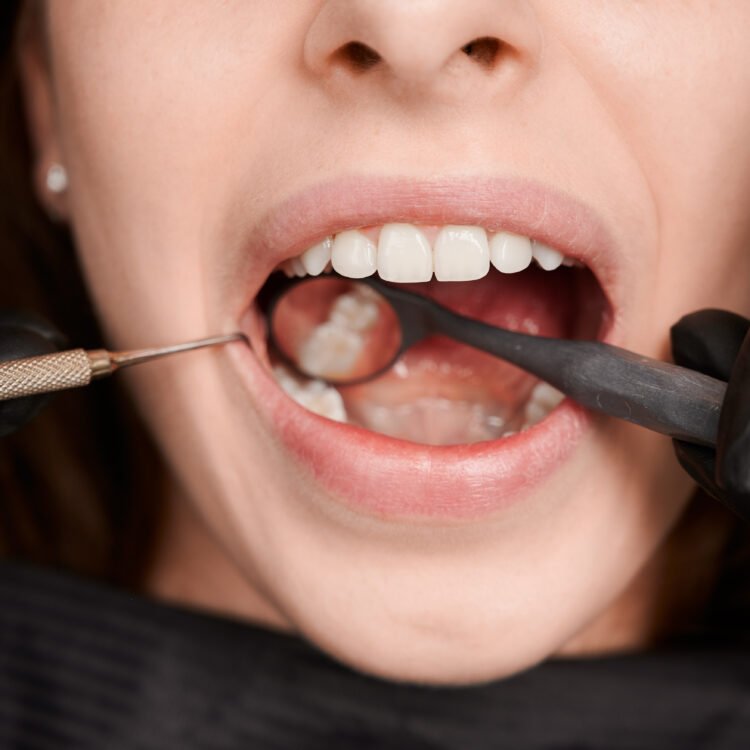
A dentist confirms the stage of disease with a periodontal probe and X-rays. Only then can the right treatment be planned.
Simple Gum Care vs Surgical Gum Treatment
The stage of your gum disease decides the approach. Early disease needs cleaning below the gumline. Advanced disease needs surgery to reach deep pockets and rebuild lost tissue.
- Scaling and root planing: Non-surgical deep cleaning for early to moderate gum disease
- Flap surgery: Lifting the gum to clean deep pockets and reshape bone
- Bone grafting: Adding material where bone has been destroyed by infection
- Soft tissue grafts: Covering exposed roots when gums have receded
- Guided tissue regeneration: Using membrane to regrow bone and ligament
- Laser gum treatment: Removing diseased tissue with less cutting for select cases
How Partha Dental Performs Gum Treatment
- The dentist measures your gum pockets with a calibrated probe and records bleeding points
- Full mouth X-rays show bone levels and any hidden infection between roots
- The hygienist numbs your gums with local anaesthesia before deep scaling begins
- Ultrasonic scalers remove hardened tartar above and below the gumline
- Hand instruments smooth root surfaces so bacteria cannot reattach easily
- The dentist irrigates pockets with antimicrobial solution and reviews home care technique
- For surgical cases, the periodontist schedules the procedure and explains suture care
What to Expect After Gum Treatment
Your gums will feel tender for two to three days. Some tooth sensitivity to cold is normal as roots settle. Most patients return to work the next day after non-surgical care. Surgical cases need five to seven days of softer foods.
- First 24 hours: Avoid hot drinks and do not rinse vigorously
- Days 2 to 3: Salt water rinses twice daily if your dentist advises them
- Week 1: Soft foods only; no seeds, nuts, or crunchy snacks
- Brushing: Use a soft brush and avoid the treated area for 48 hours
- Smoking: Stop completely; it halves healing speed and raises recurrence risk
- Follow-up: Return in one week for pocket check and suture removal if needed
- Call the clinic if bleeding lasts beyond 24 hours or swelling worsens after day three
What Happens If Gum Disease Is Left Untreated?
Gum disease does not stay in one place. The infection travels deeper along the root, destroying the ligament that holds your tooth in its socket. Bone melts away slowly and silently. Teeth shift, loosen, and eventually require extraction. In later stages, the bacteria enter the bloodstream and strain the heart and kidneys. The treatment you needed at one sitting becomes months of surgery and replacement teeth.
Why Patients Choose Partha Dental in Chirala
- BDS and MDS qualified periodontists with DCI registration handle all gum cases
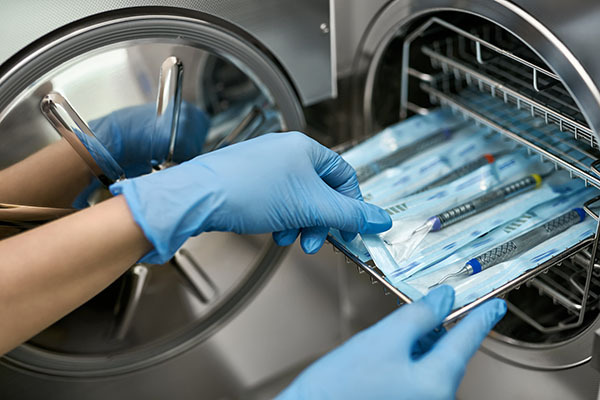
- NABH accredited protocols for instrument sterilisation and infection control
- Same-day appointments available six days a week for urgent gum bleeding
- Digital OPG and IOPA X-rays on-site so diagnosis is immediate
- Written treatment plans with stage-wise costing before any procedure begins
- EMI payment options through partner finance providers for surgical gum treatment
Book Gum Care Near You in Chirala
Call or walk in to the Chirala branch. The clinic sits above IDBI Bank near Aakruthi shopping mall, easy to reach from Station Road or the textile market areas.
- Partha Dental, Chirala: 078428 77793