












When Is Gum DIsease Treatment Needed?
Your gums should not bleed when you brush. If they do, or if you notice a bad taste that brushing does not fix, something below the gumline needs attention. Many patients from textile and granite workshops in Warangal delay this until the teeth feel loose.
- Bleeding gums when brushing or eating hard foods like chakli or murukku
- Persistent bad breath that mouthwash masks for only an hour or two
- Gum recession making teeth look longer than they used to
- Loose or shifting teeth that change how your bite closes
- Pus between teeth and gums visible when pressing gently
- Tender, swollen gums that feel puffy rather than firm
- Deep pockets where a toothpick or floss sinks unusually far
Only a clinical examination and a full mouth X-ray can confirm whether gum disease is present and how far it has progressed.
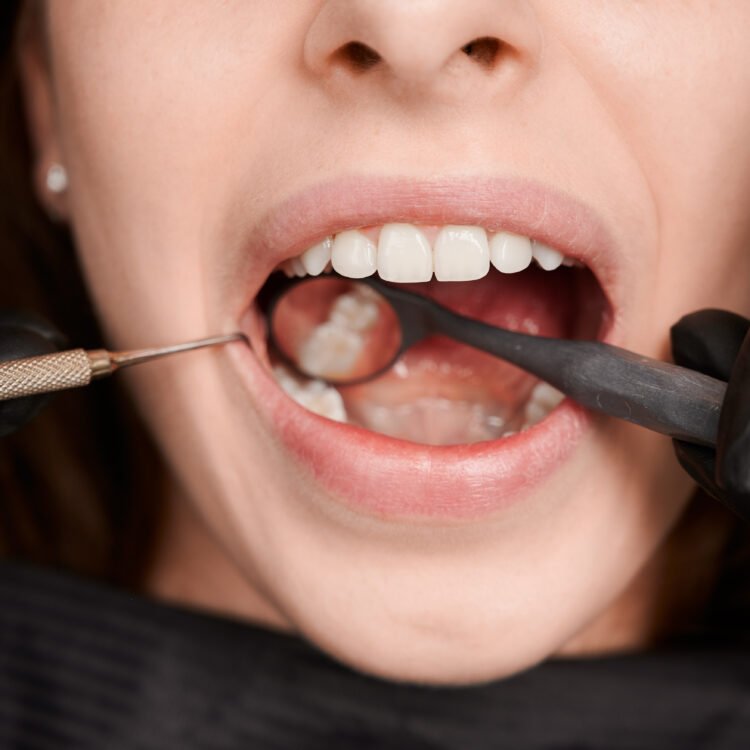
Simple Scaling vs Surgical Gum Treatment
The treatment you need depends on how deep the infection has gone. Early gum disease stays above the bone. Advanced disease destroys the bone itself. The dentist measures pocket depth with a probe to decide.
- Simple scaling: Removes tartar above and slightly below the gumline; done in one or two sittings; no cutting needed
- Root planing: Smooths the root surface below the gumline so bacteria cannot reattach easily
- Flap surgery: Lifts the gum to clean deep pockets and reshape damaged bone
- Bone grafting: Replaces bone lost to advanced periodontitis; adds months to healing
- Simple cases: Typically managed with local anaesthesia and return to work the same day
- Surgical cases: Require stitches, a soft diet for one to two weeks, and multiple follow-ups
How Partha Dental Performs Gum Care
- The dentist examines all teeth and charts pocket depths with a periodontal probe
- A full mouth OPG X-ray shows bone levels around each root
- The hygienist applies local anaesthetic gel or injection before deep cleaning begins
- Ultrasonic scalers remove tartar above the gumline; hand scalers clean below it
- The dentist polishes roots to slow bacterial reattachment
- You receive a written recall schedule based on your risk level
What to Expect After Gum Treatment
Your gums will feel tender for two to three days. Cold sensitivity may last up to two weeks. This is normal. Do not stop brushing; use the soft brush the clinic gives you.
- Rinse with warm salt water three times daily for the first three days
- Avoid hard foods like groundnut chikki or granite dust exposure if you work in cutting units
- Take prescribed antibiotics exactly as directed, even if pain stops early
- Brush gently with a soft brush; do not skip the gumline
- Return for the scheduled follow-up in seven to ten days for pocket reassessment
- Call the branch if bleeding continues beyond 48 hours or swelling worsens
- Quit smoking if possible; it doubles the risk of recurrence
What Happens If Gum Disease Is Left Untreated?
Infection that starts at the gum margin does not stay there. It travels down the root surface, destroying the periodontal ligament and the alveolar bone that holds teeth in place. Teeth become mobile. In some patients, the infection spreads to adjacent soft tissue. The result is tooth loss that could have been prevented with earlier intervention. Bone loss does not regenerate on its own.
Why Patients Choose Partha Dental in Warangal
- BDS and MDS qualified periodontists with DCI registration handle all gum cases
- NABH accredited protocols for instrument sterilisation and cross-infection control
- OPG and digital X-ray available on-site; no referral to external imaging centres
- Multiple Telangana branches including Warangal, Hanamkonda and Karimnagar for follow-up convenience
- Written treatment plans with EMI options discussed before any procedure begins
Book Gum Care Near You in Warangal
Whether you work at the Kakatiya Mega Textile Park or in a granite cutting unit, early gum care protects your teeth and your income. Call the branch closest to you.
- Warangal, Girmajipet: 072070 41441